
Topline
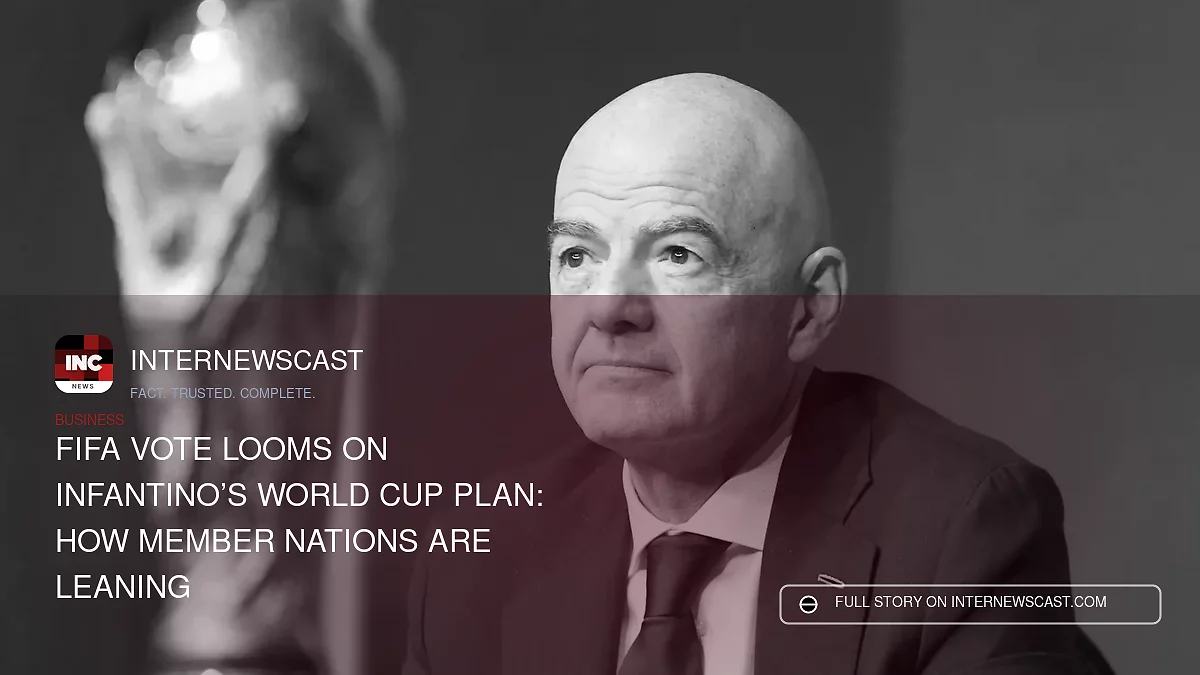
FIFA President Gianni Infantino’s contentious push to sell as much as 20% of the World Cup faces a steep approval hurdle: it needs backing from 106 member associations, yet all 55 European members have already rejected the idea, while many others have raised serious objections—leaving the proposal’s path to a majority increasingly uncertain.
Gianni Infantino, president of FIFA, at the 2026 World Cup.
FIFA via Getty Images
Key Facts
FIFA has said it plans to raise about $4.2 billion this year by selling a reported 20% minority stake in a newly created subsidiary, FIFA Forward Enterprise, based on an equity valuation of $20 billion.
The deal has drawn significant criticism from soccer fans, analysts and other governing bodies, who say the sport “is not FIFA’s to sell” and have said they worry investors could create pressure to maximize revenue.
The way the plan has been handled has further angered soccer confederations, which say the proposal was drawn up without consultation with the organizations it would affect. Carlos Cordeiro, a senior adviser to Infantino, resigned Friday in protest of the plan.
Infantino will need a majority of FIFA’s 211 member votes, so at least 106, to vote “yes” on his proposal for it to move forward, and the 55 members of UEFA Europa League have already confirmed they’ll unanimously vote against it (and boycott all FIFA competitions in protest).
CONCACAF, which governs football across North America, Central America and the Caribbean, has signaled that its 35 votes could also fall into the “no” column after citing “deep concerns about the lack of due process.”
The Asian Football Confederation added its criticism Friday, joining the European and CONCACAF blocs in questioning the proposal. Although its 41 votes are not all guaranteed to oppose the deal, a senior soccer official told the Telegraph the AFC’s intervention amounted to the “killer punch.”
CRUCIAL QUOTE
“It’s dead and buried,” an unnamed official told the Telegraph.
BIG NUMBER
131. That’s how many votes associations have suggested will be against the Infantino deal, ensuring it doesn’t go forward. No FIFA member associations have publicly committed to voting “yes,” but some—like Football Australia and New Zealand Football—have yet to take public positions.
Key background
Under the plan, which FIFA announced Tuesday, the 211 member associations would each be given $20 million in funding, the organization said, and annual funds to members would continue increasing through 2038. FIFA said it would remain the primary owner of the new subsidiary and maintain control over scheduling competitions and matches, as well as governance and regulatory decisions. The investor group would be led by Thrive Eternal, a fund created by Josh Kushner’s Thrive Capital. A report from The Times said the new plan could make Infantino the commissioner or chief executive of the new company after his FIFA presidential term expires in 2031, setting him up for a salary in the tens of millions.
WTWF
FIFA member associations must vote on the plan by Sept. 19.
CALLS GROW FOR INFANTINO TO RESIGN
UK Prime Minister Andy Burnham on Friday reportedly called for Infantino to resign after the British government stood by the UEFA’s decision to boycott. Burnham said the scheme made clear Infantino “is the wrong man to lead the organisation.” British broadcaster Piers Morgan, who said he once thought Infantino was “a force for good in football,” also called for his resignation. “His greedy, tawdry attempt to flog off the World Cup is beyond the pale,” Morgan said.
TANGENT
A FIFA brief published Friday revealed the agency is also considering expanding the World Cup to 64 teams (rather than the current 48). FIFA is commissioning a study from an independent agency to consider the possibility for the 2030 World Cup, and findings are due Sept. 11. Experts have noted an expansion of the tournament would greatly benefit the private investors Infantino is looking to bring in, who would be buying a stake in the commercial business that encompasses broadcast, sponsorship, ticketing and licensing rights. More games would mean more tickets to sell, more expensive broadcasting rights, higher sponsorship fees and a bigger global audience, which would in turn benefit investors.