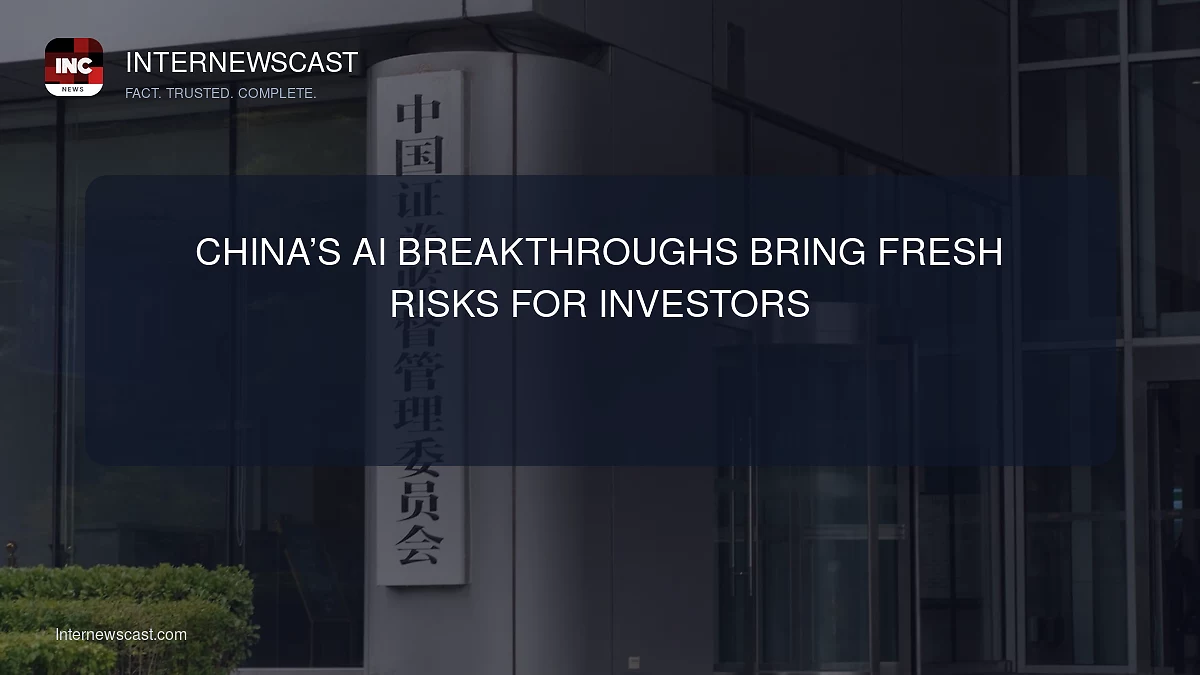

The China Securities Regulatory Commission headquarters in Beijing, photographed on July 20, 2026.
Sopa Images | Lightrocket | Getty Images
Hello from Beijing — Evelyn here. In this edition of The China Connection, I’m sharing a ground-level look at the conversations, signals and concerns shaping sentiment among local businesses.
China’s rapid progress in technology continues to unsettle Washington and raise questions on Wall Street about the durability of U.S. tech leadership. Yet foreign investors are still cautious when weighing Chinese alternatives — and Beijing’s latest actions help explain why.
The big story
Beyond the familiar risks tied to emerging markets, investors say one issue remains especially hard to price in: how Chinese policymakers communicate major decisions.
A case in point is the recently disclosed investigation into Fang Xinghai, the former vice chairman of the China Securities Regulatory Commission. Fang, a Stanford-educated official whose tenure overlapped with the abrupt suspension of Ant Group’s blockbuster IPO, was a familiar figure to many Wall Street investors operating in China — far more so than many officials swept up in Beijing’s anti-corruption campaigns.
Since authorities announced the probe with limited explanation, much of the discussion inside China has centered on Fang’s backing of algorithm-based quantitative trading. The strategy has repeatedly faced public criticism and regulatory scrutiny during periods of market weakness, even as DeepSeek — now viewed as a national artificial intelligence standout — emerged from High-Flyer, a quantitative hedge fund.
“This is exactly where communication can be better,” said Liqian Ren, a quantitative manager at U.S.-based asset manager WisdomTree.
“Right now for China the number one thing is tech competition,” she said, “not yet financial market competition.”
Parsing Fed statements on policy direction has been a key U.S. investment skill since the days of Alan Greenspan in the 1990s. UBS even said the Fed’s forward guidance, which is now under review, has decreased market volatility over the last two decades.
China, in contrast, only launched its stock markets just over three decades ago, and has not had a reputation for transparency. From a surprise yuan devaluation in 2015 to crackdowns in recent years on after-school tutoring and cross-border stock trading, many of Beijing’s policy moves appear abrupt to outsiders.
Market volatility isn’t due to quantitative trading, but sometimes “totally unexpected” policy information disclosure, Ren said, noting China’s market swings are “way higher” than in Europe or Japan — two overseas markets popular with U.S. investors.
Shares of Trip.com, whose top investors include BlackRock, plunged nearly 20% in one day in January after China said it was investigating the online booking company for alleged monopolistic practices.
Futu shares dropped by more than 27% on May 22 after China’s renewed crackdown on services that enabled people in mainland China to trade overseas stocks. UP Fintech shares fell by more than 25% that day.
More strikingly, just days after the SoftBank-backed Didi IPO in the U.S. in June 2021, the ride-hailing company faced a cybersecurity probe and app suspension in China, leading to a months-long stock decline and ultimately, delisting. Didi has yet to relist in Hong Kong despite announcing plans to.
While analysts note in retrospect that warning signs were clear, investors did not necessarily grasp them until after the fact.
Ren noted how China stocks climbed early last year after the DeepSeek R1 release, and in recent days after the Kimi K3 model launch in mid-July. “The more good headlines come out, then it will kind of neutralize some of the Chinese government regulations or abrupt regulations,” she said.
Chinese stocks overall have yet to generate returns that exceed U.S. stocks and bonds enough to attract significant amounts of capital willing to overlook the risks.
BlackRock Investment Institute has kept a neutral view on Chinese stocks and views AI-related opportunities as stock-specific, rather than regional, plays.
And alternative chip plays such as CXMT — a state-backed memory chip company that surged nearly 470% in its debut last week — listed in Shanghai, making it difficult for most foreign investors to access.
Global stock index giant MSCI quickly announced, however, that CXMT would be added to the MSCI China All Shares Index on Aug. 10, paving the way for foreign funds tracking the index to buy exposure.
As former Goldman Sachs banker Fred Hu, now chairman of Primavera Capital, told my colleague Anniek Bao in Singapore recently, finance, not AI, is Beijing’s biggest challenge. And it’s finance that requires the most communication and trust.
Need to know
China’s reported chip breakthrough comes with some big caveats
It is currently unclear whether a Chinese manufacturer using the homegrown DUV machine will deliver a chip yield close to or above that of a machine from ASML. If the yield is not close to what ASML machines can provide, that might hamper the adoption of China’s machine.
The U.S. wants Asia to use its AI — but China dominates cheaper models
The U.S. has launched an export program and other initiatives to bolster American AI in Asia. But between the first APEC AI meeting and the second, the U.S. has grown noticeably quieter.
China threatens retaliation against U.S. humanoid robot ban, says it ‘severely damages’ relations
As the FCC escalates restrictions on Chinese goods, it “severely damages China-U.S. economic and trade stability,” China’s commerce ministry said via a CNBC translation of an online statement Thursday. The ministry urged the U.S. to withdraw the decision, and threatened countermeasures if it failed to do so.
Coming up
Aug. 5: RatingDog China Services PMI
Aug. 7: China trade data
Aug. 9: China CPI, PPI