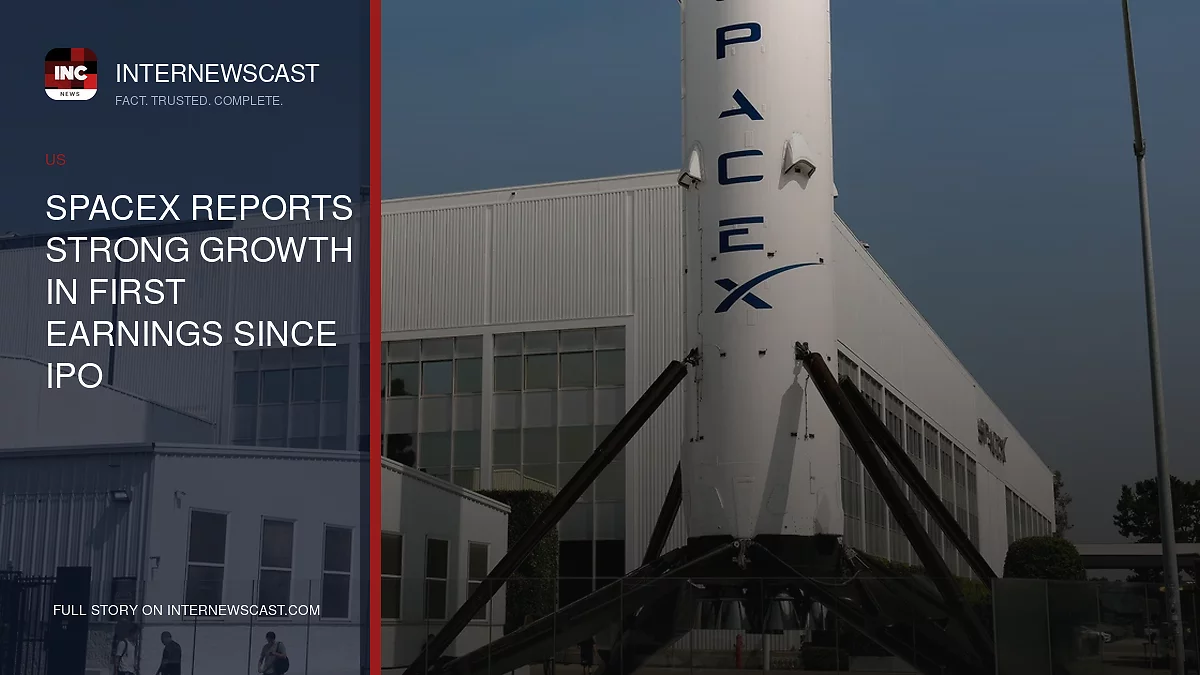

SpaceX delivered a strong first look at its finances on Tuesday, reporting surging revenue and a narrower loss in its debut quarterly earnings release as a public company following June’s biggest ever initial public offering.
Elon Musk’s rocket, satellite and AI company posted second-quarter revenue of $7.8 billion, well above the $6.8 billion analysts expected, according to FactSet. Its net loss narrowed to $541 million, down from a $1 billion loss in the same period last year.
“All three of the main business units reported revenue ahead of the consensus, including Space, Connectivity and AI,” market analyst Adam Crisafulli, head of Vital Knowledge, wrote in a research note.
Investors had been especially focused on Starlink subscriber growth because the satellite internet business is SpaceX’s largest source of revenue. The connectivity division generated $4.3 billion in quarterly revenue, topping FactSet estimates of $3.8 billion, as Starlink’s customer base doubled to 12 million from 6 million a year earlier.
Musk highlighted Starlink’s momentum during a conference call with Wall Street analysts after the results were released.
“It’s not out of the question that at some point, Starlink will deliver the majority of the world’s internet,” he said.
Beyond connectivity, SpaceX said its Starship division brought in $962 million in revenue for the quarter, while its AI business recorded $2.6 billion.
On the call, Musk also said SpaceX expects to deliver “well over 1 million tons to orbit per year,” adding that the total could ultimately climb to 10 million tons.
“And this is a big number by normal standards,” he said. “The rest of the world, I think, delivers around 300 tons.”
SpaceX’s IPO made Musk, the company’s founder and CEO, into the world’s first trillionaire on paper.
SpaceX shares could use a boost
SpaceX shares have slumped since the company’s blockbuster IPO, with the stock losing almost 50% of its value after hitting an intraday high of $225.64 on June 16.
Despite its rapid revenue growth, investors appeared unconvinced by SpaceX’s maiden quarterly readout, with the stock sinking 7% to $116.40 in after-hours trading, below the IPO offer price of $135 per share.
READ MORE: Fauci Drops F-Bomb During Walk With Wife After Senate Grilling
“I don’t think people want to hear promises about the next five years or a mission to Mars,” Emarketer Senior Analyst Gadjo Sevilla told AFP. “Everyone knows that will take time. They want to see how the value can be turned around as quickly as possible.”
Wall Street analysts and retail investors were looking to the quarterly earnings report for clues on whether SpaceX can deliver on Musk’s vision for the company, which includes putting solar-powered data centers in space and eventually sending spaceships to Mars.
“In many ways, SpaceX presents a track record of building toward solutions which many industry experts had previously viewed to be implausible,” noted Goldman Sachs analyst Eric Sheridan in a July research report.
The company booked $18.7 billion in revenue last year, but reported a net loss of more than $4.9 billion, according to a regulatory filing.
SpaceX, which launched its 13th Starship rocket in late July, is targeting a landing on the moon in 2028. For now, however, no Starship has been put into Earth orbit.
Alain Sherter


