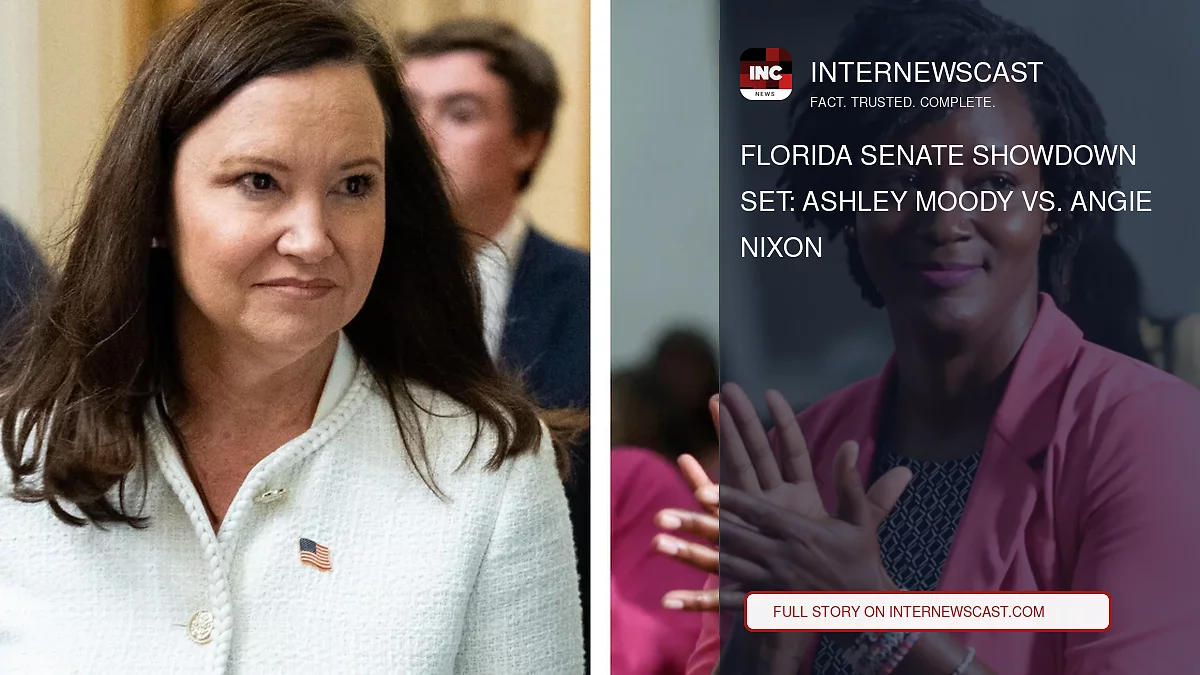

Ashley Moody captured the Republican nomination Tuesday, brushing aside several lower-profile GOP challengers as she works to keep the U.S. Senate seat she was tapped to fill last year. Democrats, meanwhile, see Florida as a difficult but potentially valuable Senate pickup opportunity as they try to shift the balance of power in Washington.
On the Democratic side, Nixon, a member of the Democratic Socialists of America, defeated Alex Vindman, the former National Security Council official and whistleblower who testified during President Trump’s first impeachment proceedings. Her primary victory adds to a growing pattern this midterm cycle: progressive and insurgent Democrats toppling better-funded, more centrist rivals in high-profile contests from New York City to Colorado and Michigan.
“Rep. Nixon ran a strong campaign. I will be standing by her side in the fight against Ashley Moody. I hope you’ll join me,” Vindman said in a statement Tuesday night.
Nixon, 42, campaigned heavily on her Florida roots and a progressive platform aimed at working families, including Medicare for All, free child care, paid family and sick leave, and a nationwide rent freeze. She also emphasized her record as an advocate for working- and middle-class Floridians, having represented parts of the Jacksonville area in the Florida statehouse since 2020.
Moody’s path to the GOP nomination included challenges from several Republicans, among them Army veteran Chris Gleason, physician Neelam Perry and minister Ernie Rivera. The former Florida attorney general framed her campaign around her identity as a fifth-generation Floridian, touting her support for law enforcement and her focus on public safety and stronger communities.
The 51-year-old Florida Republican was appointed by Gov. Ron DeSantis to succeed Secretary of State Marco Rubio in the Senate. She is now running in the special election to complete the remainder of Rubio’s term, which runs through early 2029.
Before joining the Senate in January 2025, Moody served as Florida attorney general from 2019 until her appointment. Her résumé also includes work as a commercial litigator and federal prosecutor, and in 2007 she became the youngest circuit court judge in Florida history. Since arriving in the Senate, she has aligned closely with Mr. Trump’s agenda and earned his endorsement last month. Ahead of the primary, Mr. Trump praised her as someone “doing a tremendous job representing the incredible people of Florida.”
With both nominees now set, the race moves toward the November general election. Democrats are looking for signs of renewed competitiveness in Florida, even as the onetime swing state has trended increasingly Republican. The last time Florida voters elected a Democrat to the U.S. Senate was in 2012.
With 53 Republicans in the Senate, Democrats would need to win four seats to flip the chamber. But with limited opportunities for pickups, and a handful of their own seats to defend, Democrats’ ability to take back control of the chamber has appeared to be an uphill battle. With the race in Florida, they’re aiming to improve that picture.