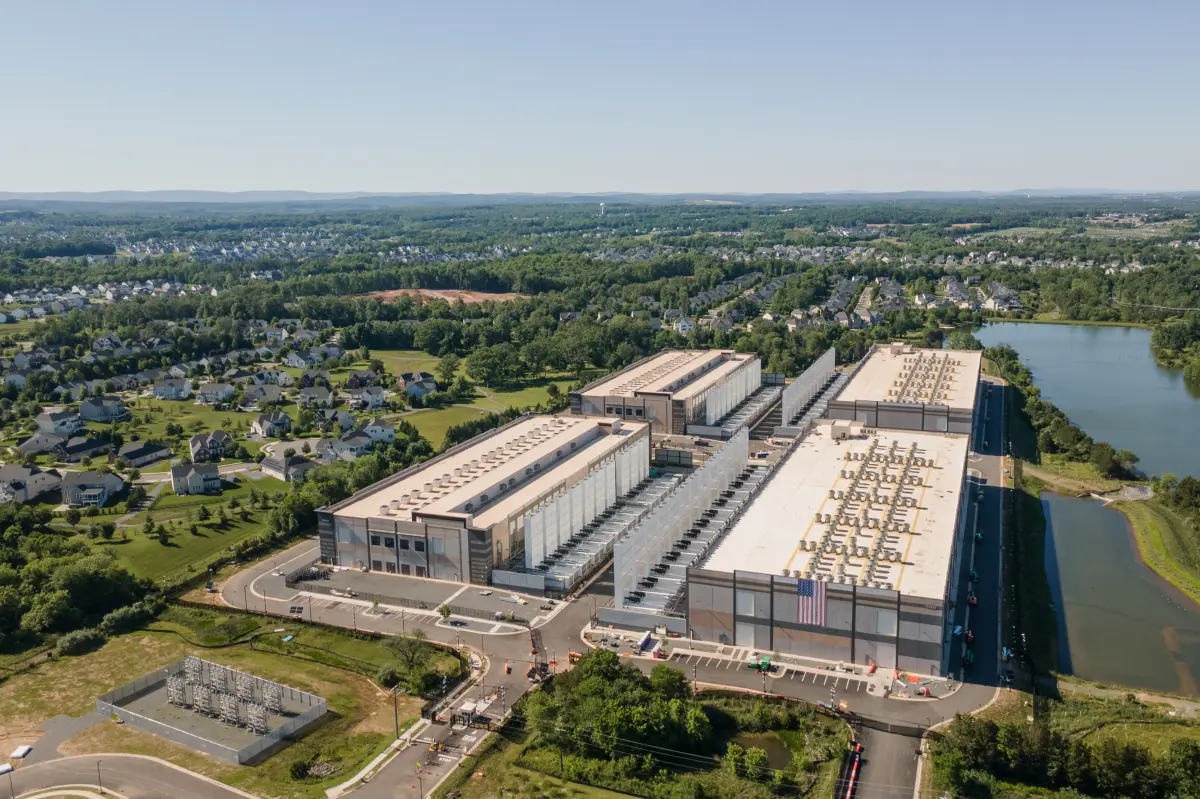

In one of Virginia’s most affluent counties, the rapid rise of data centers has turned into a massive financial jackpot — one that is helping fund major public upgrades while easing the tax burden for homeowners.
Loudoun County, an upscale Washington, DC, suburb, has become a key hub for the digital economy, with about 250 data centers operated or leased by major tech companies including Amazon, Microsoft and Google to support artificial intelligence systems and the broader internet.
Revenue from taxes on the computer equipment housed inside the sprawling server farms, along with property taxes tied to the land beneath them, is projected to bring in an eye-popping $1.3 billion next year. That total represents roughly 40% of Loudoun County’s overall tax revenue, according to its fiscal year 2027 budget.
That surge of money has helped drive down residential property taxes by about 30% over the past 10 years in the high-income county, which has the highest median household income in the United States, The New York Times reported.
The data center boom has also helped pay for high-profile community projects, including a $102 million recreation center featuring several pools and hydro-massage chairs, a $22 million transformation of former President James Monroe’s estate into a public park, and two newly built schools, with a third school planned, according to the report.
With its budget swelling to $5.4 billion, Loudoun County has been able to pour more resources into fire and emergency services, road and bridge improvements, and expanded parks and recreation offerings.
The data center industry has also strengthened the local labor market, adding about 15,000 workers to the county’s workforce, said Buddy Rizer, Loudoun’s executive director for economic development.
“People understood that the data centers were the reason we were building schools and keeping taxes low and those kinds of things,” Rizer told the outlet.
“From the day we started with data centers to today, more than half of the people are new, so they don’t remember when we were struggling financially.”
The success has made Loudoun a model across the nation, with officials in Pennsylvania, West Virginia and Delaware touring its so-called Data Center Alley for peak at the county’s cash cow.
But the boom has also drawn backlash from residents fuming about the noise, pollution, excessive electricity demands and the scale of development of the data centers.
Loudoun has 53 million square feet of data centers — transforming quiet tree-lined neighborhoods into tech hubs.
“What is the quality of life for those who don’t even want to go outside because of the noise?” said Greg Pirio, 75, who bought a home in Loudoun County 14 years ago, according to the Times.
The data company Vantage has since begun construction of two data centers roughly 200 yards from his home.
“It’s gone way too far,” said Juli Briskman, a member of the county’s Board of Supervisors who proposed a moratorium on data centers in July.
“We’ve become addicted to the data centers for their tax revenues, but at what cost?”
Rizer claimed the criticism overlooks how much the data centers — which occupy 3% of the county’s land — have benefited the community.
“I call this the great overreaction,”he said.


