
An Ohio death row prisoner who has spent more than 30 years fighting his conviction received an unusually rare chance this week to make his case for a full pardon before the state parole board, arguing once again that he is innocent of the double murder that sent him to death row.
Tyrone Noling, 54, of Alliance, appeared before the Ohio Parole Board on Tuesday with support from the Ohio Innocence Project, a group dedicated to preventing wrongful convictions and helping exonerate people who have been wrongly imprisoned. His legal team presented what it describes as an expanding record of evidence challenging the conviction.
Among the issues raised were witnesses who later withdrew their trial testimony, shifts in position by both the sheriff and one juror involved in the original case, and evidence that supporters say points toward an already executed murderer as a possible suspect.
Noling’s case has drawn national attention through documentaries, true-crime podcasts and public support from figures including Kim Kardashian and actors Hilarie Burton and Jeffrey Dean Morgan, all of whom have advocated for his exoneration. It has also renewed scrutiny of death penalty cases built without physical evidence tying a defendant to the crime, according to the Death Penalty Information Center, a nonprofit research organization that does not take a formal position on capital punishment.
Noling was found guilty in the 1990 murders of an elderly couple inside their home, a crime he has consistently denied committing. With no physical evidence linking him to the killings, prosecutors relied in part on witness statements during the trial. Several of those witnesses later recanted, saying they had been pressured by the prosecutor to make the statements, the Death Penalty Information Center says.
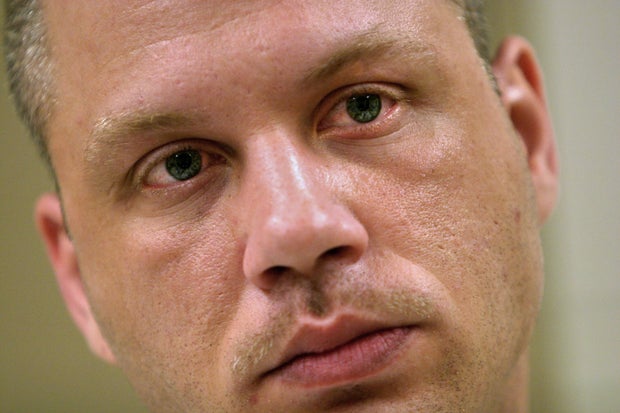
Thomas Ondrey, The Plain Dealer via AP, File
After Tuesday’s hearing — the first clemency hearing for an Ohio death row inmate since 2020 — the parole board will send its recommendation to Gov. Mike DeWine, who will make the final decision. DeWine, a Republican, said in June that he supports abolishing the death penalty, explaining that his views changed because he no longer believes capital punishment deters violent crime.
Clemency hearings for death row prisoners are usually scheduled only after an execution date has been set. Noling does not have one, making the hearing itself a significant development in his long-running case. He is seeking release from prison and has said he would not accept a sentence commuted to life without parole for a crime he maintains he did not commit.
Noling was convicted in the April 5, 1990, deaths of Bearnhardt and Cora Hartig, both 81, at their home in Atwater Township in Portage County. A neighbor discovered the couple’s bodies on the kitchen floor after noticing their lawn mower had remained outside the home for several days. Bearnhardt Hartig had been shot three times, and Cora Hartig was shot five times with a .25-caliber automatic handgun. Their home had been ransacked.
Authorities said Noling, who had just turned 18 at the time, was part of a group involved in home robberies of elderly couples. Three others in the group — 14, 15 and 16 at the time — implicated Noling in the slayings of the Hartigs during a burglary but later retracted their statements, saying that police pressured them to name Noling as the shooter.
Initial aggravated burglary charges brought against Noling were dropped in 1992, but a grand jury reindicted him in 1995 for the Hartig murders. He was sentenced to death in 1996.
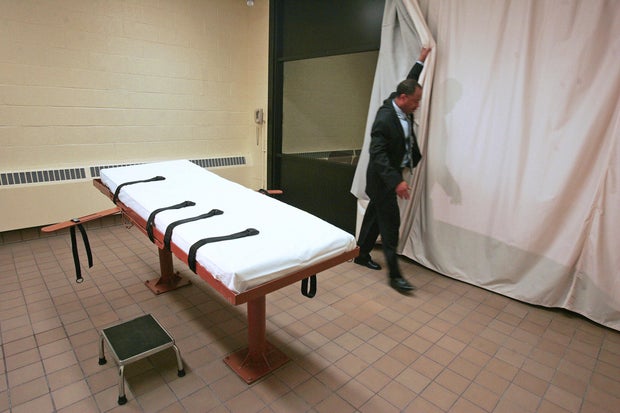
AP Photo/Kiichiro Sato, File
No physical evidence tied him to the crime, and no murder weapon was ever found. Noling’s advocates say evidence, including law enforcement notes and a cigarette butt found in the Hartigs’ driveway, points to two other potential suspects. One is Dan Wilson, who was executed by lethal injection in Ohio in 2009 for a different crime. Noling’s lawyers wrote in court documents that a man told authorities that his foster brother, Wilson, bragged about committing the crime.
“I believe that these boys were, and are, innocent,” he said.
Portage County Prosecutor Connie Lewandowski and Caitlin Flanagan, an attorney for a team representing Noling, did not immediately return separate phone messages seeking comment.
Following the hearing, the board will deliberate in executive session and is expected to deliver a recommendation to the governor by Aug. 25.