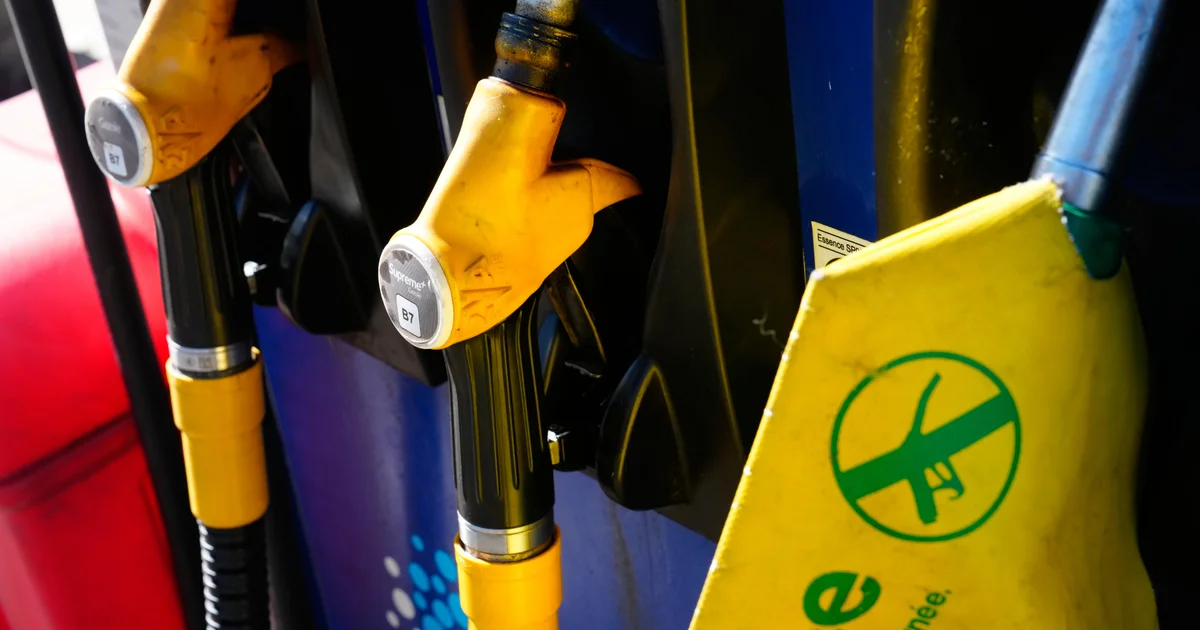

Washington — President Trump said European leaders have agreed to release a “massive amount” of diesel from their stockpiles in an effort to ease rising prices after an emergency meeting of Group of Seven leaders.
The G7 held a video conference Friday morning to address fuel supplies and prices, following an overnight call between President Trump and French President Emmanuel Macron. Afterward, Trump said Europe would begin releasing diesel from its reserves “immediately.”
“Europe has just agreed to release a massive amount of their heavily stocked Diesel Oil,” Trump wrote on Truth Social. “The process will begin immediately. Thank you for your attention to this matter!”
A joint statement issued by G7 leaders and released by the Élysée Palace in Paris confirmed a coordinated release of 100 million barrels. The effort will start immediately and continue over four months, with G7 members and partners making a “front-loaded substantial diesel release” during the first 20 days.
The G7 comprises Canada, France, Germany, Italy, Japan, the United Kingdom and the United States. The European Union participates as a non-enumerated member.
A White House official said Mr. Trump spoke with Macron last night and with the G7 leaders this morning to negotiate the release of European diesel stockpiles. Fatih Birol, executive director of the International Energy Agency, posted a photo of their conference call.
Trump has threatened to prohibit U.S. diesel exports, a step that could drive global diesel prices even higher. The G7 statement urged countries not to impose such restrictions, though it did not refer directly to Trump.
“We reaffirm our commitment to refrain from export restrictions on energy and energy products between G7 countries and call on all producers to refrain from imposing bans that could exacerbate market tensions,” the leaders said.
In the United States, soaring diesel prices are rippling through the economy. Schools, farmers and small businesses are facing mounting fuel bills, while farmers confront higher costs to operate diesel-powered machinery. Construction companies, food banks and other organizations have also reported sharply increased expenses for vehicles and delivery trucks.
This is a developing story and will be updated.