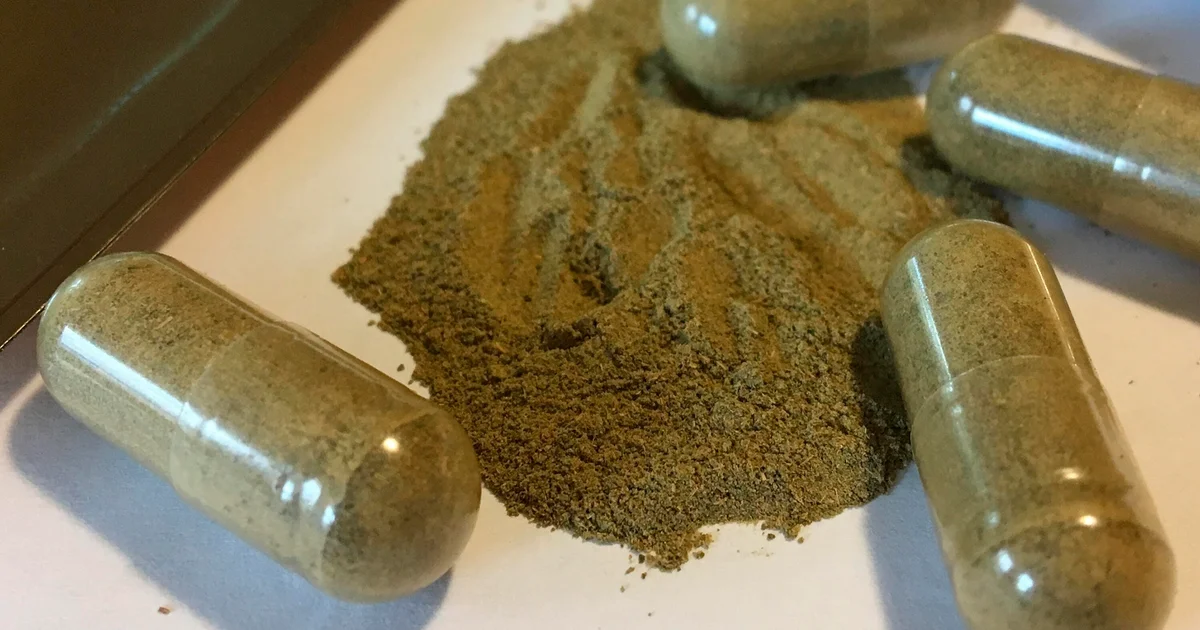

A store clerk and his son have been charged with selling an illegal kratom product as federal authorities investigate the deaths of two University of Mississippi students, prosecutors said Friday.
Mississippi’s drug task force had already advised the public to avoid kratom — an herbal substance that can act as a stimulant in small amounts and a sedative at higher doses — after investigators found packages of kratom derivatives while examining the students’ deaths on Sept. 21.
Authorities have not determined whether the substances played a role in either death. Federal prosecutors said, however, that both cases appeared consistent with drug overdoses. Two state agencies were working to speed up toxicology testing, Mississippi Gov. Tate Reeves said in a statement last week. Lafayette County Metro Narcotics said Thursday that the investigation was ongoing and that more charges could follow.
Federal court records show that one of the students, Aidan Hamilton, made several purchases in September at an Oxford, Mississippi, store selling vape products, tobacco and beer, according to a court filing.
On Sept. 24, an informant working with investigators bought kratom-based pills from clerk Yahya Mohamed Mosleh, 51. Mosleh allegedly warned the informant to “be careful taking the pills because people were dying from them,” U.S. Drug Enforcement Administration Special Agent Michael Dassance wrote in an affidavit.
Authorities arrested Mosleh and his 18-year-old son, Islam Yahya Mosleh, who also worked at the store. The Justice Department said each man faces one count of possessing a controlled substance with the intent to distribute it.
Scott Davis, who represents the elder Mosleh, and A.E. Harlow Jr., attorney for Islam Mosleh, said by email that they had no comment. The defendants appeared before a magistrate judge Thursday, and the judge found sufficient evidence to proceed with the charges.
Kratom is derived from a tree native to Southeast Asia and remains legal under federal law. However, several states and local governments have prohibited it, while federal authorities have issued warnings about potential health risks.
Supporters say pure, ground-leaf kratom is a natural and safe supplement that may help with pain, anxiety, depression and opioid withdrawal. They argue that the greater risk comes from kratom derivatives, which are often synthetic and can be substantially more potent.
The U.S. Food and Drug Administration says kratom has been associated with deaths in rare cases, although it was generally used alongside other drugs, making its specific role difficult to determine.
The DEA banned three kratom-related compounds in August. In an affidavit dated Sept. 25, Dassance said one of those compounds was identified as an ingredient in products seized from the Oxford store and Hamilton’s room.
Hamilton, a freshman from Englewood, Colorado, and the other student who died, Robert Strang, a junior from Atlanta, were found at separate locations. One was discovered on campus, while the other was found off campus.
Investigators found opened packages of a kratom product labeled “Smax” in both students’ rooms, according to the Justice Department. The department said investigators later identified a “suspected link” between the packages and the Oxford store where the Moslehs worked.
According to the affidavit, Yahya Mosleh told the undercover informant to remain quiet when other customers entered the store and moved the kratom pills out of view. After the customers left, he completed the transaction and again cautioned the informant to be careful.
Kratom is banned in 11 states. Other states, including Mississippi, regulate its sale, in part by requiring buyers to be at least 21. Oxford has gone further by adopting its own ban on kratom.