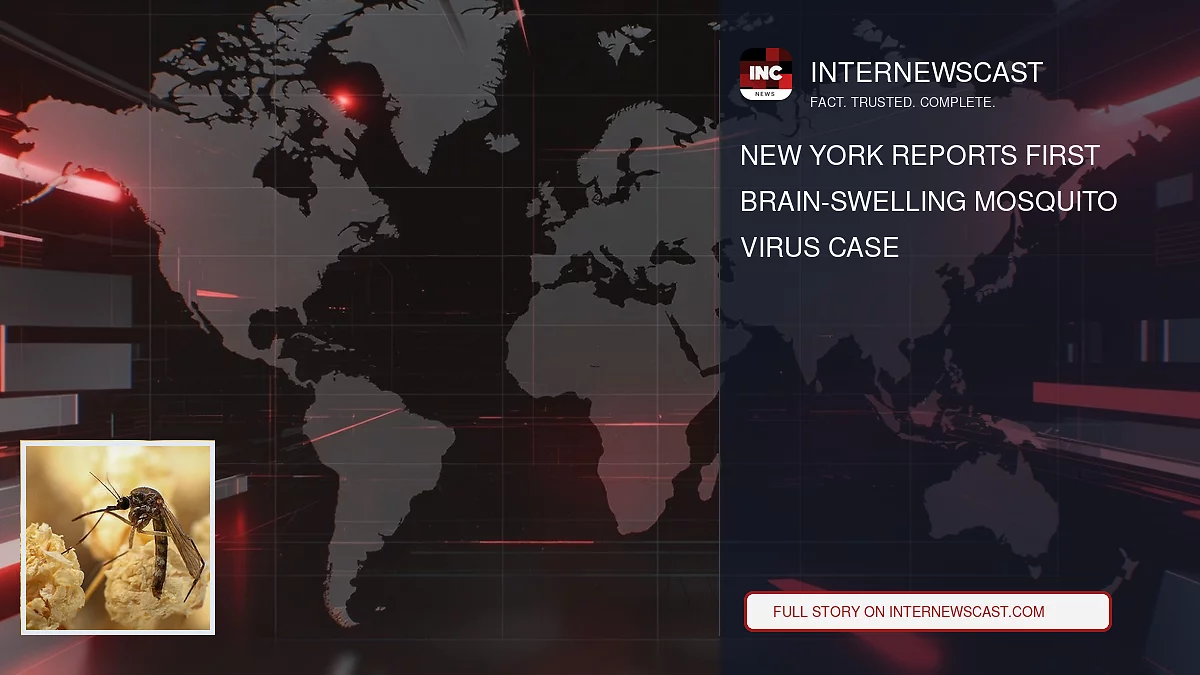

New York City health officials have confirmed the city’s first West Nile virus case of 2026 involving brain swelling, a serious complication linked to the mosquito-borne illness.
The New York City Health Department said Wednesday that the resident became infected after spending time outdoors in locations both within and outside the city.
Officials did not release additional information about the patient’s identity, condition or the exact circumstances surrounding the infection.
The case marks New York City’s first reported West Nile virus infection so far this year. Nationwide, 222 cases have been reported, with most concentrated in Arizona, Texas and California.
Mosquitoes carrying West Nile virus are found in New York City every year from June through October, according to the health department, with activity typically peaking in August and September.
City officials said they have stepped up mosquito monitoring and broadened control measures after the virus was detected in mosquito samples across all five boroughs since June, amounting to twice as many positive samples as last summer.
Most people infected experience no symptoms or only mild illness, but roughly one in 150 cases can lead to dangerous complications, including brain swelling, infections and paralysis.
“The good news is it’s preventable,” NYC Health Commissioner Alister Martin said in a statement. “With mosquito season in full swing, we’re encouraging New Yorkers to take extra precautions to minimize the risk of mosquito bites.”

West Nile virus is caused by a bite from Culex mosquitoes (pictured above) and is most common in Great Plains states
He added that the best steps ‘to protect yourself are simple: wear insect repellent, cover up during dawn and dusk, and get rid of standing water around your home.’
West Nile virus is caused by a bite from Culex mosquitoes and is most common in Great Plains states like North Dakota, South Dakota, Nebraska and Colorado, though cities like Los Angeles, Chicago and Dallas-Fort Worth also record high levels due to large populations.
Many of these states have also extended mosquito season – which runs from late spring through early fall – due to the increases in mosquito prevalence later in the year.
The disease usually causes no symptoms, but in one in five patients, it can lead to fever, headaches, nausea, diarrhea, joint pain and pain behind the eyes.
About one in 150 cases are neuroinvasive, meaning the virus penetrates the blood-brain barrier and travels to the meninges, causing meningitis and potential paralysis.
West Nile is fatal in about one out of 10 people who go on to develop nervous system infections, or about one in 1,500 people with West Nile.
CDC data as of August 18 shows 222 human cases of West Nile virus so far this year in 32 states, 156 of which were neuroinvasive. Last year there were a total of 2,100, up from 1,800 the year before.
Arizona has reported the most at 76, followed by Texas with 31 and California with 29.
CDC data, however, tends to lag behind local health departments.
It’s unclear how many of last year’s cases were neuroinvasive, but CDC data shows there were 1,342 hospitalizations for neuroinvasive disease.
There have been no deaths recorded this year and 172 last year.
New York City reported 18 human cases of West Nile virus last year, and the state total was 59.
Older adults, people with weakened immune systems and those with certain chronic conditions face the highest risk of severe illness due to West Nile.
Survivors of severe West Nile illness may experience long-lasting complications, including memory problems, chronic fatigue, muscle tremors or permanent neurological damage.
West Nile virus can be prevented primarily by avoiding mosquito bites.
CDC officials recommend using insect repellents that contain the ingredient DEET, wearing long sleeves and pants outside and staying inside between dusk and dawn during the summer.