
China is probing whether the Arctic can emerge as a major new trade artery, beginning regular seasonal container shipments to Europe through Russia’s far northern waters as Beijing and Moscow expand their economic and military activity in a region Washington increasingly sees as vital to U.S. national security.
For now, the operation is modest, with a little more than eight voyages planned for the season. But China analyst Gordon Chang told News Outlet that the development carries strategic weight far beyond the number of containers currently moving along the route.
“China has a major strategic push on the Arctic for various reasons,” Chang said in an interview. “Arctic ice is melting, and this means that the Northern Sea Route, which hugs Russia’s north coast, does become viable at least for a few months in the summer.”
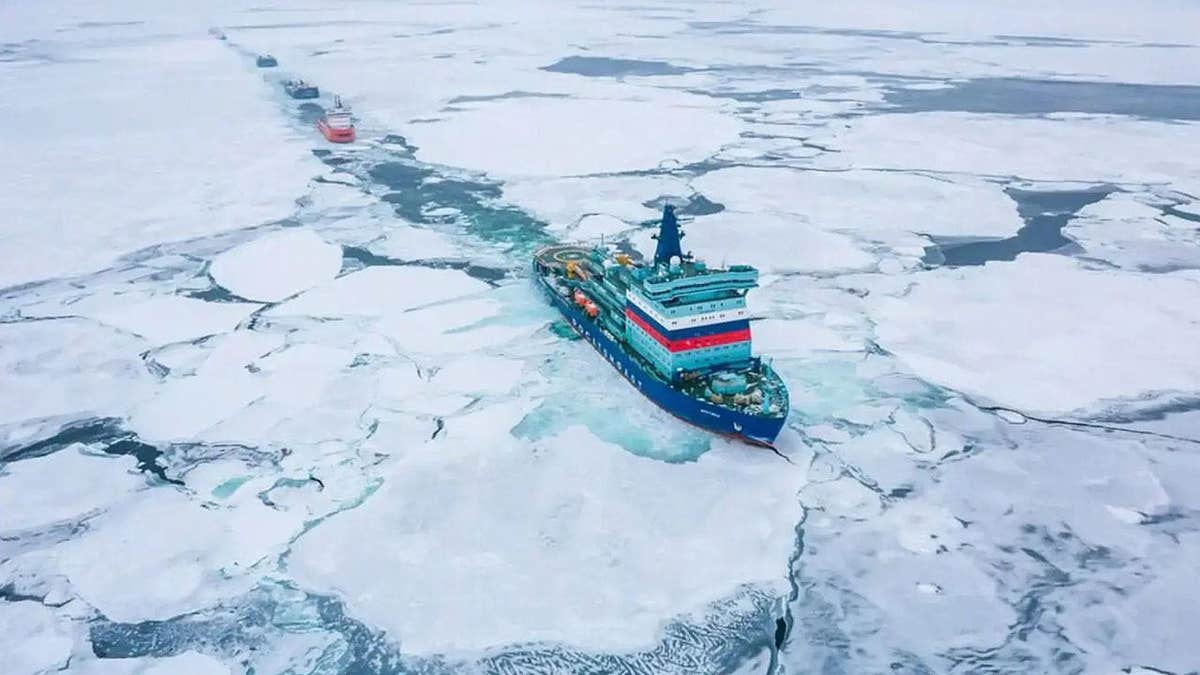
A Russian ship moves through Arctic waters on the Northern Sea Route, the corridor running along Russia’s northern coastline that connects European and Asian shipping lanes. (East2West news)
Sea Legend Shipping’s Dubai Tower left Ningbo-Zhoushan Port on Aug. 15 bound for Europe via Russia’s Northern Sea Route. The trip to Felixstowe, England, is expected to take roughly 20 days, China Daily reported on Aug. 17.
The launch comes as a new staff report from a U.S. congressional commission cautions that Russia’s growing isolation and reliance on Beijing are increasing China’s leverage over Moscow — and opening the door to expanded Chinese access in the Arctic.
Chang said the United States must answer with a more robust presence in the region. “We need to be in the Arctic, and President Trump has authorized more icebreakers,” he told News Outlet. “We are woefully short in that department.”
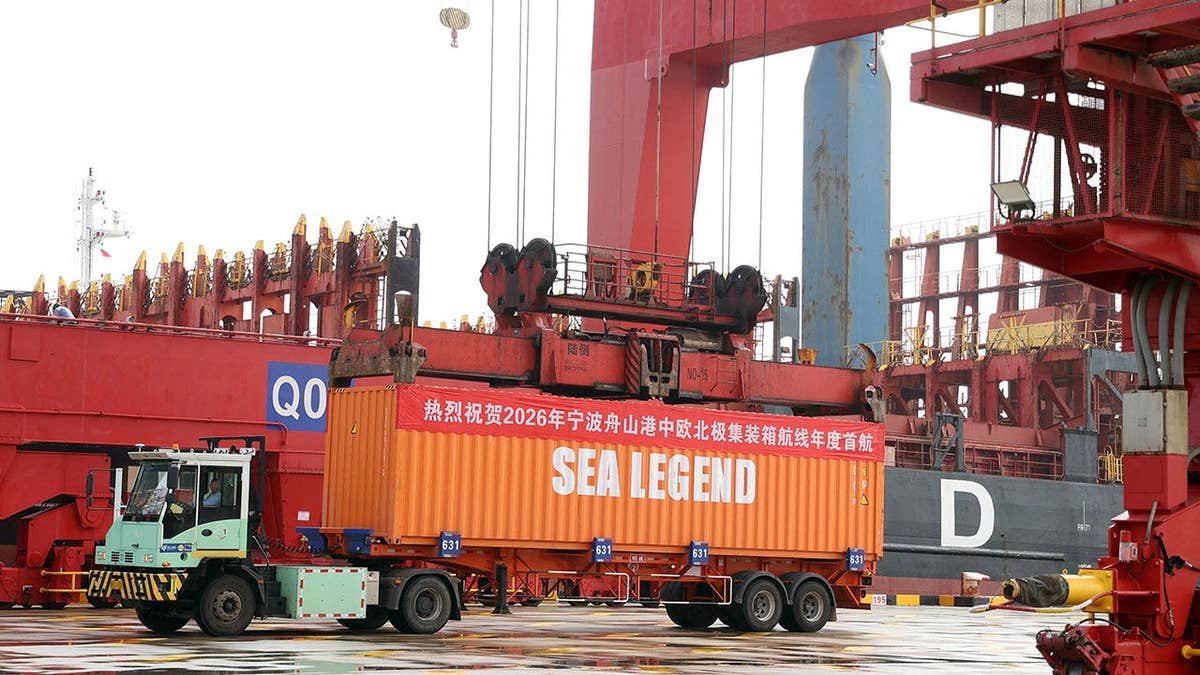
A banner reading “Warmly Congratulate the first annual voyage of the China-Europe Arctic Container Route at Ningbo-Zhoushan Port in 2026,” is displayed on a container at the Ningbo-Zhoushan port in Ningbo, China, on Aug. 15, 2026. (CN-STR/AFP via Getty Images)
A White House official told News Outlet on background, “The Arctic is a critical region for U.S. national security and the economy. As an Arctic nation, the United States will pursue its security and economic interests and ensure safety, stability, and prosperity in the face of growing competition from China and Russia.”
A fact sheet released Aug. 20 by staff of the U.S.-China Economic and Security Review Commission said Russia’s invasion of Ukraine and subsequent economic isolation from the West have “compelled Russia to accept a greater Chinese presence in the Arctic,” a region Moscow has traditionally regarded as central to its sovereignty and national security.
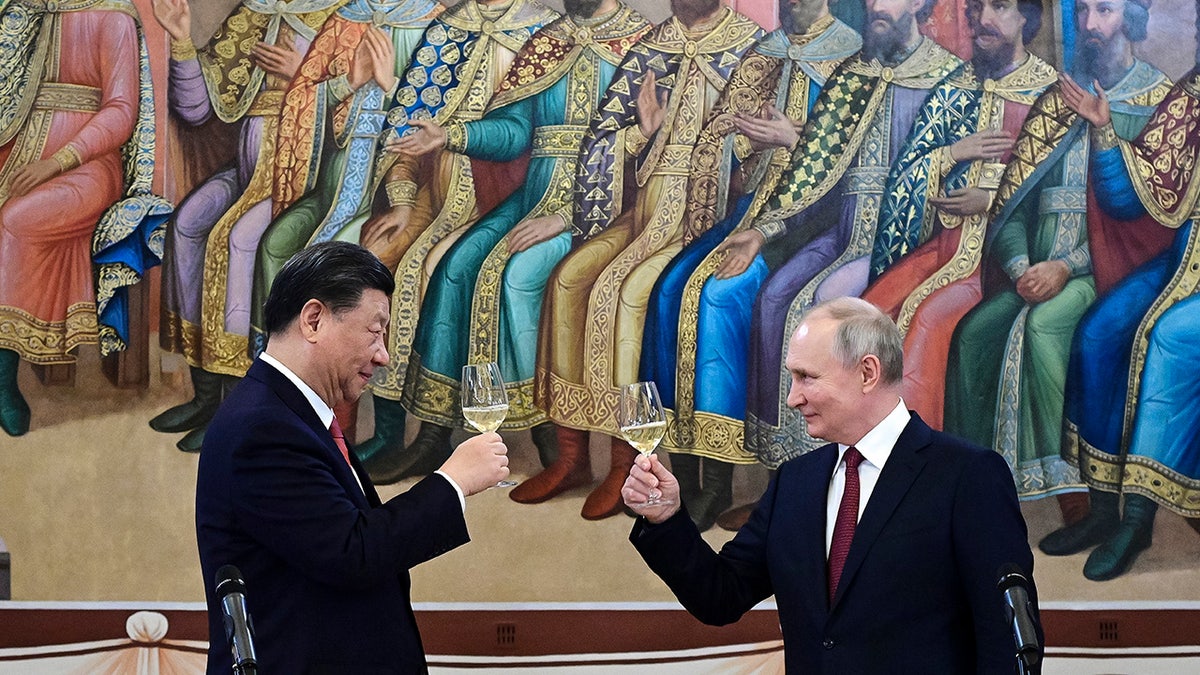
Russian President Vladimir Putin and Chinese President Xi Jinping toast at the Kremlin in Moscow, March 21, 2023. (Pavel Byrkin, Sputnik, Kremlin Pool Photo via AP, File)
The report said Chinese state-owned enterprises now hold a combined 20% stake in the U.S.- and EU-sanctioned Arctic LNG 2 project, while China and Russia are developing year-round commercial shipping along the Northern Sea Route. The two countries have also established a joint venture to manufacture ice-class container vessels, with the first ship planned to enter service in 2027.
The Pentagon’s 2024 Arctic Strategy similarly said changing climate conditions are increasing accessibility in the region while China seeks greater influence and access there. The strategy identified Beijing’s proposed “Polar Silk Road” as a vehicle for infrastructure and natural-resource investments in the Arctic and warned that growing cooperation between China and Russia could “‘alter the Arctic’s stability and threat picture.’”
For China-Europe commerce, the Northern Sea Route offers a radically different path from the traditional westbound journey through the Strait of Malacca, Indian Ocean, Bab el-Mandeb, Red Sea and Suez Canal.
“This of course avoids some choke points, like the Strait of Malacca, the Bab el-Mandeb, the Suez Canal, the Strait of Gibraltar,” Chang said. “So this is important for China.”
The new USCC report argues that China is increasingly benefiting from an asymmetric relationship in which Moscow needs Beijing more than Beijing needs Moscow. It says China has become indispensable to Russia since the 2022 invasion of Ukraine, giving Beijing growing leverage to obtain discounted energy and greater access to Russian military technology while avoiding the obligations of a formal alliance.
Energy is a major part of that imbalance. According to the report, China accounts for roughly half of Russia’s crude oil exports, while Russian crude represents only about one-fifth of China’s oil imports. The report says China has purchased approximately $372 billion in Russian fossil fuels since the invasion of Ukraine.
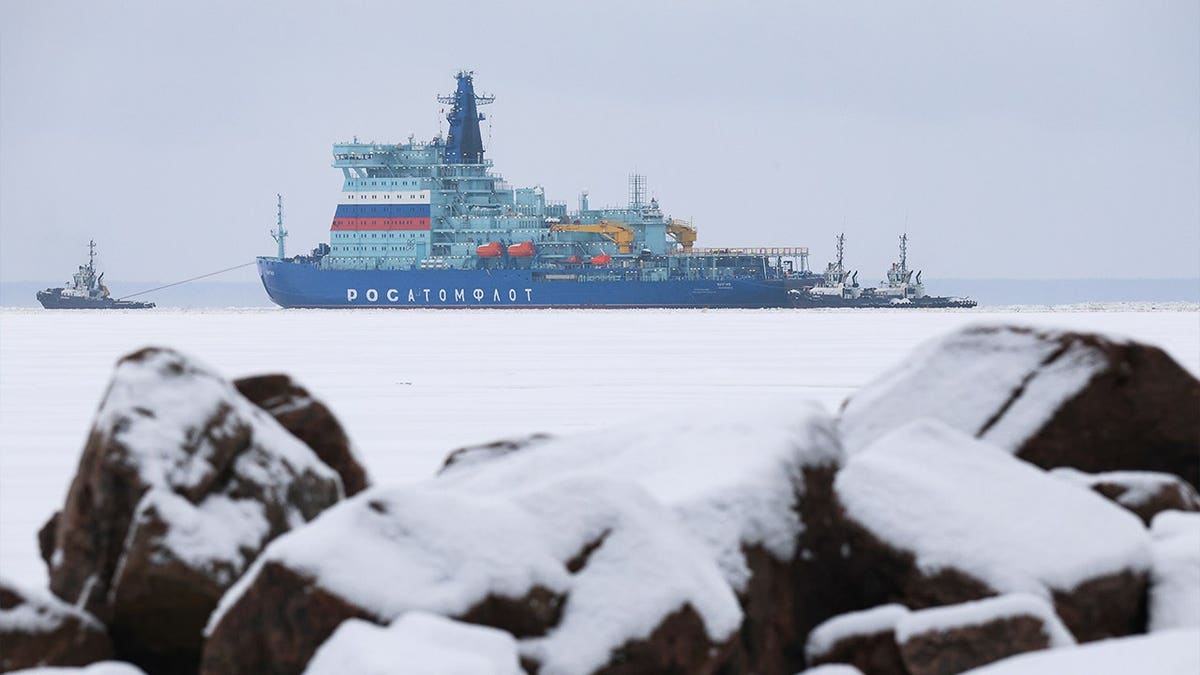
The nuclear icebreaker Yakutia entes the Gulf of Finland for sea trials in St. Petersburg. With the capability to break through ice up to three meters thick, it plays a critical role in Russia’s Arctic strategy. (Artem Priakhin/SOPA Images/LightRocket via Getty Images)
Moscow is now making increasingly aggressive use of the same Arctic passage to move oil east.
Reuters reported Aug. 11 that Russia had sent seven crude shipments totaling roughly 6 million barrels toward Asia through the Northern Sea Route so far this season, nearly half the amount transported during the entire 2025 season. China is the principal destination for those shipments, according to Reuters.
The growing Arctic activity comes as Washington has become increasingly concerned about Chinese and Russian cooperation close to Alaska.
Chang pointed to the Bering Strait — separating Russia from Alaska — as a strategic vulnerability even on the Arctic route.
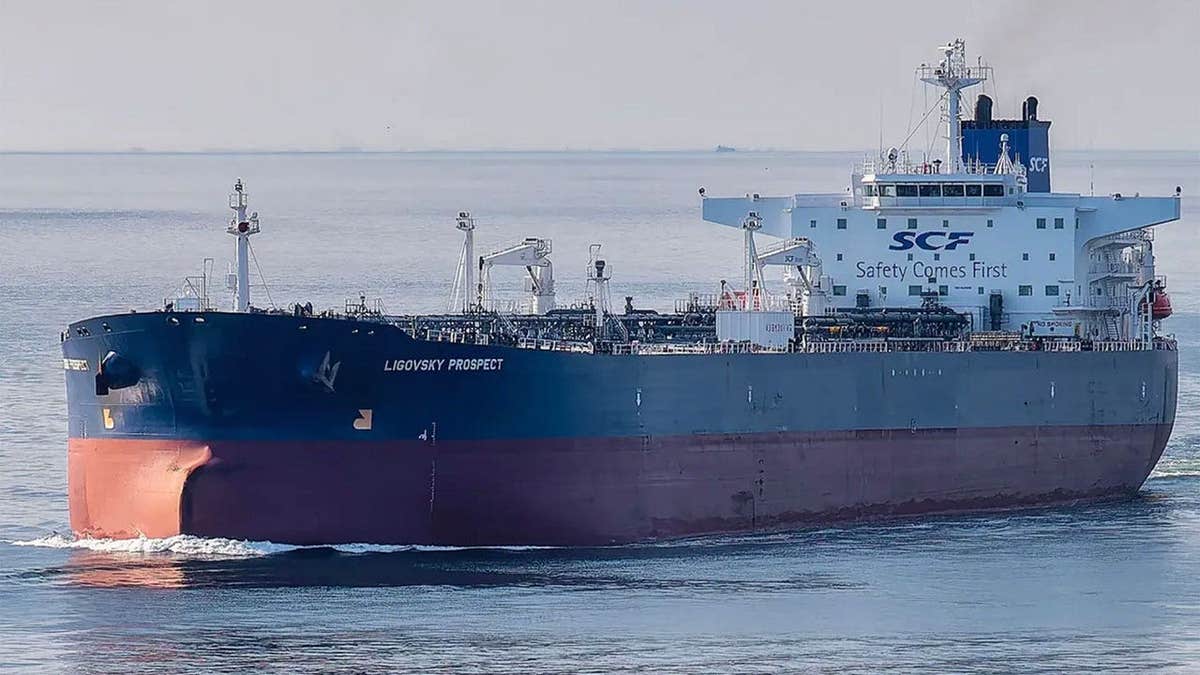
The Russian Aframax tanker Ligovsky Prospect navigates waters along Russia’s Northern Sea Route. (Marinetraffic/east2west)
“There is one choke point though, which is of interest,” he said. “You have to go between Russia on the west and our 49th state on the east. And that gives the U.S. some leverage over here.”
The military relationship is also expanding. The new USCC fact sheet says China and Russia had participated in at least 119 combined military exercises as of April 2026, while their joint naval operations in July included submarine, anti-submarine and drone activity. It also noted that Chinese bombers entered the Alaskan Air Defense Identification Zone for the first time during a joint China-Russia bomber patrol in 2024.
For Chang, the issue extends beyond whether the Northern Sea Route itself ever becomes a competitor to Suez.
“There are some U.S. national security strategists who say, ‘Oh, the Arctic is a distraction. There are more important places in the world,’” Chang said.
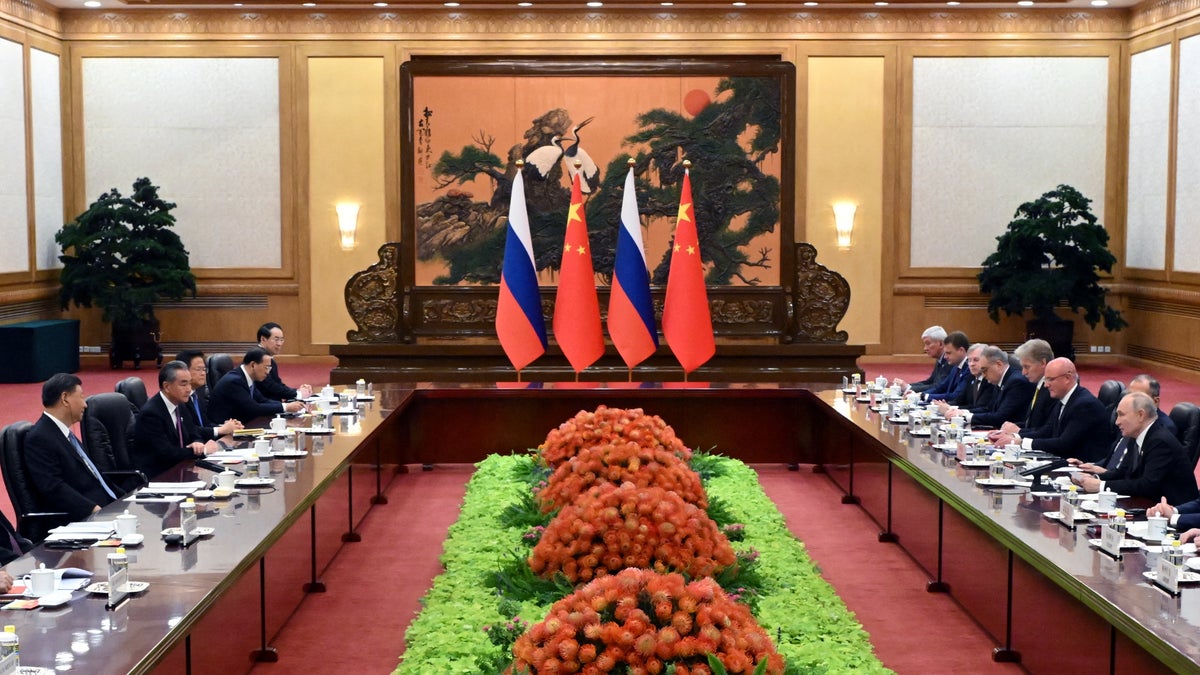
Russian President Vladimir Putin and Chinese President Xi Jinping, with their delegations, hold talks at the Belt and Road Forum in Beijing, Oct. 18, 2023. (Sputnik/Sergei Guneev/Pool via Reuters)
“But even more important, regardless of what one thinks of the importance of the Arctic, the Chinese and the Russians are pressing us in the Arctic,” he added. “So we’ve got no choice to respond. Whether we think the Arctic is strategic or not, the Chinese and Russians are there in force. We have to be there too.”
News Outlet has reached out to the Chinese and Russian embassies in Washington and the White House for comment.