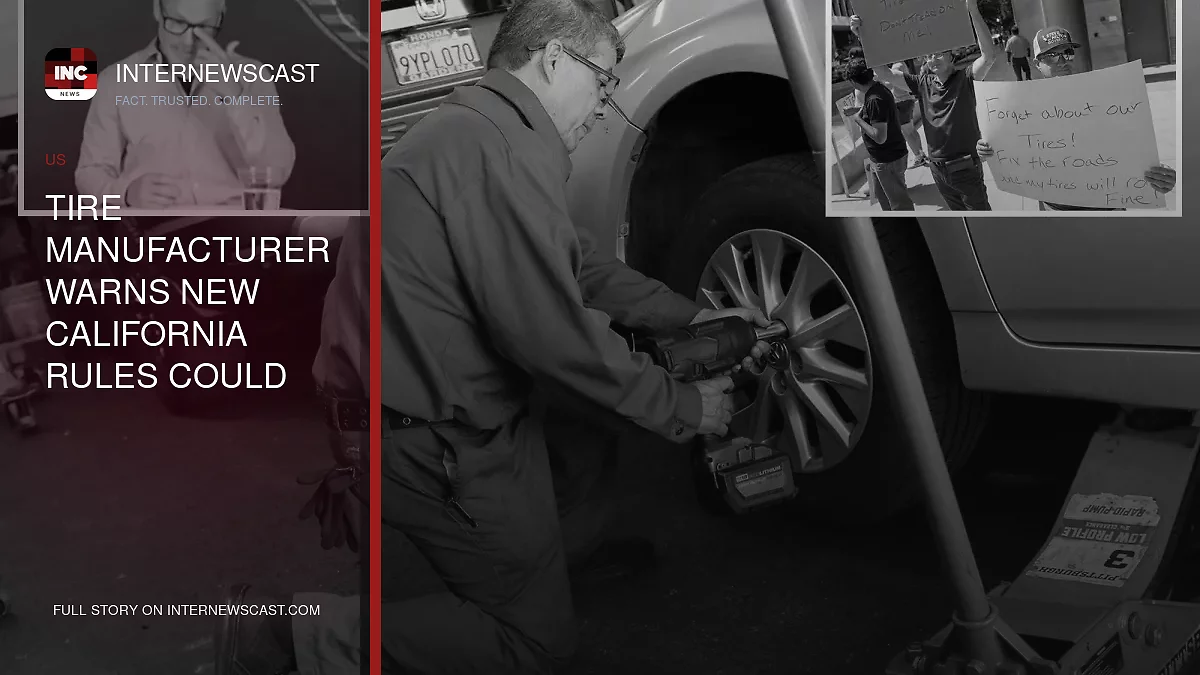

A top global tire manufacturer is sharply criticizing California Gov. Gavin Newsom’s new tire rules, warning that the regulations could drive up prices for motorists and disrupt much of the replacement tire market.
Speaking at a lengthy press conference Monday, Dunlop Tires North America President and CEO Darren Thomas said the policy would raise manufacturing costs — expenses he said are likely to be passed directly to consumers.
Thomas also questioned whether the rules could create unintended consequences involving tire safety, product durability and potential environmental impacts.
The California Energy Commission last week approved a plan to gradually eliminate the sale of replacement tires that fail to meet new energy-efficiency requirements, a move that could affect as much as 70% of the current market.
At the center of the regulations is a tire’s “rolling resistance” — the amount of energy required to keep a vehicle’s tires moving along the road.
Supporters, including Democrats, argue that lower rolling resistance can help vehicles consume less gasoline or electricity, improve mileage and ultimately make driving less expensive.
But Thomas pushed back on that promise, saying: “Will prices increase? You bet they’ll increase. It’s going to be a real issue, in terms of cost, it’s going to go up. By how much? We don’t know. Is there going to be fuel savings? In theory.”
Dunlop Tire executives said California motorists could already reduce costs and boost tire performance through a simpler step: keeping their tires properly inflated.
Thomas continued: “Generally, when you attempt to regulate something, you don’t understand, or don’t care much about, you create bad policy. And that’s probably what we have here.”
The drastic move is being justified on two fronts: reducing emissions and helping Californians save money on gas — potentially up to $1 billion a year, according to California Energy Commission estimates.
Thomas noted the impact could be felt more by drivers than larger brands like his. “We can all do it tomorrow,” he said. “Will it accomplish the needs you have for your vehicle and your driving use? The answer is no.”
He said the standard could reduce carbon emissions but called the regulation “overreaching.” He argued proper tire inflation can already improve fuel efficiency and suggested education may be more effective than a broad mandate.
He also warned the rules could disadvantage smaller manufacturers and potentially create monopolies.
Newsom has defended the new replacement tire efficiency regulations, calling them a “good choice.” The Post has reached out to his office for comment on Dunlop’s concerns.
Major tire manufacturers are divided over California’s new Replacement Tire Efficiency Program (RTEP), with Michelin and Bridgestone supporting the regulations, while Goodyear and Dunlop oppose them.
But lawmakers and political figures on the other side of the aisle have blasted the rules as another example of California’s regulatory overreach.
Former Los Angeles mayoral candidate Spencer Pratt called the regulations a “scam” that could ultimately drive up costs for drivers.
Republican Rep. James Gallagher of California also slammed the policy, arguing that the state is using high gas prices to justify regulations that could make tires more expensive.
Critics have pointed to estimates from the Tire Industry Association that average tire prices could rise from about $81 to as much as $157 under the new rules. For a driver replacing all four tires, that could mean hundreds of dollars in additional costs.
Some opponents have also questioned whether the efficiency requirements could affect tire performance, including grip, durability and resistance to flats.
The concerns come as California drivers already face some of the nation’s highest transportation cost which add a dent to the state’s 30 million drivers.