
Retired California bureaucrats are collecting a staggering $6.3 billion annually in pension payments, with some receiving as much as $462,000 a year.
As California’s public employee pension shortfall reaches at least $153 billion, the California Post has found that more than 63,000 retirees receive annual payments of $100,000 or more from the California Public Employees’ Retirement System (CalPERS), the largest public pension fund in the United States.
The scale of the payouts, along with recent efforts to increase pension benefits further, has drawn criticism from local elected officials. They also receive CalPERS benefits but say rising pension costs are putting additional pressure on local government budgets.
“In the 1990s and the early 2000s, similar pension packages nearly bankrupted this state and many of our local municipalities,” Santa Barbara County Supervisor Bob Nelson told lawmakers last year. He said his county now has to spend an additional $100 million annually to keep pace with rising pension costs.
“Those payments came at real costs: Reductions to pay public safety staffing and fewer resources to address mental health, homelessness and criminal justice reform,” he added.
The number of retirees receiving six-figure pensions, 63,107, is more than twice the total recorded in 2018, when over 26,000 retirees were collecting at least $100,000 a year. In 2005, only 1,841 retirees received pensions in that range, according to the Orange County Register.
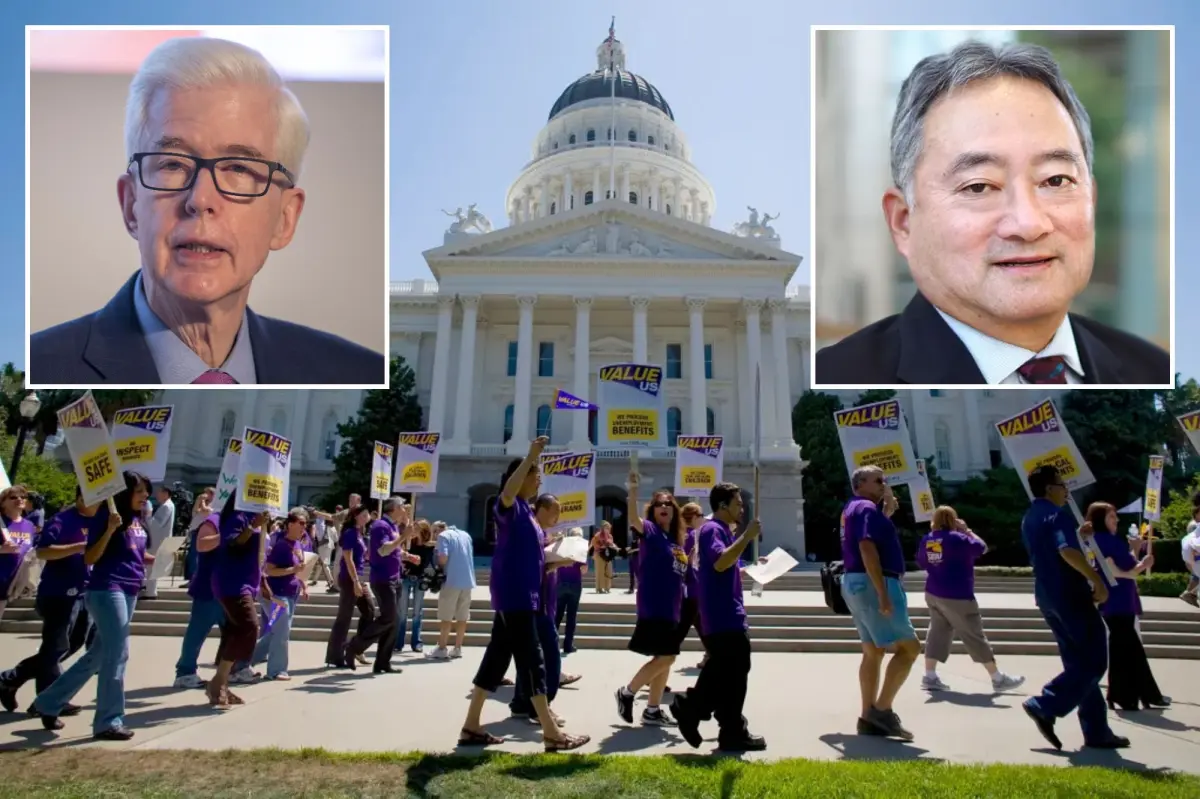
Experts who spoke with the California Post have described the pension growth as a financial time bomb. They point to a 1999 decision by former Democratic Gov. Gray Davis to sign legislation that substantially increased retirement benefits for state employees.
“If I knew then what I know now, I would never have signed SB 400,” Davis said in 2012, referring to the law.
Much of CalPERS operates as a defined-benefit system, financed through employee contributions, investment returns and payments from government employers—in effect, taxpayer dollars.
“The system is $153 billion short on assets needed to pay for promised benefits, the largest single pension debt in the country,” Zachary Christensen, who leads the Pension Integrity Project at the Reason Foundation, told The Post.
“The growing number of retirees receiving lavish public pension benefits in California rightfully frustrates taxpayers and will likely worsen in the years ahead,” Christensen added.
The average annual pension payment is $44,209, according to a Post analysis. At the highest end of the scale, however, the number of retirees receiving at least $300,000 a year has risen in recent years.
There were 21 such retirees in 2023. By last year, that figure had increased to 36.
Curtis Ishii topped the list. A former managing investment director for fixed income at CalPERS, he received $462,784 last year and has ranked among the system’s biggest pension recipients since retiring in 2018 after more than 40 years in public service.
His substantial pension is partly tied to his final salary: Ishii earned $688,000 in 2017. Government pensions are calculated using a formula based on an employee’s annual salary and years of service, while investment officers are among California’s highest-paid state employees.
Michael D. Johnson, a former Solano County administrator, ranked close behind with a pension of $426,028 last year. Johnson became county administrator in 1992 at age 43, after 19 years in the public sector. His total gross pay in 2010, his final full year with the county, was $354,197.
His annual pension has increased over time as CalPERS applies cost-of-living adjustments. Johnson previously held the top spot, receiving a $372,000 pension in 2019.
Steve Maguin rounded out the top three. He spent 23 years in solid waste management and served as chief engineer and general manager of the Los Angeles County Sanitation Districts. His salary was $125,693 in 2012, and he received $418,614 from CalPERS last year.
Maguin retired in 2012 and died in January, according to a LinkedIn post.
“I talked with him not long after his retirement and he seemed happy and fulfilled,” one user commented in response to news of his death.
The rest of the CalPERS beneficiaries who got lavish payments totaling more than $350,000 last year are:
- Joaquin Fuster, professor of cognitive neuroscience at UCLA, with $385,479.57 in pension payments. Tenure-track and ladder-rank professors at UCLA earn a median salary of $294,100.
Not all recipients have fully retired, with some moving on to non-government jobs. For example, Di Stasio is listed as the president of the Large Public Power Council, where he advocates for public power systems in Washington, DC.
Huge annual pensions may eventually phase out after California lawmakers passed a 2013 law that ties public pensions to IRS limits.
Still, there are many going into retirement with pensions formed before the 2013 rules went into effect. CalPERS’ total payout has increased in recent years, from $29.1 billion in 2021-22 to $34.6 billion in 2024-25. The total number of members receiving pensions also grew.
All that will put strain on CalPERS to keep up with its benefits obligations, despite a banner year in investment returns.
“That has been the question that has been discussed for years and years in all public sector jobs,” said Dr. Jeffrey Goodrich, a professor with UCLA’s Financial Management Program and a wealth advisor at JCG Private Wealth Management. “They’re supported by the communities or the state, or the cities, or the municipalities, and those numbers are getting bigger and bigger all the time, and they’ve reached tremendous sums.”
Goodrich said the rising number of bulging pensions could be attributed to more people taking advantage of the benefits and staying longer in public service. People may also just be getting higher salaries, which the pension formula is based on, he added.
Christensen blamed former Gov. Davis, who along with state lawmakers in 1999 gave all public workers and retirees a massive pension benefit increase.
“The impact of this decision has played out over decades; workers who were just getting started in their careers at the time are now reaching retirement and cashing in on their sweetened CalPERS benefits,” Christensen said.
Back then, Davis approved a massive expansion of benefits as the pension system was flush with cash. CalPERS had assured then there would be no cost due to “booming stock market and investment strategies.”
The changes enabled state and local government employees to stop working at an earlier age to collect more retirement pay and made more lucrative pension calculations retroactive.
But economic crises occurred, from the dot-com bubble to the Great Recession. The increased benefits combined with investment losses caused annual government contributions to CalPERS to jump from $1.6 billion in 1999 to $26.7 billion this fiscal year.
Despite the ballooning cost, unions were still pushing for pension increases as recently as this year. Gov. Gavin Newsom ended up vetoing a bill last month that would have expanded pension benefits for police officers and firefighters.
“This is an era of California history I do not wish to repeat,” Newsom wrote in his veto statement, citing the pension crisis before the 2013 law.
Large public pension payouts may continue for at least another decade before the group of workers most affected by the state’s 2013 pension reforms starts retiring, Christensen explained. Until then, unions — a major political force in Sacramento — will continue seeking higher payouts.
“Very strong unions make sure their members get the compensation they deserve, and you’re hoping that the city, or the municipalities, or the counties have good negotiators on their side,” UCLA’s Goodrich said.
“That’s an unknown factor to say, can we do this forever, and the answer is I don’t know,” he added.