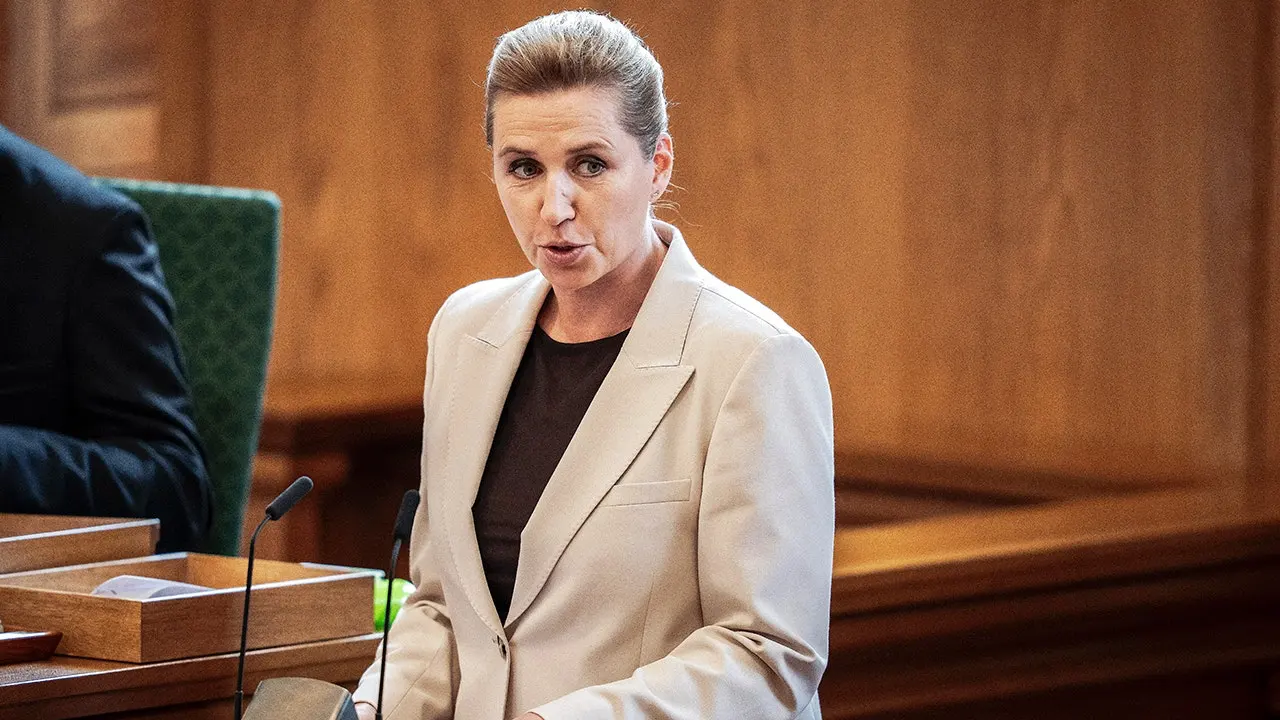
Danish Prime Minister Mette Frederiksen, a prominent figure on Europe’s center-left, has stirred intense debate across the continent after speaking unusually bluntly about what she described as Europe’s struggle to confront radical Islam within some migrant communities.
Her remarks followed the migration crisis in Ceuta, Spain’s North African exclave, and came as she criticized Spanish Prime Minister Pedro Sánchez during a special Danish Parliament session focused on the events in Ceuta.
Frederiksen was responding to a question from a far-left lawmaker who suggested Denmark had shown insufficient “solidarity” with Spain in the face of “anti-democratic forces” putting pressure on Europe. According to an English translation, she replied, “If we talk about undemocratic forces, then Russia is our biggest enemy. The problem is that a big enemy has started to grow from within, and it is foreigners who have come to Europe.”
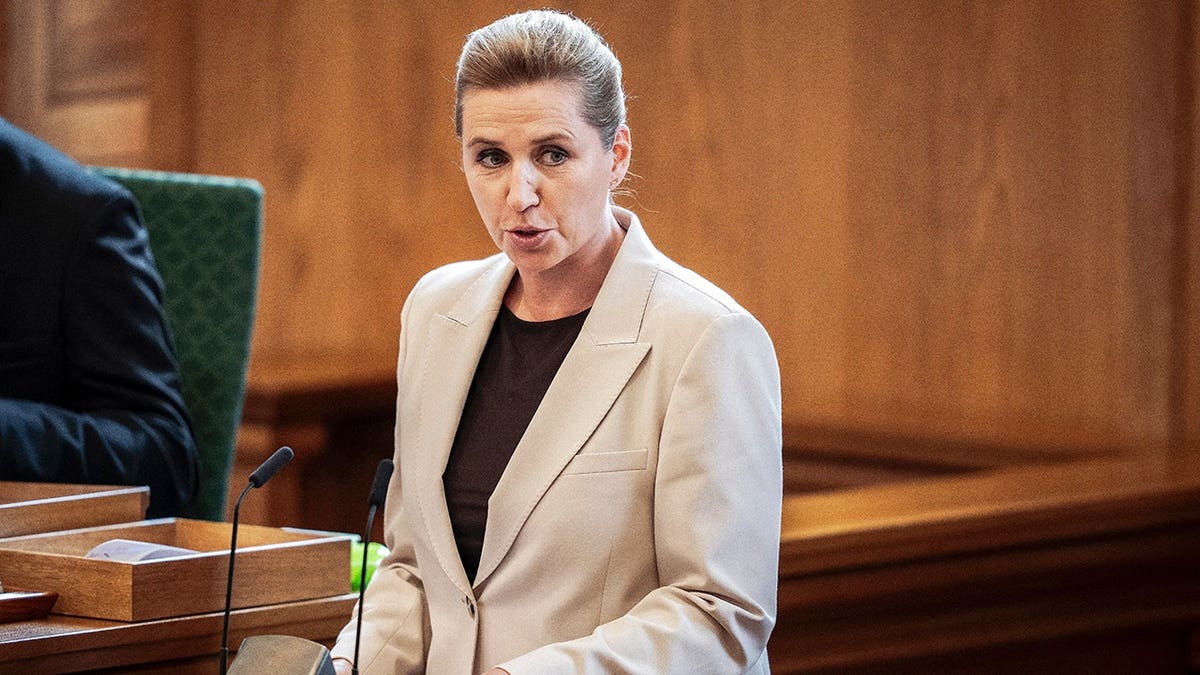
Prime Minister Mette Frederiksen addressing the Danish Parliament. (Mads Claus Rasmussen/Ritzau Scanpix/AFP via Getty Images)
Without directing her criticism at Denmark’s broader immigrant population that has integrated into society, Frederiksen went on to cite “Hamas supporters,” individuals who carry out terror attacks against European societies, and those who reject what she called core European values. “It is people who sympathize with some of the darkest forces in this world,” she said. “So, Europe is threatened.” She added that the threat, in her view, now comes both from outside Europe and from within, saying the issue was not a dispute between Copenhagen and Madrid but rather “people with an Islamic background who do not want the open, free European society, unfortunately.”
Daniel Schatz, a Sweden-based foreign policy analyst and author, told News Outlet that Frederiksen’s language reflects a major political shift. “What is striking is not that a conservative politician is talking about illegal immigration, failed integration and Islamist extremism, it is that one of Europe’s leading center-left prime ministers is saying it in such blunt terms,” he said. “That tells you how far the European immigration debate has shifted.”
Frederiksen won power in Denmark’s 2019 election on an agenda Reuters described as combining ambitious climate reforms, a lower pension age for manual laborers and tougher migration rules. Even before she took office, Denmark had some of Europe’s strictest asylum policies, including a 2018 law aimed at so-called “parallel societies.” Under that measure, authorities could demolish or sell social housing in areas where more than half the residents were classified as having a “non-Western” background, provided certain conditions were met. Refugees living in those areas were also barred from family reunification.
In 2021, Frederiksen’s government advanced another hard-line immigration measure, introducing a deportation law that allowed refugees to be sent back to their countries of origin if Denmark judged those countries to be safe, even in cases where Copenhagen had no diplomatic ties with them. Around the same period, the European Commission said Danish legislation permitting asylum seekers to be transferred to third countries while their claims were processed was “incompatible with EU law.”

Escorted by the Spanish army, migrants who crossed into Spain return to Morocco from the Spanish enclave of Ceuta on Saturday, Aug. 1, 2026. (AP Photo/Antonio Sempere)
Since June, Frederiksen has been a leading voice in opposition to the immigration policies of Spain’s Pedro Sánchez, telling Parliament, “It is no secret that I and the Spanish Prime Minister deeply disagree on immigration policy… I and we will not accept that Danish society has to pay the price for decisions in Spain that we fundamentally disagree with.”
On Aug. 1, Frederiksen joined conservative Italian Prime Minister Giorgia Meloni and 20 other EU government leaders in a letter saying the EU “cannot allow mass crossings, the instrumentalization of migration or other hybrid threats to create the perception that illegal entry into the European Union is possible.”
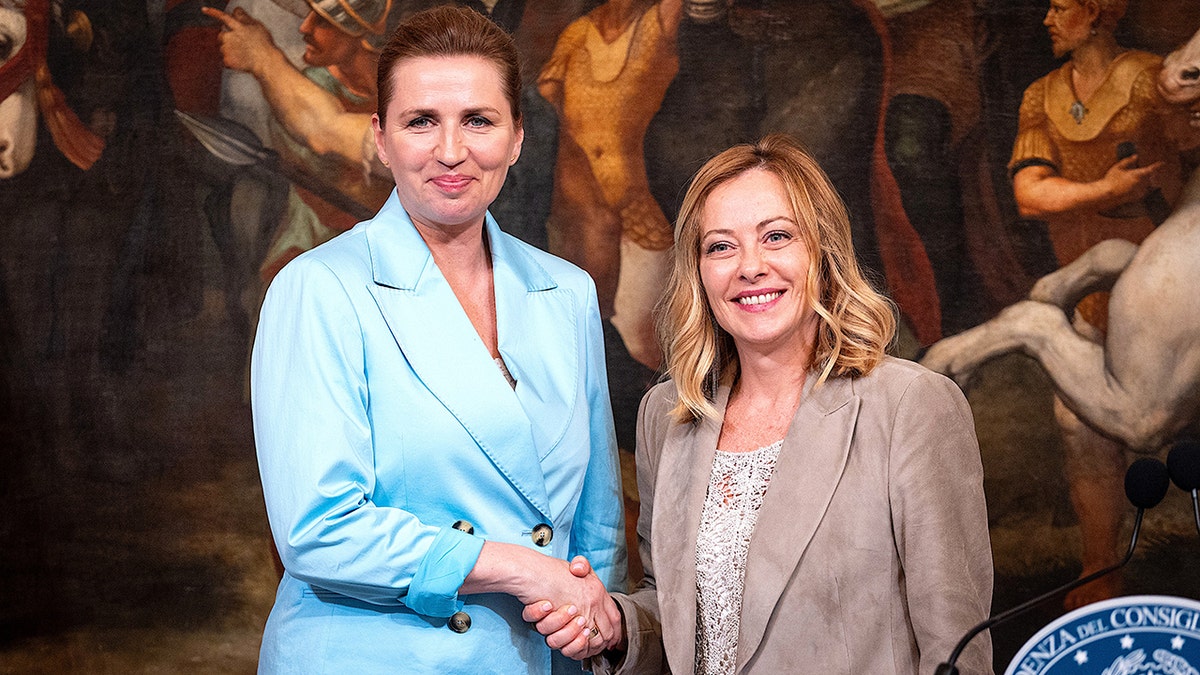
Italian Prime Minister Giorgia Meloni and the Prime Minister of the Kingdom of Denmark Mette Frederiksen addressed the media during a joint press conference after a meeting at Palazzo Chigi. (Stefano Costantino/SOPA Images/LightRocket via Getty Images)
The two, currently the only female heads of government in the EU, followed that letter with an Aug. 10 joint statement saying they “are both proud of Europe’s Christian cultural heritage and we want to protect it. We expect that those who arrive in our countries and choose to make Europe their home respect our values and do not try to impose ways of life that we do not share. We believe that this is the right path to protect Europe and our common values. And we believe that millions of Europeans share this conviction.”
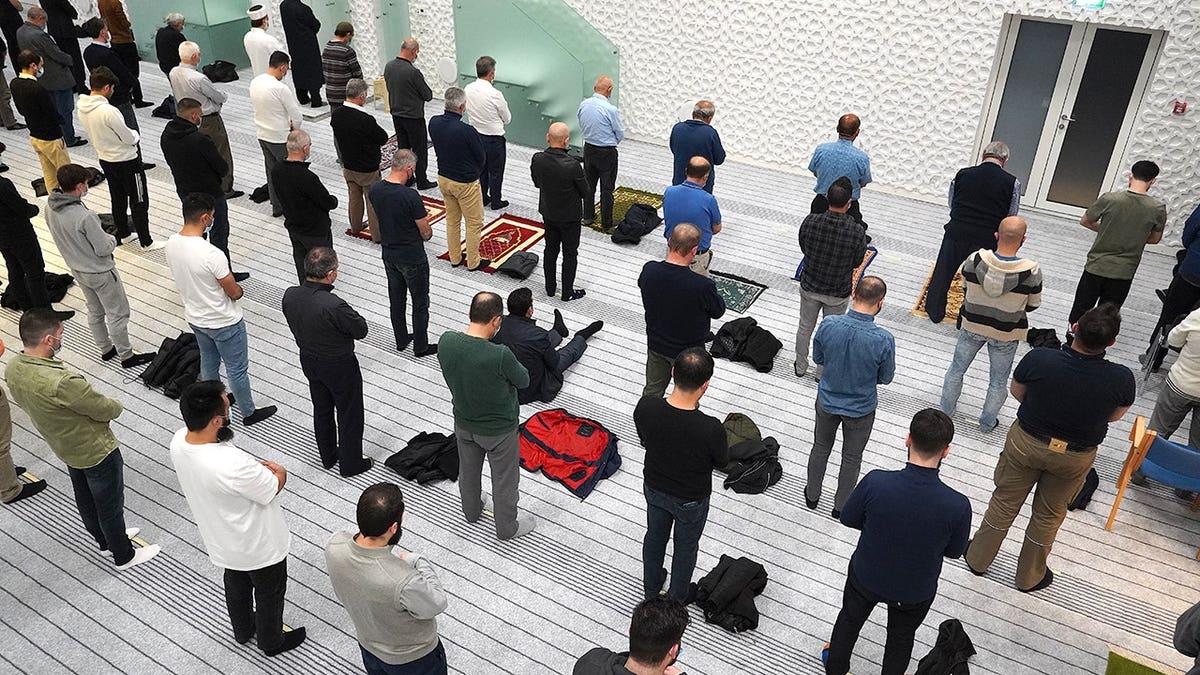
File photo showing men praying at a Mosque in Denmark. (Davut Colak/Anadolu Agency via Getty Images)
Emma Schubart of the Henry Jackson Society told News Outlet, “Frederiksen is right to name the ‘enemy within’. Europe has spent years pretending that uncontrolled migration and failed integration come without consequences. They do not… Parallel societies have taken root, Islamist extremism has been allowed to fester and support for groups such as Hamas is no longer confined to the margins. Denmark understands the cost.”
Daniel Schatz said Frederiksen “is essentially arguing that Europe faces threats from two directions: Russia from outside and anti-democratic extremism from within. For a center-left European leader, that is remarkably strong language.” He noted Frederiksen’s “political formula has been straightforward: protect Denmark’s generous system of public benefits and social services, control the border and deny the populist right a monopoly on immigration. For an American audience, that is probably the most important thing to understand about the Danish model.”
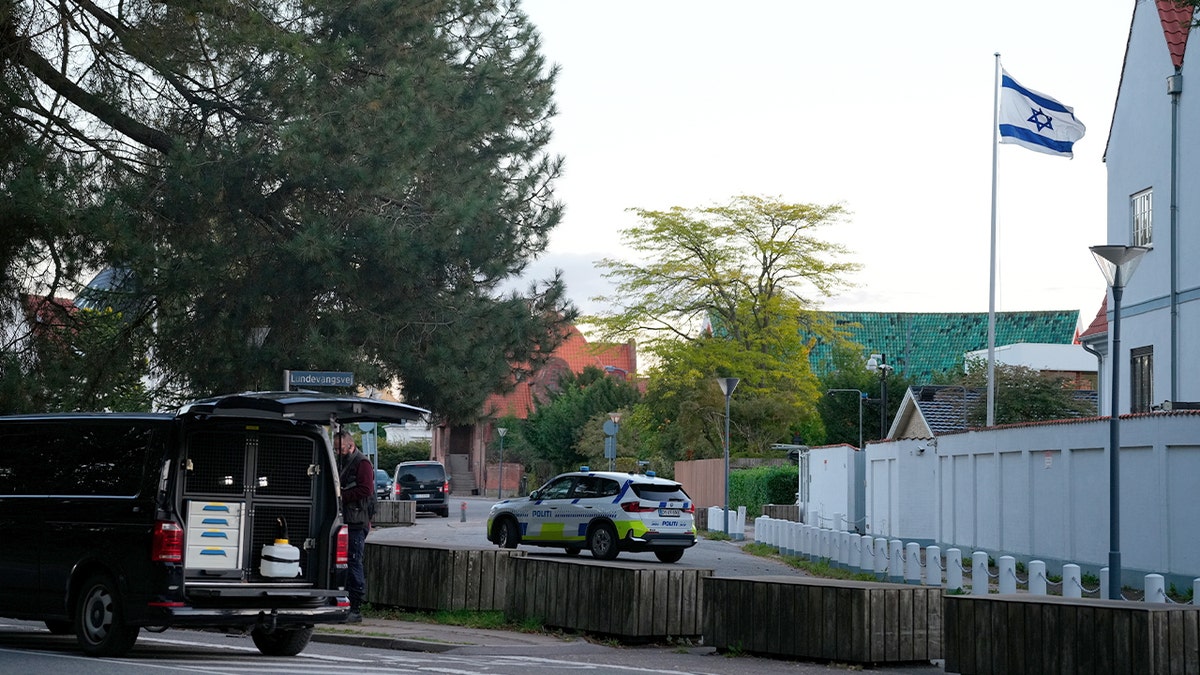
A police vehicle is seen near the Israeli embassy in Copenhagen, as police investigate two explosions near the site, on Wednesday, Oct. 2, 2024. (Emil Helms/Ritzau Scanpix via AP, File)
Frederiksen’s position is important, he said, because she did not move politically “because Danish voters suddenly became concerned about immigration. She moved because she realized years ago that many of them already were.” He added, “The important distinction is that this is not an argument that immigrants are inherently criminal. It is an argument that a democratic society must be willing to confront failed integration when it occurs.”
Schubart added, “Other leaders now need to show the same courage, secure their borders, deport those with no right to remain and make clear that integration into our laws and values is not optional.”


