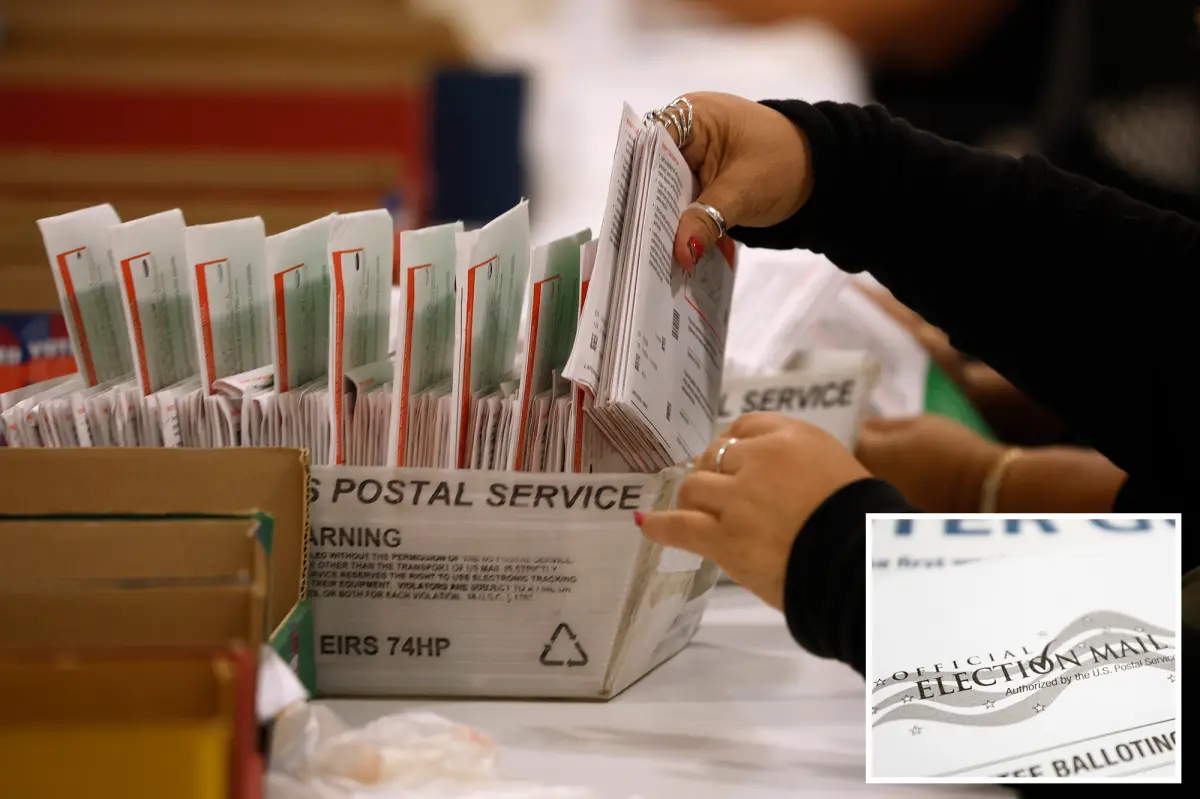

A federal appeals court has found that South Carolina’s mail-in voting rules are unconstitutional, faulting the state for giving older voters broader access to absentee ballots than younger residents.
The decision from the Fourth Circuit Court of Appeals centers on South Carolina’s absentee-by-mail system and a provision that gives voters age 65 and older special access to that option.
Under South Carolina law, most voters who want to cast a ballot by mail must qualify under specific categories, such as being disabled or being outside the country during the early voting period.
But the state carved out an exception for voters over 65, allowing them to vote absentee by mail without meeting those additional requirements. The Fourth Circuit ruled that age-based distinction violates the Constitution.
“By granting voters aged sixty-five and older unconditional access to absentee-by-mail voting while conditioning that same option for younger voters on eligibility categories, documentation, and a rigid deadline, the state allocates voting opportunities unequally based solely on age,” U.S. Circuit Chief Judge Roger Gregory wrote in the order.
The lawsuit was filed in 2023 by a group of younger voters who sued the South Carolina Elections Commission, arguing that the rule ran afoul of the 26th Amendment.
A lower court had rejected their claim at the outset, but the challenge moved forward on appeal and ultimately reached the Fourth Circuit.

The appeals court’s ruling returns the case to the lower courts with guidance on how it must be resolved. Gregory said South Carolina must either make unrestricted absentee-by-mail voting available to every voter or deny that unconditional option to all voters.
That is unlikely to be the end of the question, however, as representatives of South Carolina say they plan to appeal further, potentially reaching the Supreme Court.
The order came the same week that the US Supreme Court issued a largely favorable ruling for President Donald Trump’s effort to limit mail-in ballots across the country.
Former White House deputy counsel Gene Hamilton said federal agencies such as the Postal Service can now move forward with parts of Trump’s election-integrity order, including new ballot-mail standards and efforts involving state citizenship lists, as opposing states wait to see which concrete federal actions could form the basis of new lawsuits.
Further litigation is expected on that front as well.