
A growing number of Americans are finding their next pizza fix in a place many might not expect: the neighborhood gas station.
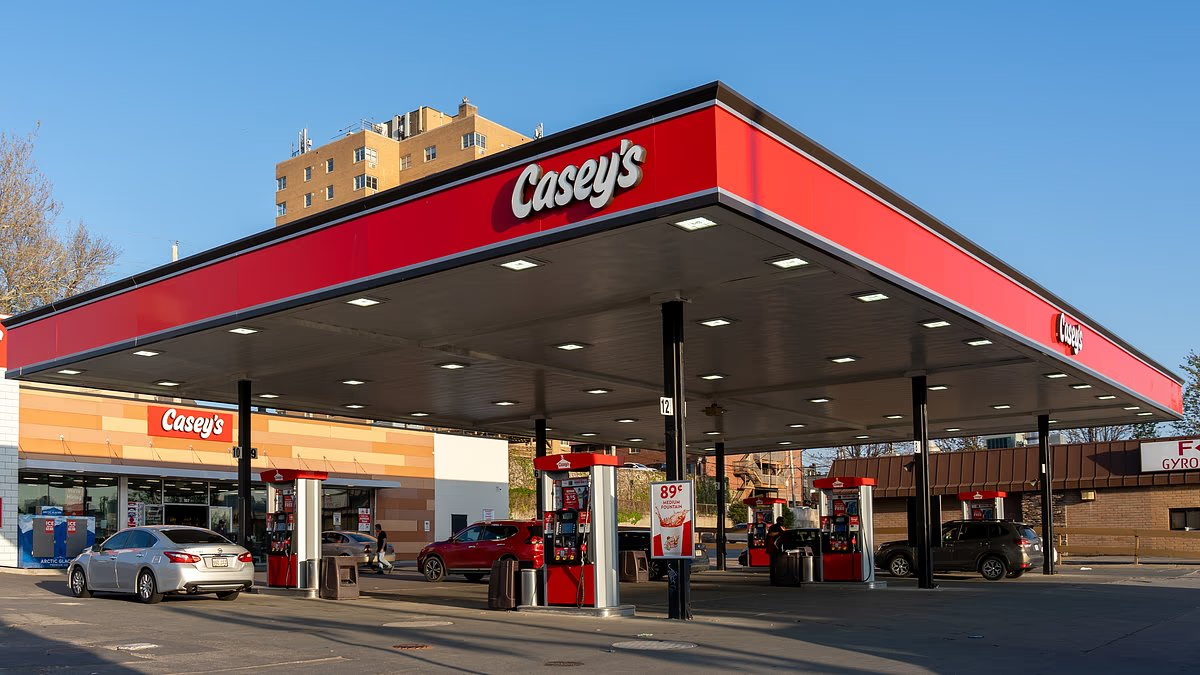
Casey’s, the Midwestern convenience store brand long associated with fuel pumps, grab-and-go snacks and lottery tickets, has steadily built a pizza empire of its own — and the company is now preparing for a major push into Texas.
According to Bank of America Research, Casey’s has climbed to become the fifth-largest pizza chain in the United States, placing the once-under-the-radar convenience store operator alongside some of the most recognizable names in fast-food pizza.
Tom Brennan, Casey’s chief merchandising officer, confirmed the ranking in an interview with Fortune and said the company is gaining ground as its store network and food business continue to expand.
‘You don’t hear the other big pizza players talk about Casey’s,’ Brennan told Fortune. ‘But at the same time, it’s evident from our growth … we’re taking share as we continue to grow.’
Today, Casey’s operates nearly 3,000 locations in 19 states. Roughly half of those stores are in towns with populations under 5,000, while about two-thirds serve communities with fewer than 20,000 residents.
That deep presence in small-town America has become one of Casey’s biggest competitive strengths in the pizza market.
In fact, Casey’s says around half of its stores have no national pizza chain operating within what it defines as a competitive distance, giving the gas station pizza brand valuable room to grow.

Casey’s, the Midwest convenience-store chain known for selling gasoline, snacks and lottery tickets, has quietly transformed itself into one of America’s biggest pizza businesses

The chain has become the country’s fifth-largest pizza operation, according to Bank of America Research, putting the humble gas station in direct competition with some of the biggest names in the pizza industry

Casey’s chief merchandising officer Tom Brennan confirmed the ranking to Fortune, saying the company is ‘taking share’ as it continues to grow
That means Casey’s is providing an option where the nation’s biggest chains don’t have stores at all.
Casey’s pizza is generally cheaper than its competitor’s products: a large pie costs around $13.99 while Domino’s, Papa Johns and Pizza Hut’s pizza are priced closer to $20, according to a report from William Blair.
Combine the appeal to inflation-weary customers with the chain’s recent virality on social media, and Casey’s is experiencing a genuine boom.
Prepared food and dispensed beverage same-store sales growth exceeded those of Domino’s in 18 of the last 20 quarters, according to Wells Fargo data.
Pizza was first added to Casey’s menu in 1984, and the chain has since become known for unusual offerings – including taco pizza and breakfast pizza, which features sausage gravy, egg and cheese.
The company makes its dough from scratch and uses pizza ovens inside its stores, helping it distinguish itself from the stereotypical image of gas-station food sitting under a heat lamp.
That reputation has begun spreading well beyond the Midwest.
Videos of Casey’s pizza have become a recurring trend on TikTok and YouTube, with creators documenting their trips to the chain and often expressing surprise that a gas-station pizza can actually be good.
And Gen Z appears to be taking notice.

Videos of Casey’s pizza have become a recurring trend on TikTok and YouTube, with creators documenting their trips to the chain and often expressing surprise that a gas-station pizza can actually be good

Casey’s social team found that its penetration among Gen Z has increased by six percentage points over the past three years based on engagement
Casey’s social team found that its penetration among Gen Z has increased by six percentage points over the past three years based on engagement.
The company has embraced the online attention rather than shying away from its gas-station identity.
‘What underpins all of this is just this incredible fandom and brand love that we’ve generated,’ said Brennan.
The rise comes at a challenging time for the traditional pizza industry.
The roughly $31 billion US quick-service pizza category declined in 2025 after barely growing the year before as Americans appear to be losing some of their appetite for traditional pizza chains.
But Casey’s unexpected growth despite this trend is due to the company carving out a different niche by combining pizza with the convenience of a gas station.
Customers can fill up their tanks, grab groceries and pick up a freshly made pizza all in one stop – often at a lower price than they might pay at a traditional pizza chain.
And Casey’s has several advantages that allow it to keep prices competitive.

Casey’s unexpected growth despite the downturn for traditional pizza joints in the industry is due to the company carving out a different niche by combining pizza with the convenience of a gas station

Casey’s stores are also company-owned rather than franchised, meaning Casey’s does not have to pay franchise royalties or fees
Join the discussion
Would you trust your local gas station more than a traditional pizza place for a fresh, tasty meal?
Part of the answer is scale. Unlike a standalone pizza restaurant, Casey’s sells groceries, fuel, tobacco and other goods under the same roof, allowing it to spread labor and fixed costs across multiple revenue streams.
Its stores are also company-owned rather than franchised, meaning Casey’s does not have to pay franchise royalties or fees.
Rising costs are providing another advantage. Smaller convenience stores have been forced to raise fuel prices as labor and other expenses climb, helping larger chains such as Casey’s improve their fuel margins and giving them more room to keep pizza prices competitive, wrote Phillip Blee, an equity analyst at William Blair.
The strategy is paying off. Casey’s earnings before interest, taxes, depreciation and amortization have grown at a compound annual rate of 16 percent over the past three fiscal years, compared with 9.3 percent for Costco over a similar period.
Prepared food and beverages are also particularly profitable for Casey’s. Bank of America estimated the category had a 58 percent gross margin in fiscal 2025, more than twice the company’s overall margin of roughly 23.5 percent.
And the chain still has plenty of room to grow.
About 63 percent of US convenience stores are owned by operators with 10 or fewer locations, according to the National Association of Convenience Stores, giving Casey’s a highly fragmented market to consolidate through acquisitions.
That expansion is now moving south.

Texas has emerged as a major target for Casey’s, with its roughly 30 million residents offering a vastly larger potential market than Iowa, the company’s home state, which has around three million people and roughly 550 Casey’s stores
Texas has emerged as a major target for Casey’s, with its roughly 30 million residents offering a vastly larger potential market than Iowa, the company’s home state, which has around three million people and roughly 550 Casey’s stores.
Casey’s has already begun expanding in Texas and sees an opportunity to establish itself in smaller communities before traditional pizza competitors move in.
The company is also betting that customers will come to its stores for more than pizza.
Its Sauced Wings, which began as a pilot in January 2025, are now available at almost 900 stores, with plans to continue rolling them out across the chain over the next two years.
The chain is now the third-largest convenience-store operator in the US and the fourth-largest liquor license holder, according to Brennan.
But pizza remains at the heart of its growth strategy.