
For years, one of the Eastern Sierra’s most scenic lakes concealed an ugly reality below its calm, mirrorlike water: discarded guns, heaps of tires and what volunteers described as “thousands and thousands of beer cans.”
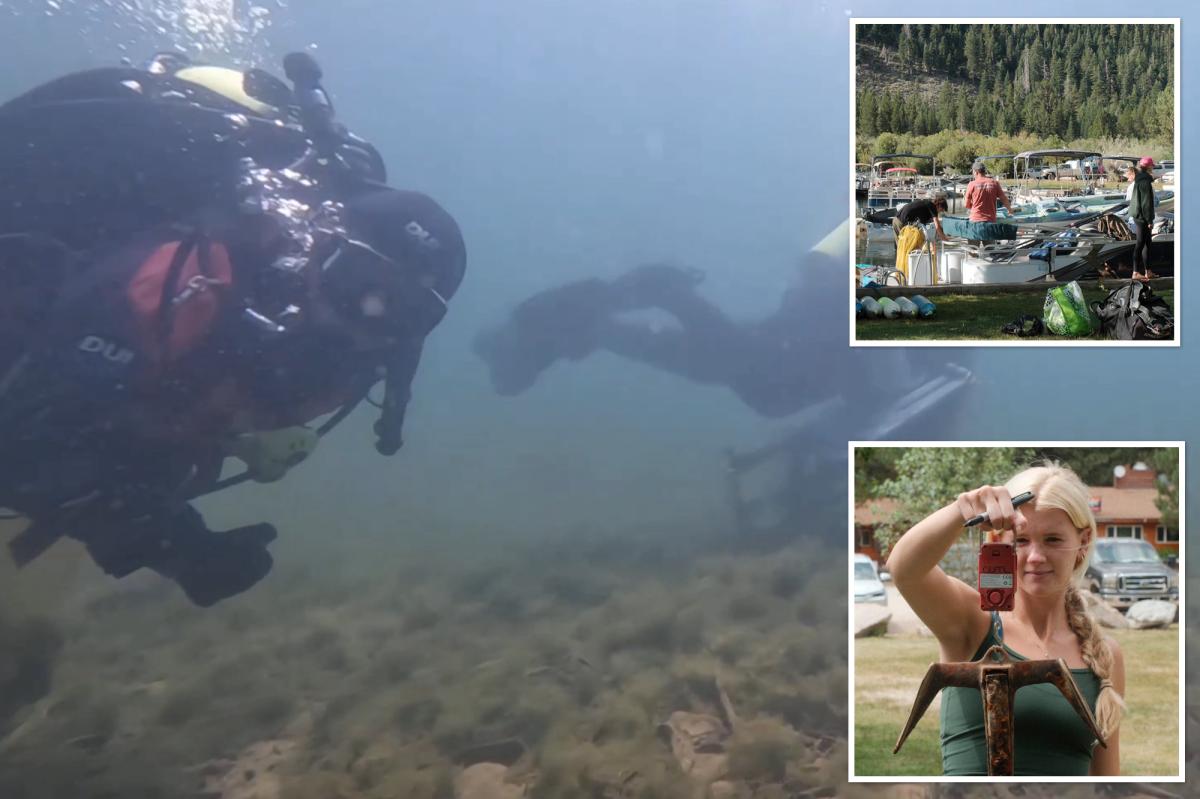
In September, 23 volunteers with the Tahoe-based nonprofit Clean Up The Lake spent five days tackling the problem, completing 18 scuba dives across 3.89 miles of shoreline at Upper Twin Lake and removing 4,999 pieces of underwater debris.
The cleanup effort in Bridgeport, California, brought up more than 2,400 pounds of trash from the lakebed, including 1,376 cans, 24 tires and 31 anchors. Divers also made a more startling discovery: two handguns hidden beneath the surface.
“One of the handguns was an old derringer and the other a revolver. They were very small, kind of like ones you might put in a purse or be able to conceal much easier. They looked to me a bit older,” Colin West, founder and CEO of Clean Up The Lake, told The California Post Wednesday.
According to West, both firearms were found during the same dive operation and were later turned over to the Mono County Sheriff’s Department.
The team’s finds included nine oversized “heavy lift” objects that took extra coordination to remove, along with two areas divers flagged as major underwater litter hot spots.
“We came across big old metal pipes that were like 6 feet long and a foot wide, a bunch of anchors chained together that were probably used to moor a small boat, 20 tires and thousands and thousands of beer cans,” he said.
West said the ambitious Upper Twin Lake cleanup was compressed into a single week, with divers making their way around the entire lake by dividing the shoreline into about 20 underwater sections.
He said that CUTL’s cleanup operation is a choreographed assembly line of divers, snorkelers, kayakers and boat crews. Divers drop beneath the surface with yellow mesh bags and inflatable lift bags for heavier objects.
“Each diver might have 5 or 6 yellow mesh bags when they go down. They’ll fill those bags up, and then they’ll shoot it up to the surface … or to a free diver above them.”
Heavier items like tires and fishing poles get rigged and lifted separately.
“If they come across a tire, they’ll use those lift bags and they have rope and things that they rig around it and then up goes the tire to the surface. … The kayakers and the snorkelers will work to load those tires or those full mesh bags onto the kayak or the boat captain will come by and they’ll grab all the trash and load it into the boat.”
Back at the dock or marina, the trash gets bagged, tagged and coded to specific dives so CUTL can map exactly where certain types of litter pile up.
The nonprofit also identified two litter “hot spots” in Upper Twin Lake — areas where trash has piled up heavily. West said those hot zones are no mystery.
West pointed to a busy resort road near the lake as a major contributor to the underwater junk pile up.
“There’s a lot of people fishing along the side of that road and there’s a pretty high level of wind that came out over the peaks. I believe, with the access of everyone on that main road and then the winds … any beer cans or anything that would fall into the lake would start collecting on the northwest side of Upper Twin Lake,” he said.