

Static Media
The enduring appeal of spy movies is easy to explain: espionage turns secrecy, deception, and high-stakes information into drama. Across history, spies have worked in plain sight, passing crucial intelligence to governments, military organizations, and private interests. Figures such as Hercules Mulligan, Mata Hari, and Sir Francis Washington became famous for their covert activities—but popular culture has created an entire mythology of its own around the profession.
Audiences may love James Bond, “Mission: Impossible,” and the Jason Bourne series, but those films are far removed from the realities of intelligence work. The same is true of spy spoofs such as Paul Feig’s “Spy” and the wildly exaggerated “Austin Powers” movies. Realistic espionage films are harder to make, in part because the actual job likely involves far more surveillance, patience, and routine than explosive action. Even spies, after all, probably experience their share of ordinary workdays.
With that distinction in mind, these are five of the most realistic spy movies ever made—several of them grounded in genuine historical events. From a late-career Steven Spielberg triumph to an unexpected Oscar winner and a celebrated adaptation of a classic espionage novel, these films deliver suspense without abandoning reality.
Argo
Warner Bros.
Ben Affleck had already established himself as a director by the time he made “Argo,” but his 2012 thriller remains one of his most accomplished films behind the camera. Based on one of the CIA’s boldest operations, the movie was written by Chris Terrio and adapted from Tony Mendez’s 1999 memoir, “The Master of Disguise,” along with Joshua Bearman’s 2007 Wired article, “The Great Escape: How the CIA Used a Fake Sci-Fi Flick to Rescue Americans from Tehran.” Together, those sources recount the operation known as the “Canadian Caper.”
Affleck plays Mendez, the CIA technical operations officer who devised the rescue plan, though “Argo” makes clear that the mission depended on a broader team effort. In November 1979, Iranian extremists seized the U.S. Embassy in Tehran and took more than 60 Americans hostage. Six embassy personnel escaped and found refuge with Canadian ambassador Ken Taylor (Victor Garber). Unable to find a conventional way to extract them, Mendez drew inspiration from the 1973 film “Battle for the Planet of the Apes.” He proposed that the six Americans, along with the CIA team, pose as Canadian filmmakers scouting locations for a science-fiction production. The cover story gave them a chance to leave Iran safely.
The film’s final act is every bit as tense as a spy thriller should be, helping explain why “Argo” won Best Picture at the 2013 Academy Awards. Its portrayal of Mendez and the rescue mission is remarkably faithful to the historical record, although the movie takes some liberties that minimize the extent of Canada’s contribution.
Syriana
Warner Bros.
Loosely inspired by Robert Baer’s 2003 memoir “See No Evil,” “Syriana” is both a gripping espionage drama and a film rooted in real-world geopolitics. It also earned George Clooney his first acting Oscar—though, in an amusing connection, Clooney later collected a second Academy Award as a producer of “Argo” in 2013. Written and directed by Stephen Gaghan, the film follows several intersecting stories tied to Persian Gulf oil fields and the American conglomerate Connex Oil. After China receives drilling rights in the region, Connex negotiates with Killen, a company operating in Kazakhstan. The proposed merger of the two powerful corporations quickly attracts scrutiny from the U.S. Department of Justice.
Not every thread in “Syriana” involves espionage, particularly the corporate maneuvering, but its spy narrative is driven by Clooney’s character, Bob Barnes. A CIA officer operating in Tehran, Barnes is tasked with disrupting illegal arms trafficking while navigating relationships with Hezbollah and an order to assassinate Prince Nasir (Alexander Siddig), the Emirates’ foreign minister. The agency suspects Nasir of financing the very weapons network Barnes is trying to dismantle. Without revealing its many twists, “Syriana” stands as a career highlight for Clooney and a grimly convincing portrait of the dangers facing American operatives in the fractured Middle East.
Tinker Tailor Soldier Spy
StudioCanal
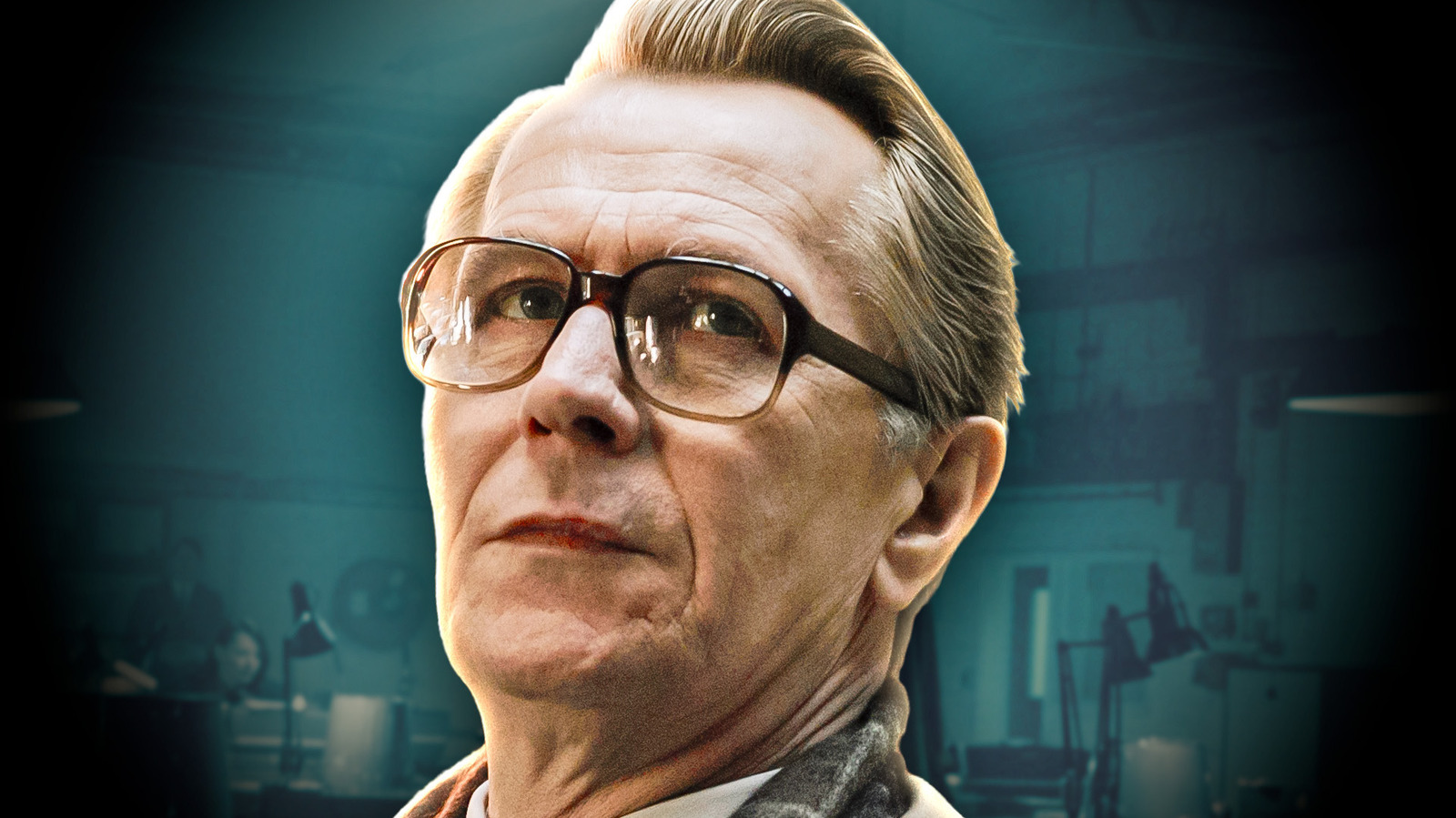
John le Carré’s background in British intelligence—he served with both MI5 and MI6—helped give his novels an unusual level of authenticity. The 2011 film adaptation of “Tinker Tailor Soldier Spy” preserves much of that credibility while remaining deeply engrossing. Directed by Tomas Alfredson and written by Bridget O’Connor and Peter Straughan, the movie stars Gary Oldman as George Smiley, le Carré’s restrained but formidable intelligence officer. Smiley works for the fictional British agency known as the Circus, which is searching for a Soviet mole inside its own ranks. The investigation begins dramatically when the Circus chief, known as Control, sends Jim Prideaux (Mark Strong) to investigate—and Prideaux is shot during the mission, in the back.
As Control’s deputy, Smiley becomes central to Operation Witchcraft, the effort to identify the Soviet agent within the Circus. After Control dies following Prideaux’s failed mission, Smiley builds a team that includes Peter Guillam (Benedict Cumberbatch) and special investigator Mendel (Roger Lloyd-Pack). Their inquiry also relies on intelligence from Ricki Tarr (Tom Hardy), a field agent living in hiding.
The film’s exceptional ensemble includes John Hurt, Ciarán Hinds, Colin Firth, Toby Jones, and le Carré himself in an uncredited appearance as a party guest. “Tinker Tailor Soldier Spy”—a reference to the group assembled to help Smiley uncover the truth—is a masterclass in slow-burning espionage. It is also remarkably close to the realities of intelligence work.
Bridge of Spies
Walt Disney Studios Motion Pictures
Steven Spielberg’s “Bridge of Spies,” written by Matt Charman with Joel and Ethan Coen and starring Tom Hanks, brings a crucial but less familiar Cold War figure to the center of the story. Hanks plays James B. Donovan, the American lawyer tasked with negotiating a prisoner exchange between the United States and the Soviet Union. The proposed trade involves Rudolf Abel (Mark Rylance), a Soviet spy Donovan previously defended in court, and Francis Gary Powers (Austin Stowell), an American fighter pilot imprisoned in the USSR after his aircraft was shot down. Donovan must persuade both sides to release their prisoners while navigating the dangerous political tensions of the era.
The exchange itself takes place at the bridge that inspires the movie’s title — Glienicke Bridge in Germany — and another American prisoner named Frederic Pryor (Will Rogers) held in Germany is added to the deal in the process at Donovan’s urging. In doing so, Donovan allows Abel to reunite with his family in the USSR and both Pryor and Powers are finally freed from their own captivities, making Donovan into a national hero when all is said and done. Obviously, Hanks and Rylance are incredible as two ostensible enemies — Rylance, in particular, won his first Academy Award for best supporting actor thanks to his layered turn as Rudolf Abel — and “Bridge of Spies” does an incredible job telling a story that, frankly, too few people had heard before.
A Most Wanted Man
Lionsgate/Roadside Attractions
The second John le Carré adaptation on this list really drives the point home that this esteemed author knew a thing or two about crafting accurate, compulsively consumable spy dramas … though this one does not feature his stalwart character George Smiley. Adapted from le Carré’s 2008 novel of the same name by screenwriter Andrew Bovell and director Anton Corbijn, “A Most Wanted Man,” which came out in 2014 stars the late, great Philip Seymour Hoffman as Günther Bachmann, a German intelligence officer who leads an anti-terrorism unit alongside his close associate Irna Frey (Nina Hoss). Under Bachmann’s nose, a political refugee hailing from Chechnya named Issa Karpov (Grigoriy Dobrygin) sneaks into Germany, but when Bachmann learns about this, he starts to suspect that Karpov might be involved in terrorist activity.
To track Karpov down in Germany, Bachmann links up with immigration lawyer Annabel Richter (Rachel McAdams) and banker Tommy Brue (Willem Dafoe), both of whom have long-held connections to Karpov that could help Bachmann truly investigate whether or not the man is guilty or innocent. As Bachmann, Richter, and Brue try to discover the fullest truth about Karpov, this cat-and-mouse movie remains eminently gripping, especially thanks to the central performances from Hoffman, Hoss, Dobrygin, McAdams, and Dafoe and supporting turns from talents like Robin Wright, Daniel Brühl, and Vicky Krieps (years before Krieps stunned audiences across the world in films like “Phantom Thread” and “Old”). Again, if you see le Carré’s name attached to a spy movie, you can safely assume it has a solid basis in reality … and if you want to watch the adaptation of one of his most underrated novels, you won’t want to miss “A Most Wanted Man.”