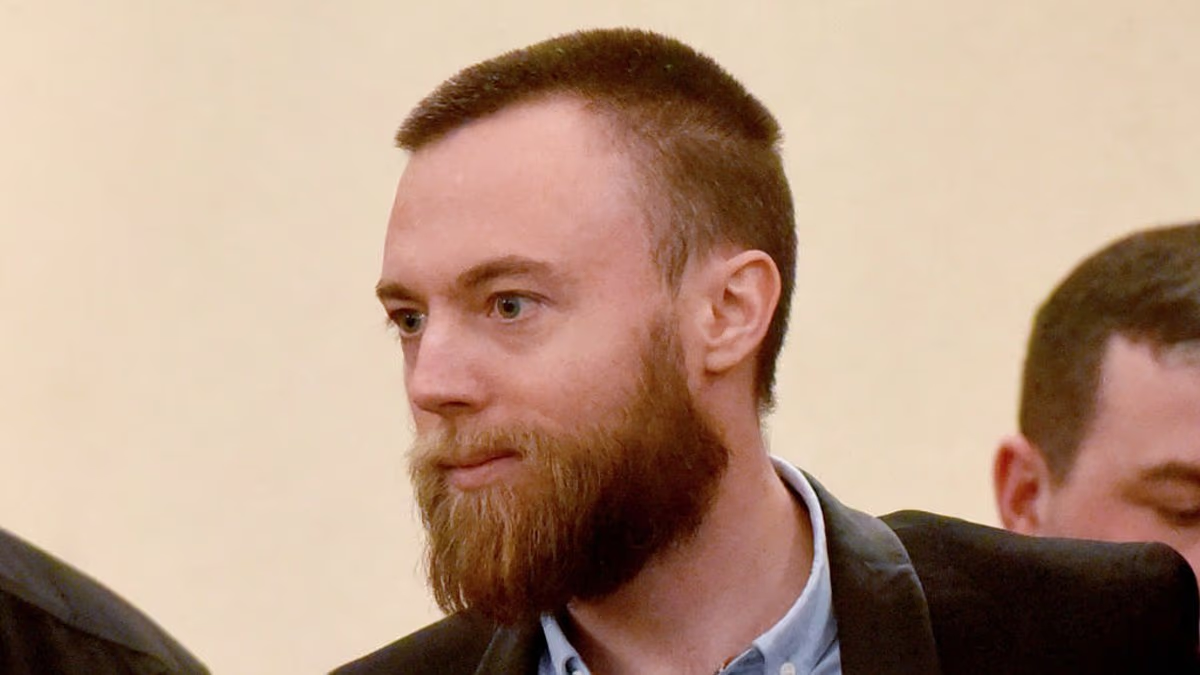


Tasia Fortune, a 29-year-old mother of four, was found hanging from a tree behind an abandoned home in Jackson, Mississippi, on Aug. 3. The state medical examiner later classified her death as a homicide.
Authorities arrested 51-year-old Jarques Ratliff, who was acquainted with Fortune, and charged him with murder. Investigators have indicated that additional arrests are possible. The case remains open, and the evidence will ultimately determine what happened and who is responsible.
Yet early national coverage quickly placed the case within Mississippi’s long history of racial violence. CNN, MSNBC and The Washington Post all highlighted the state’s legacy of Ku Klux Klan lynchings and other past injustices. Civil rights advocates and several lawmakers called for federal scrutiny, suggesting that the circumstances pointed to a broader pattern of racially motivated violence. In doing so, some headlines and commentaries encouraged audiences to adopt that interpretation before investigators had established the most basic details.
🚨BREAKING: An arrest has been made in the death of Tasia Fortune, the 29-year-old mother of four found HANGING FROM A TREE behind a vacant home in Jackson, Mississippi.
The state medical examiner has now ruled her death a homicide. Police arrested 51-year-old Jarques Ratliff in… pic.twitter.com/8iZIAeYG8q
— Lindsay 🇺🇸 (@TheLinzerShow) September 12, 2026
The arrest introduced a significant detail: Ratliff is a Black man who knew Fortune. Some early national reports gave that information less attention than the historical context surrounding the case. Critics argue that this reflects a recurring tendency to emphasize racial conflict whenever a Black victim dies under unusual circumstances in the South.
Stories built around the possibility of systemic racial hatred often attract more attention than measured accounts of individual criminal violence. The concern is that sensational framing can turn an uncertain death into evidence of enduring white racism before the facts support that conclusion. Such coverage may generate controversy, but it can also obscure the actual circumstances of the crime.
Tasia Fortune’s family said her hanging was no suicide. Mississippi’s medical examiner agreed Thursday and ruled it a homicide. Friday, Jackson police arrested a man who knew her.
Jacques Ratliff, 51, to be charged with homicide. Cops interviewed nearly 15 people and pulled two… pic.twitter.com/oRmGpWDzYo
— IredcapI (@IredcapI) September 11, 2026
For Fortune’s loved ones, however, the priority has been finding the truth. Her mother, Christy Spivey, had maintained that her daughter would not have ended her own life and later expressed relief and gratitude after learning of the arrest. Families facing such losses need reliable information, a thorough investigation and accountability when the evidence identifies a suspect.
They should not have to watch their grief become a vehicle for political messaging or profit-driven outrage. When coverage favors racial provocation over careful reporting, it risks pulling attention away from the central questions: who killed Fortune, what led to her death and whether everyone responsible will be held accountable.
In case you’re wondering why the Tasia Fortune story has completely dropped from the headlines today.
This is the man arrested for hanging her from a tree. pic.twitter.com/VoaS6DtQja
— Vince Langman (@LangmanVince) September 12, 2026
Jackson police have stressed that the case remains active and that evidence guides them. That is the proper standard. Premature racial framing can complicate investigations, inflame community distrust, and leave victims’ relatives navigating both personal loss and public spectacle. Similar cases in recent years have followed the same cycle: initial speculation about hate, later findings of suicide or interpersonal violence, and limited correction in the original high-visibility outlets.
Responsible coverage would lead with verified details, the medical examiner’s ruling, the arrest, and the relationship between suspect and victim. It would note Mississippi’s history without forcing every new tragedy into that mold. Crime is real. Homicide is real. Most of it is not political theater. Treating it as such may generate attention and revenue, but it does not deliver justice or comfort to grieving families.
The focus belongs on Fortune’s children and relatives, on thorough investigation, and on holding the responsible party accountable under the law. Anything else is secondary.
Editor’s Note: Do you enjoy RedState’s conservative reporting exposing the radical left and woke media? Support our work so we can keep bringing you the truth.