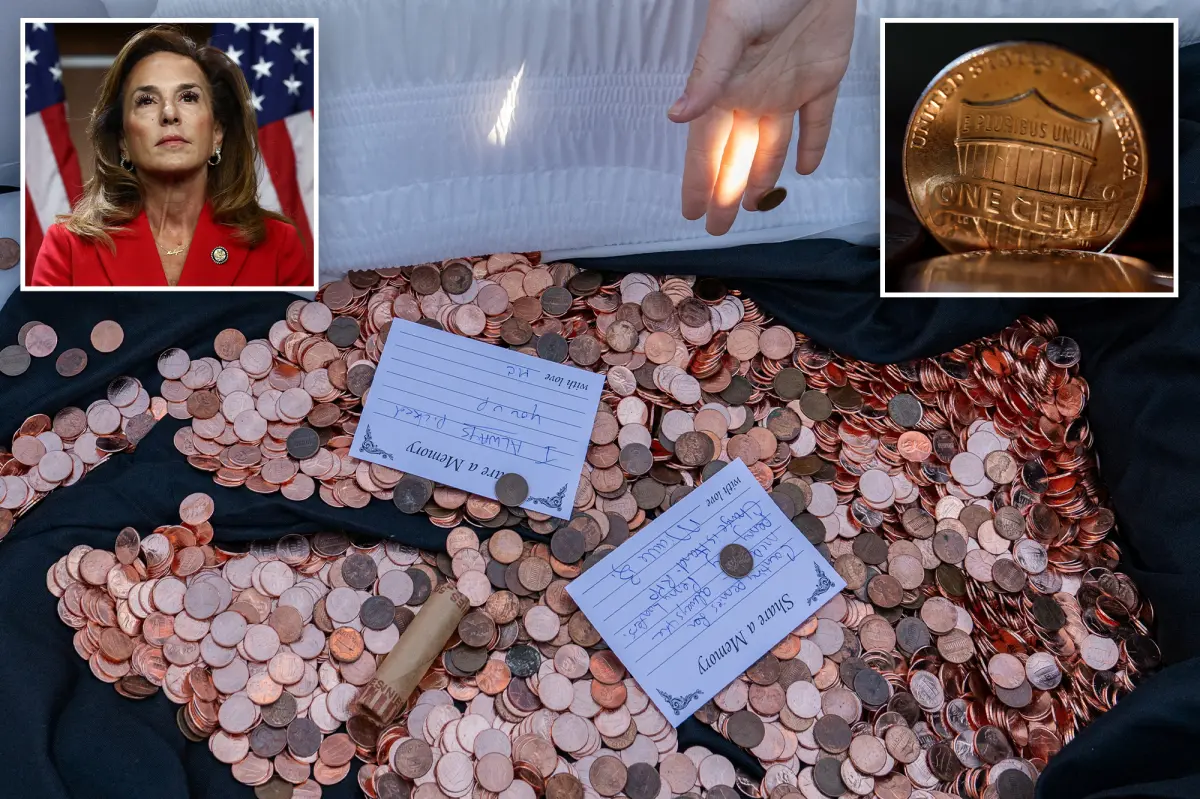

Americans could soon lose the ability to offer a penny for their thoughts as the nation’s smallest coin moves closer to becoming a relic of the past.
The House of Representatives voted unanimously Monday to retire the 1-cent coin, approving the bipartisan Common Cents Act and sending it to the next stage of the legislative process.
The measure would prohibit the Treasury from minting additional pennies, except for collector coins. It would also create a system for rounding cash purchases to the nearest 5 cents, removing the need for pennies in everyday transactions.
Cash wages would be treated differently: When a paycheck total is not divisible by 5 cents, it would have to be rounded up.
Pennies already in circulation would continue to be recognized as legal tender.
The US Mint halted penny production in November 2025, ending 232 years of regular circulation for the coin.
If President Donald Trump signs the legislation, Congress would make the change permanent and prevent a future administration from reversing the policy.
The push to eliminate the penny comes as production costs have soared. By 2025, making a penny cost more than three times its face value.
In a press release announcing the decision, the Treasury estimated that ending penny production would produce immediate annual savings of $56 million.
House GOP Conference Chair Lisa McClain, R-Mich., and Rep. Robert Garcia, D-Calif., the top Democrat on the House Oversight Committee, led the legislation.
The bill follows an earlier measure led by McClain that passed both the House and Senate and directed the federal government to stop producing pennies. However, that legislation did not address how cash payments would be rounded.
The proposal also includes a provision allowing the US Mint to make nickels with less expensive materials than those currently used.
Congress would track the rule’s impact by requiring the Treasury to study how the change affects low-income Americans, older consumers, debanked people and other groups.