
The Federal Reserve raised interest rates Wednesday for the first time since 2023, reversing course as the Iran war drives global energy prices higher and adds to inflationary pressure.
The Fed increased the federal funds rate by 0.25 percentage points, setting its target range at 3.75% to 4%—the highest level since December 2025. The benchmark rate affects borrowing costs throughout the U.S. economy, including rates on credit cards, auto loans and personal loans.
In its quarterly economic projections, the Fed indicated that its rate-setting committee expects to raise rates once more later this year. The decision was approved unanimously, according to the central bank’s statement released Wednesday.
No rate hikes in 2027
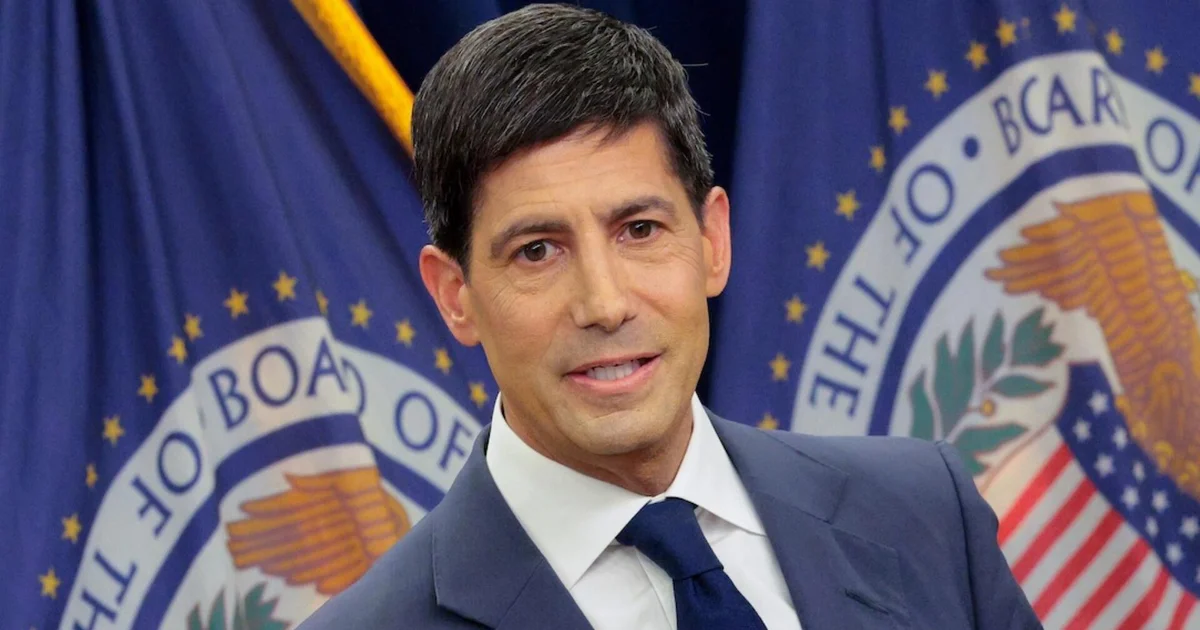
The move does not currently point to the beginning of an aggressive rate-hiking campaign. Fed Chair Kevin Warsh said policymakers expect to keep rates unchanged throughout 2027.
“For more than five years, inflation has been running above target,” Warsh said at a news conference following the announcement. “So our predominant focus is on the price stability side of our mandate. The plain fact is that inflation is too high, and has been for too long.”
Roughly half of the Federal Open Market Committee’s members projected that interest rates would remain unchanged next year.
“We don’t think this is the beginning of another major tightening cycle, and markets have too much tightening priced in over the coming year,” Michael Pearce, chief U.S. economist at Oxford Economics, wrote in a research note.
The latest decision contrasts with the Fed’s response to post-pandemic inflation, when it raised rates 11 times beginning in 2022 as the economy recovered and prices surged.
Wednesday’s increase marks a sharp shift from the Fed’s position at the beginning of the year, when inflation was easing and many economists expected rate cuts throughout 2026. Instead, policymakers are turning to their most powerful tool for restraining prices. The Consumer Price Index climbed at an annual rate of 3.4% in August, well above the Fed’s 2% target.
President Trump has repeatedly urged the Fed to reduce borrowing costs. However, the escalating conflict in the Middle East has disrupted crude oil production and supplies, lifting fuel prices in the United States and increasing costs across the wider economy.
Asked Wednesday how the president might respond to the rate increase, Warsh said, “I’ve got nothing for you on a discussion with the president.”
Why stocks fell after Warsh comments
“Hiking was the right move, and it restores Fed credibility that the central bank will curb inflation no matter what the White House or anyone else says,” Long said. “The big news is that the vote was unanimous and the forecast only signals one more hike in 2026.”
Higher interest rates can help slow inflation by prompting consumers to spend less and businesses to scale back investment. As demand weakens, economic growth cools and price increases can moderate.
Stocks fell after Warsh said the U.S. economy “appears to be strengthening” and reaffirmed his commitment to bringing inflation under control. Some investors viewed his comments as evidence that the central bank believes the economy could absorb further rate increases if necessary.
“Stocks declined after Warsh finished. Why? Warsh was hawkish today,” Heather Long, chief economist at Navy Federal Credit Union, said in an email. “How many more hikes beyond that remains an open question that likely will depend on the war in Iran and just how insatiable the data center building boom is.”
The Dow Jones Industrial Average fell 757 points in late afternoon trading, or 1.5%, to 51,337, while the S&P 500 lost almost 1% and the tech-heavy Nasdaq slipped 0.4%.
Higher borrowing costs
Banks are likely to respond to the latest Fed hike by boosting their interest rates on credit cards and other lending products, although a single 0.25 percentage-point increase might not significantly raise borrowing costs, according to financial experts.
Even so, the increase in borrowing costs comes as Americans are shouldering higher costs for gas, food and other essentials.
“Consumer sentiment is now 13% below where it was this time last year,” said Heather Boushey, professor of practice at the Kleinman Center for Energy Policy at the University of Pennsylvania, in an email. The Fed’s rate hike this week “will make it harder for families to borrow, raising the cost of car loans, credit cards, mortgages and more.”
Alain Sherter
contributed to this report.