
The Supreme Court has once again entered a contentious election-law fight, this time over the U.S. Postal Service’s treatment of mail-in ballots before the congressional midterm elections. The dispute highlights a familiar and frustrating pattern: Despite its conservative majority, the Court can still move cautiously in cases where constitutional principles and the practical demands of election administration call for clear direction.
Mail voting has grown sharply in recent years. Many states expanded access during the coronavirus pandemic and later retained those programs. While absentee voting offers meaningful convenience, it has also exposed disputes involving ballot custody, signature checks, delivery deadlines, and uneven standards from one jurisdiction to another. When such cases reach the Supreme Court, the essential question should be clear: Does the rule protect election integrity and ensure that every lawful vote carries equal weight, or does it create uncertainty that weakens public confidence?
This is a massive victory for those who cheat in elections. Catastrophic for the country.
Bloomberg reported that the U.S. Supreme Court declined to authorize the Postal Service to impose new restrictions on mail-in ballots ahead of the congressional midterm elections, rejecting the Trump administration’s position.
— Lara Logan (@laralogan) September 15, 2026
Many justices were appointed with the expectation that they would apply the Constitution through text, history, and structure rather than policy preference or political pressure. Yet election cases have sometimes exposed reluctance within the Court’s conservative bloc. Some justices appear to place greater weight on institutional caution, the appearance of neutrality, or narrowly tailored decisions than on providing firm guidance. The result can be delay and confusion precisely when election officials, candidates, and voters need predictable rules.
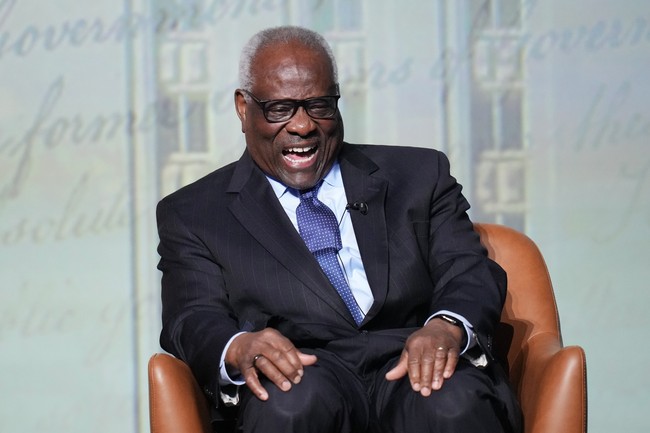
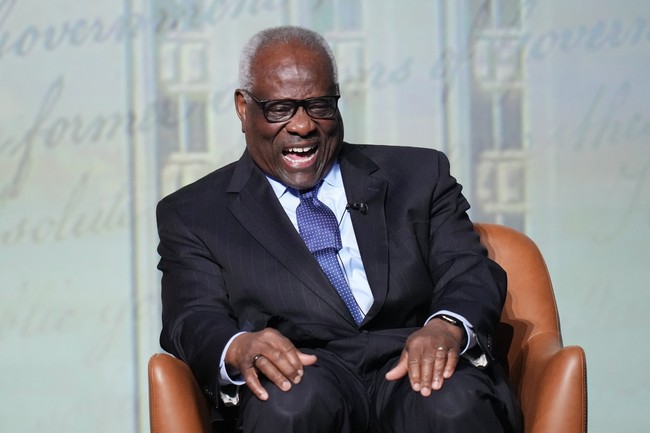
Justice Clarence Thomas has taken a notably different approach. He has consistently treated election disputes as legal questions rather than political performances. His opinions and votes have stressed the Constitution’s original meaning, the states’ authority under the Elections Clause, and the importance of establishing understandable, enforceable election rules before voting begins.
🚨 IT’S OFFICIAL: Supreme Court Justices Sam Alito and Clarence Thomas issued a scathing dissent over the decision against President Trump’s mail-in-ballot executive order. Alito argued that the timing problem was created by the states and lower courts, which forced the case into an unusually tight window before the midterms. In his view, that deadline should not have been used to invalidate an otherwise lawful order. The ruling prompted criticism of conservative justices, including Brett Kavanaugh, while supporters praised Alito and Thomas as reliable defenders of the administration’s position and called for exceptionally strong future nominees.
— Eric Daugherty (@EricLDaugh) September 15, 2026
That philosophy does not create new rights or impose novel restrictions. It calls instead for consistent enforcement of the rules already on the books. As other members of the Court sometimes take a more cautious path, Thomas’s approach offers a clear legal anchor.
That is not a case for automatic or inflexible rulings. Courts must decide the disputes actually presented in the record. Still, excessive restraint has consequences. If the Court avoids setting clear standards for mail-ballot deadlines, verification procedures, or administrative authority, lower courts and election officials are left to develop competing interpretations. Lawsuits increase, public trust suffers, and the appearance of fairness the Court hopes to preserve may be damaged rather than protected.
Conservative legal principles emphasize federalism, limited judicial intervention, and respect for the states and political branches where the Constitution places primary responsibility for elections. Applied to mail voting, those principles support safeguards requiring proof of eligibility, timely ballot receipt, and procedures that are open and verifiable.
President Trump has criticized the Supreme Court after it blocked his mail-in-ballot plan, describing the decision as “a big loss for Republicans.” He attacked mail voting, accused the justices of being pressured by Democrats, and said they were not the people he had interviewed to serve on the Supreme Court.
— MeidasTouch (@MeidasTouch) September 15, 2026
Americans who need or choose to vote by mail should be able to do so under procedures that protect the accuracy of the count. The alternative—defending vague or permissive standards in the name of access—could ultimately produce the opposite result: fewer voters convinced that election outcomes reflect the electorate’s legitimate will.
The current Court has the numbers and the precedents to provide that clarity. It should use them. Institutional legitimacy is not preserved by hedging on core questions of electoral integrity. It is preserved by deciding those questions according to law, without apology and without unnecessary delay. Justice Thomas has shown what that looks like. The rest of the majority would serve the country by matching his resolve.
Election administration is not abstract. It determines whether citizens can trust the process that selects their leaders. A Court that possesses a working majority has both the authority and the responsibility to settle these disputes with precision. Hesitation in the face of that duty does not protect the institution — it weakens the system the institution exists to uphold.
Editor’s Note: The Democrat Party has been infected by socialism, and it’s spreading FAST. Democrats are claiming there’s nothing to worry about, but we know the truth.


