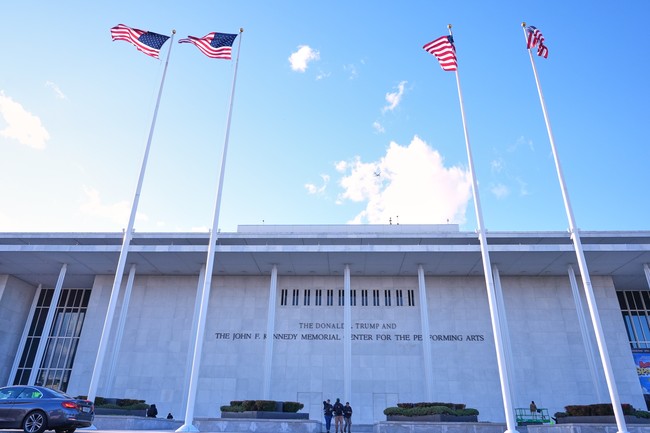

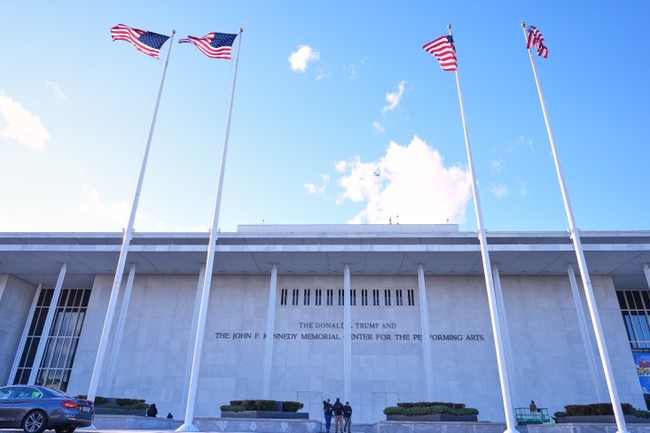
President Donald Trump’s decision to temporarily close the John F. Kennedy Center for the Performing Arts for repairs comes as the landmark faces long-standing maintenance challenges. The shutdown is being presented as a practical step focused on public safety and modernization, rather than a retreat from the center’s cultural mission.
After decades of intensive use, the Kennedy Center requires significant attention to aging infrastructure and outdated systems. A temporary closure gives construction crews the opportunity to address those concerns without exposing performers, staff, or visitors to avoidable risks. At a venue that welcomes large crowds for concerts, theater, and other productions, known safety issues cannot responsibly be ignored.
The Kennedy Center Board voted by an overwhelming margin to shut the building immediately over safety concerns and begin preparing for reconstruction. Renovation work remains subject to a ruling from the D.C. Circuit on the Board’s approved name.
In the meantime, $17M raised by President Trump has been… pic.twitter.com/TUKpKQxfJ5
— The White House (@WhiteHouse) September 16, 2026
The project could also go beyond essential repairs and bring the venue into the modern era. Upgraded stages, seating, accessibility features, and technical equipment would improve conditions for both audiences and artists. As one of the nation’s most prominent cultural institutions, the Kennedy Center should offer the reliability and quality expected of leading private venues. Strengthening the facility would reinforce its place in American cultural life.
The possibility of linking the center more directly to both John F. Kennedy and Trump has generated debate. Kennedy’s name has long been central to the institution, reflecting his presidency and his association with public service and the arts.
🚨 NOW: Donald Trump’s team has just ordered a CLOSURE of the Kennedy Center for one week, per court filing, to ensure that the major safety hazards are addressed
The ROOF literally begin COLLAPSING and an activist judge thinks they know better than the guy who’s been building… pic.twitter.com/61I7Bf4E38
— Eric Daugherty (@EricLDaugh) September 17, 2026
Supporters of adding Trump’s name say such recognition would reflect efforts during his administration to restore and protect the landmark. Presidents who make tangible contributions to the upkeep of national institutions often leave a lasting record of their involvement. In that view, dual recognition would acknowledge the center’s original namesake while documenting its restoration.
Opponents may interpret any change involving the Kennedy Center as an assault on its history or cultural role, but the immediate issue is more practical. Buildings age, mechanical systems break down, and major public venues require regular maintenance. Closing the center to address significant problems is a familiar form of responsible stewardship. Delaying the work could increase both repair costs and safety risks.
President Trump says the Kennedy Center is “a loser financially,” and that the Trump administration should receive recognition if they “raise money to carry it.” pic.twitter.com/ijDnloMgec
— CSPAN (@cspan) September 17, 2026
Once updated, the Kennedy Center could continue hosting a broad range of performances from a safer and more capable foundation. Programming that highlights American history, achievement, and artistic traditions could coexist with work representing other cultures and perspectives. Better facilities would give performers and producers the tools to present that range of programming at a higher standard.
The administration’s position reflects a results-oriented approach: identify problems in a public asset, address them directly, and aim to return the facility in better condition. The short-term disruption caused by a closure is being framed as an investment in the center’s long-term reliability. Audiences, artists, and employees would ultimately benefit if the repairs are completed successfully.
Recognizing both Kennedy and the president associated with the restoration would place attention on the institution’s history as well as its physical renewal. Kennedy’s legacy would remain part of the center’s identity, while the building would receive long-needed investment and improved safety measures. The goal is to preserve its ability to serve as a national stage for years to come.
At its core, the closure represents an effort to manage and preserve a major public resource. The Kennedy Center needs to be safe, accessible, technologically updated, and prepared for future generations. Repairing the facility now could advance that mission, while recognition of the presidents connected to its founding and renovation would mark the institution’s continuing evolution.
Editor’s Note: Critics say the Democratic Party has moved increasingly toward socialist policies, a shift that continues to fuel debate over the party’s direction and priorities.