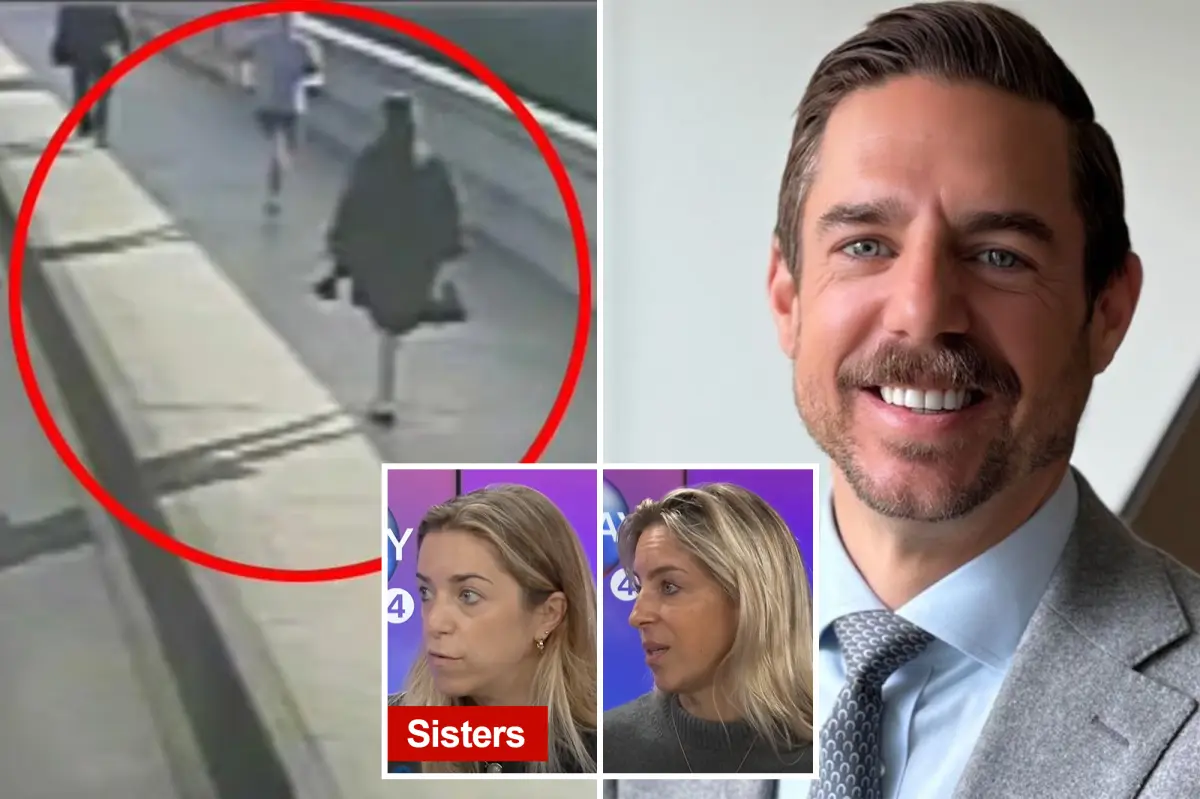

The sisters of a millionaire banker with royal ties, who was accused of being the “Putney Pusher” captured on video shoving a woman into the path of a moving bus, have blamed police for his death. They said Friday that he had been seeking a private DNA test to more quickly establish his innocence.
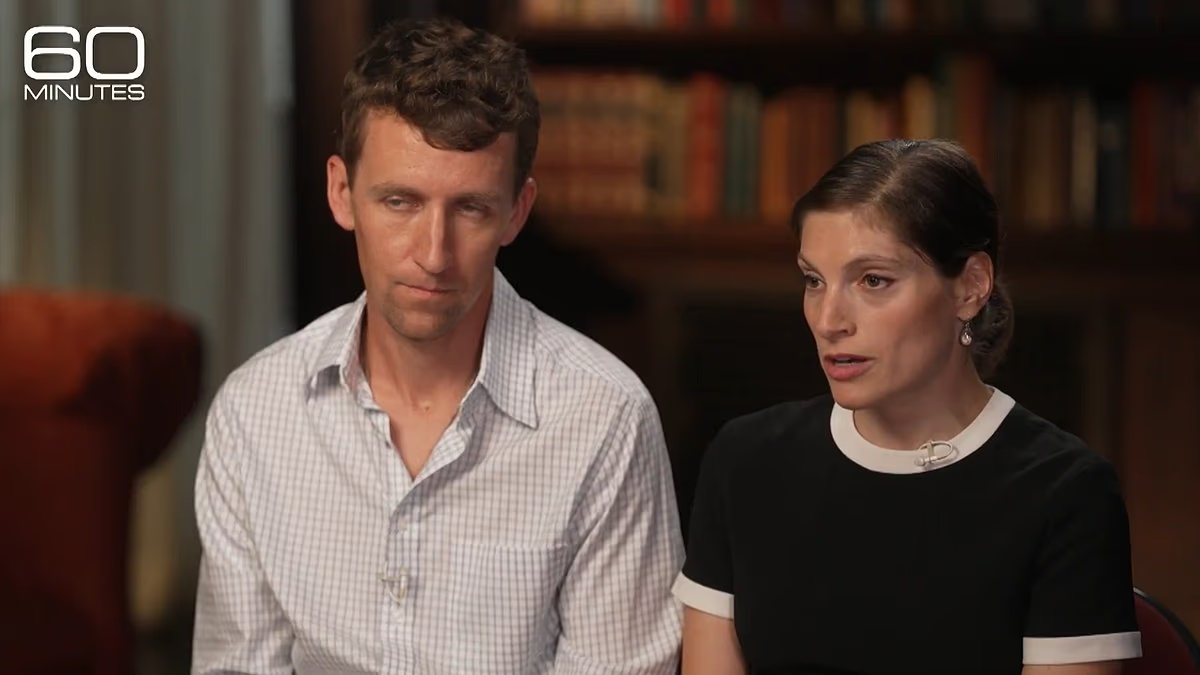
Nicholas Brandram, a descendant of Queen Victoria, was arrested and charged in June. His sister Alexia Hicks told the Guardian, through tears, that the allegations linking him to the notorious 2017 attack were “slowly murdering” him.
The former British Army captain was determined to clear his name before he died Tuesday. Hicks and her sister, Sophie Voelcker, told the BBC’s Today program Friday that Brandram had offered to “pay to have [a DNA test] done privately” so the results could be obtained sooner.
Brandram, 44, had already supplied a DNA sample to London’s Metropolitan Police. According to his sisters, officers initially advised him against arranging an independent test, saying police expected results “within four weeks.” That assurance reportedly changed shortly before the banker was found dead at his home.
“The problem is, one of the officers said that DNA test results are ‘any day now’ – and then only a couple of days, I believe, before his death, he said, ‘Actually we can’t even give you a date any more,’” said Hicks, 40.
Brandram’s family believed the police inquiry would ultimately clear his name, leaving no need to commission a separate DNA analysis.
“We put faith into the system, the justice system,” the sisters said.
“We put faith into the Metropolitan Police. We wanted them to carry out their investigation because we’re so sure that Nick is innocent. Nick was sure he was innocent. The police know he’s innocent.
“Therefore, we thought, we don’t need to pay for a DNA test – surely the police will just conduct their own test, they’ll release the [no further action] letter, as they kept assuring my brother.”
The sisters said they could not understand why police had failed to resolve the matter with the same “urgency” they showed when Brandram was arrested at his West London home by what they described as “a large handful of police officers wearing armed vests.”
They pointed to five details they believe would have demonstrated that Brandram was not the man seen in the video.
According to the sisters, Brandram sent an email from his office on Bond Street, roughly four miles from Putney Bridge, around the time the jogger was filmed pushing a woman toward a double-decker bus. They said the message showed he could not have been at the scene.
They also said Brandram had no ties to the Putney area.
His sisters further noted that Brandram had blue eyes, while the woman who reported the attack described the assailant as having brown eyes.
The family also said Brandram had a “visibly wasted and disfigured calf,” a feature they claimed was absent from the man shown in the footage.
In addition, Brandram had a “prominent forearm tattoo” that his family said could not be seen on the jogger in the video.
Brandram had volunteered to participate in an identification parade, but his sisters said the Metropolitan Police never arranged one.
“We provided evidence very quickly to show that this did not look like our brother,” they said.
“Nine and a half years ago when the incident occurred, there’d been absolutely nothing connecting our brother to the attack.”
Brandram was found dead at his home in Chiswick on Tuesday. The Metropolitan Police has since referred itself to the Independent Office for Police Conduct, the force’s watchdog.
Scotland Yard has called the death “unexpected” but not suspicious.
“Our thoughts are with Mr Brandram’s family and friends at this deeply distressing time. We recognise the significant impact his death will have on those who knew and loved him,” Chief Superintendent Dan Knowles told London’s Evening Standard.
“We also understand the strain that being subject to a police investigation can place on individuals and their families.
“The investigation remains ongoing,” he said. “Investigations of this nature, particularly those involving complex evidential and forensic work, can take a number of months to complete as officers gather and assess all available evidence.”