If another broken night has left you struggling to get through the day, you are far from alone.
For millions of people, poor sleep has become a draining routine, driven by demanding schedules, relentless stress and screens that stay active long after bedtime.
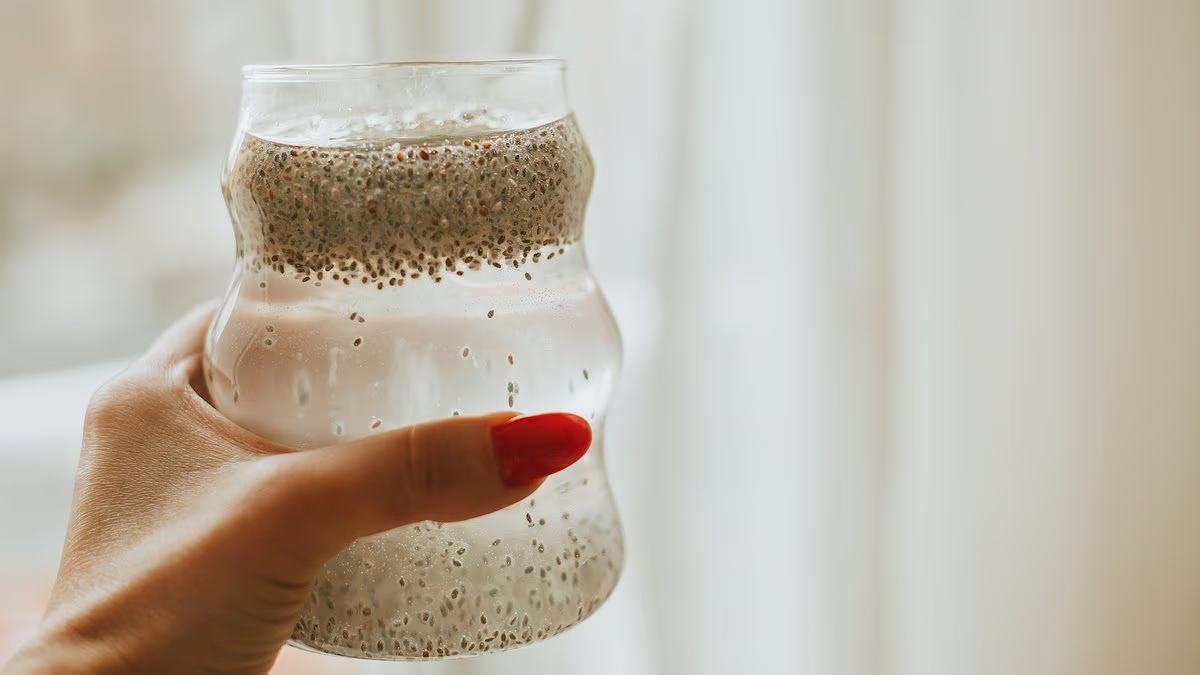
That helps explain the growing appeal of the viral “sleepy girl” mocktail—a colorful, often powdered drink promoted as a simple way to quiet the mind and fall asleep more easily.
Magnesium-based versions have surged across social media, with enthusiasts describing them as the effortless nighttime solution they have been looking for.
For people balancing jobs, families, anxiety and packed calendars, an easy bedtime beverage can sound especially appealing.
Still, it may be worth pausing before filling your shopping cart with sleep supplements.
Sleep specialists say that although a relaxing evening routine can be beneficial, these fashionable drinks may be an expensive distraction rather than a dependable answer to chronic sleeplessness.
Here is what the evidence suggests.

For many people, poor sleep has become a draining routine, driven by demanding schedules, relentless stress and screens that stay active long after bedtime (stock image)
The Science Behind the Magnesium Hype
Magnesium’s rise as a popular sleep ingredient is not difficult to understand.
The essential mineral plays an important role in nerve function and muscle relaxation, making it seem naturally suited to a bedtime routine. However, that does not prove that a powdered magnesium drink will resolve persistent sleep problems.
The scientific evidence remains limited. A clinical systematic review involving older adults found that those who took magnesium supplements fell asleep approximately 17 minutes sooner than people given a placebo, but researchers found no statistically significant increase in total sleep duration.
“The promise of a good night’s sleep is a powerful message to convey to consumers, even if the claims are difficult to back up with science,” explains Dr Jennifer Martin, former president of the board of directors for the American Academy of Sleep Medicine.
“A drink that promises to help you relax and sleep better is an attractive concept, especially on social media, but popularity should not be confused with scientific evidence.”
What’s REALLY Keeping You Awake?
For some people, magnesium may be compensating for sleep-disrupting habits, including late-afternoon caffeine, evening alcohol, high stress, naps late in the day or a bedtime routine that never properly slows down.
In other cases, the underlying cause may be more complicated than a poor nighttime routine.
According to an Epidemiology of Insomnia study, about 10 percent of adults meet the criteria for an insomnia disorder, while another 20 percent experience occasional insomnia symptoms.
Against that backdrop, depending on a viral sleep drink could conceal the true source of the problem—or delay the professional medical care needed to address it effectively.
‘Any “quick fix” approach is appealing because it can be hard to know where to start with unaddressed stress or environmental factors,’ says Dr Joy Valko, a licensed clinical psychologist board-certified in behavioral sleep medicine at the Cleveland Clinic in Ohio.
‘Caffeine too late in the day can promote a vicious cycle, exacerbating sleep problems resulting in next-day fatigue that makes caffeine even more appealing, but many people struggle with insomnia that developed for no identifiable reason.’
Understanding Potential Health Risks
One of the biggest mistakes people make is assuming that because something is ‘natural’ it must be safe in any amount.
Taking too much magnesium can cause problems, however, especially for people with specific medical conditions.
Those with kidney issues or taking certain prescription medications should be careful when adding a concentrated magnesium supplement to a nightly routine. Experts say the dose and the type of magnesium matter, and guessing can easily backfire.
‘Consumers should remember that “natural” does not necessarily mean risk-free.
‘Taking excessive amounts of magnesium through supplements can cause gastrointestinal side effects, and certain people, including those with impaired kidney function or those taking medications that can interact with magnesium, should speak with their health care provider before supplementation,’ Dr Martin told Daily Mail.

It’s easy to understand the appeal of the trendy ‘sleepy girl’ mocktail – a colorful, often powdery drink that promises to calm the mind and make drifting off feel effortless – which has taken over social media (stock image)
More Is Not Always Better
When it comes to magnesium, taking more definitely does not automatically mean sleeping better.
In fact, magnesium is well-known for its laxative effect. So, a large dose right before bed could end up causing stomach trouble, keeping you awake for the wrong reasons instead of helping you drift off.
‘Magnesium is an important mineral and electrolyte, but more is not always better… spending your evening sitting on the toilet could interfere with getting enough sleep,’ Dr Valko cautioned.
Finding Real Relief Through Clinical Paths
If trendy magnesium drinks aren’t the answer for long-running sleep problems, what are some non-medicinal things to try?
For adults with chronic insomnia, the American Academy of Sleep Medicine recommends Cognitive Behavioral Therapy for Insomnia or CBT-I.
Instead of masking symptoms for one night, CBT-I targets the thoughts and habits that keep poor sleep going.
This short-term therapy often lasts six to eight sessions and teaches lasting tools for better sleep, the AASM states.
The Takeaway
As you pursue sleep-enhancing methods, a magnesium drink might be a harmless part of a calming evening routine for some people.
But it should not be treated as a replacement for medical advice or proven insomnia treatments.
If sleep problems keep happening night after night, the better move is to talk to a clinician rather than continuing to test whatever is currently trending online.
Dr Martin added: ‘The AASM recommends discussing persistent insomnia or another suspected sleep disorder with a physician or sleep specialist rather than relying solely on self-treatment.’