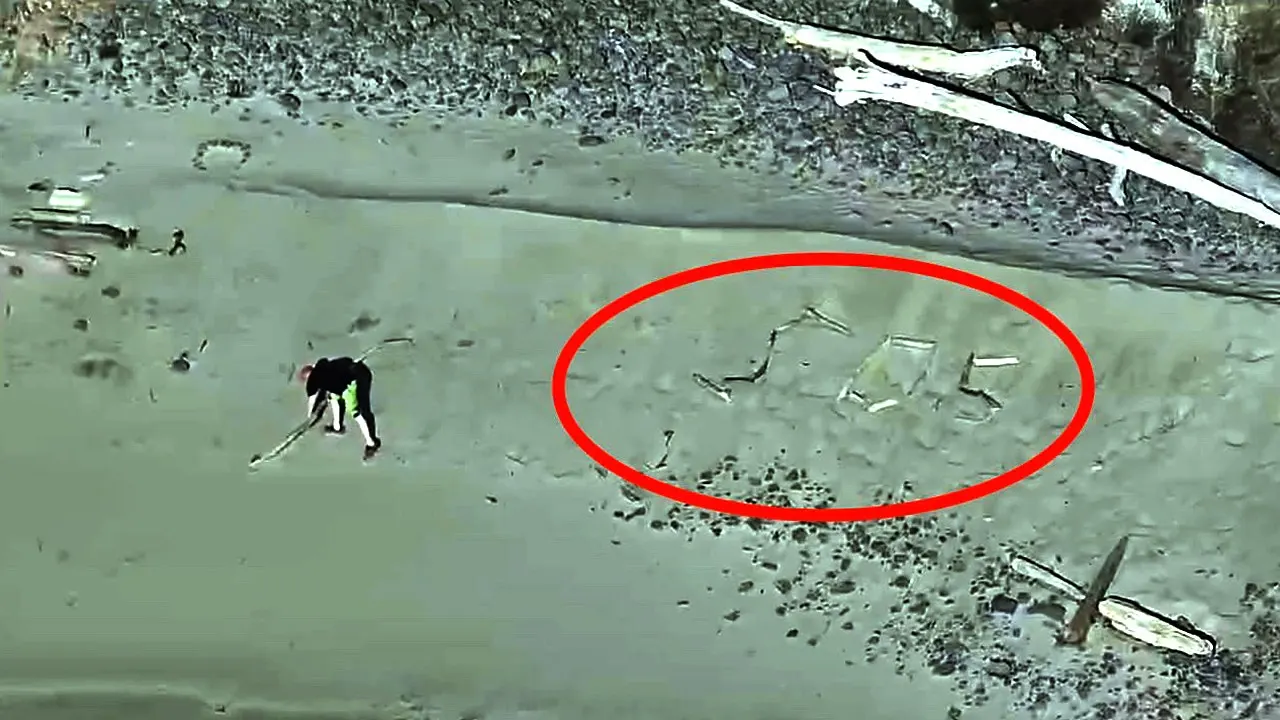

Three tourists seeking a picture-perfect view at Oregon’s Lost Boy Beach instead became the subjects of a dramatic, storybook-style rescue by local firefighters last week.
The unidentified visitors spent five hours stranded Wednesday, Sept. 16, after the incoming tide cut them off from the mainland at the remote Tillamook County cove. With regular cell service reportedly unavailable at the base of the steep cliff, the group reached 911 through an emergency satellite feature, The Oregonian reported.
The Netarts-Oceanside Fire District responded and located the trio on a shrinking strip of sand as waves advanced around them. A rescue drone captured the tourists’ makeshift distress signal: the word “SOS” spelled out in large letters with sticks.
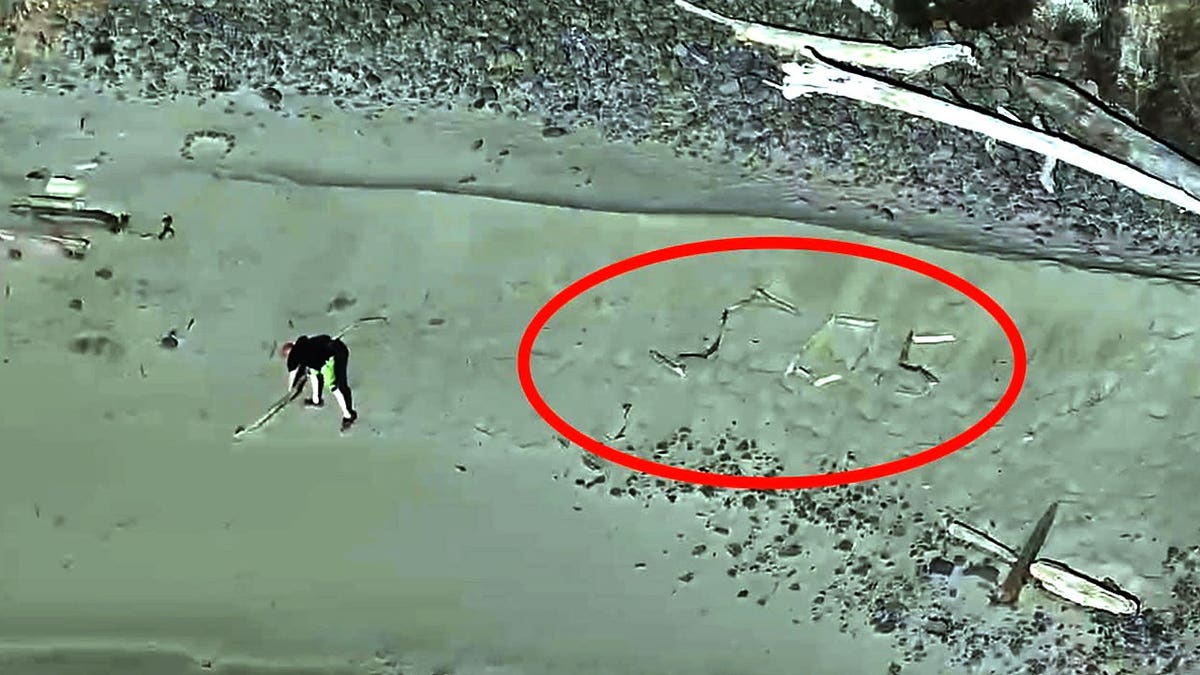
Rescue workers found the stranded visitors on Oregon’s Lost Boy Beach, where they had spelled out SOS with sticks, as shown in footage from an emergency drone, (Netarts-Oceanside Fire District)
Reaching Lost Boy Beach requires scrambling across rocky ground and passing through a sea cave open at both ends. The secluded beach may be accessible during low tide, but rising water can quickly cover the only way out.
“When people are stranded there, we may not be able to get to them,” NOFD Chief Jeff McBrayer told the newspaper.
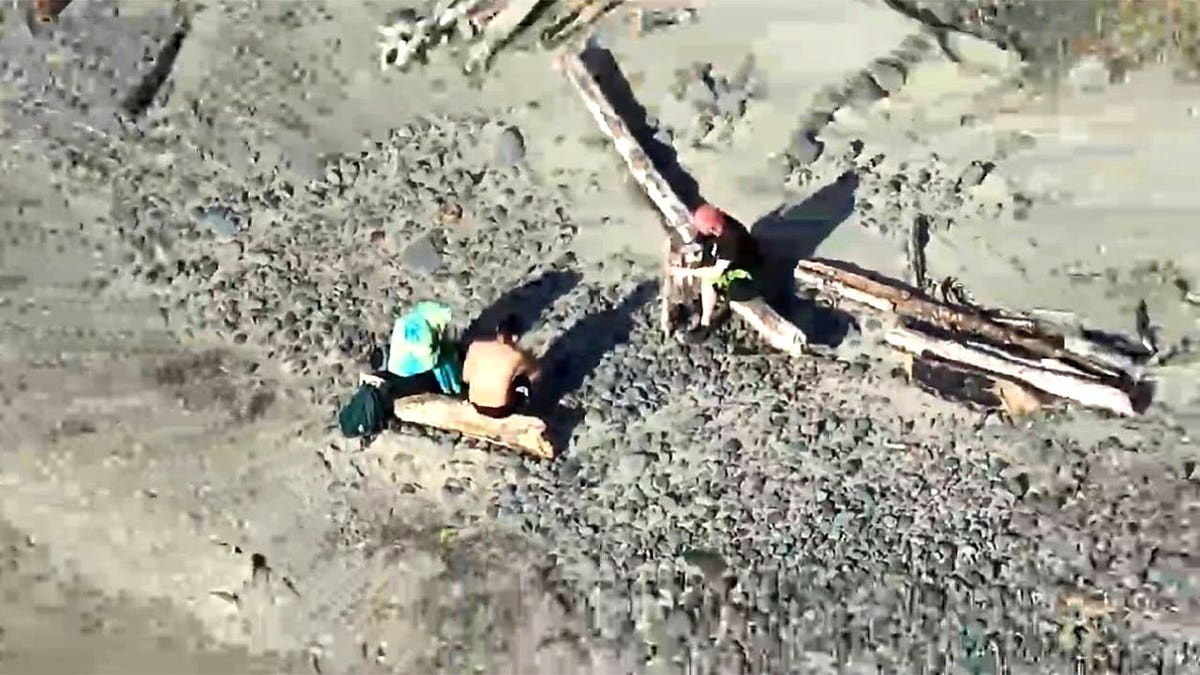
Three tourists became stranded on Oregon’s Lost Boy Beach after hiking down a cliff for what they described as a “dramatic” photograph of the iconic coastline. Instead, drone cameras recorded their rescue. (Netarts-Oceanside Fire District)
Firefighters initially weighed waiting for the tide to fall. But rough surf, sneaker waves and the visitors’ wet, cold condition prompted crews to launch an immediate rescue, McBrayer said.
Rescuers worked along the narrow shoreline while attached to safety ropes, avoiding a direct route through the unpredictable surf. After reaching the tourists, they fitted them with life vests, secured each person to the ropes and guided them through the water to a safe section of shore. From there, the group was able to walk out without assistance.
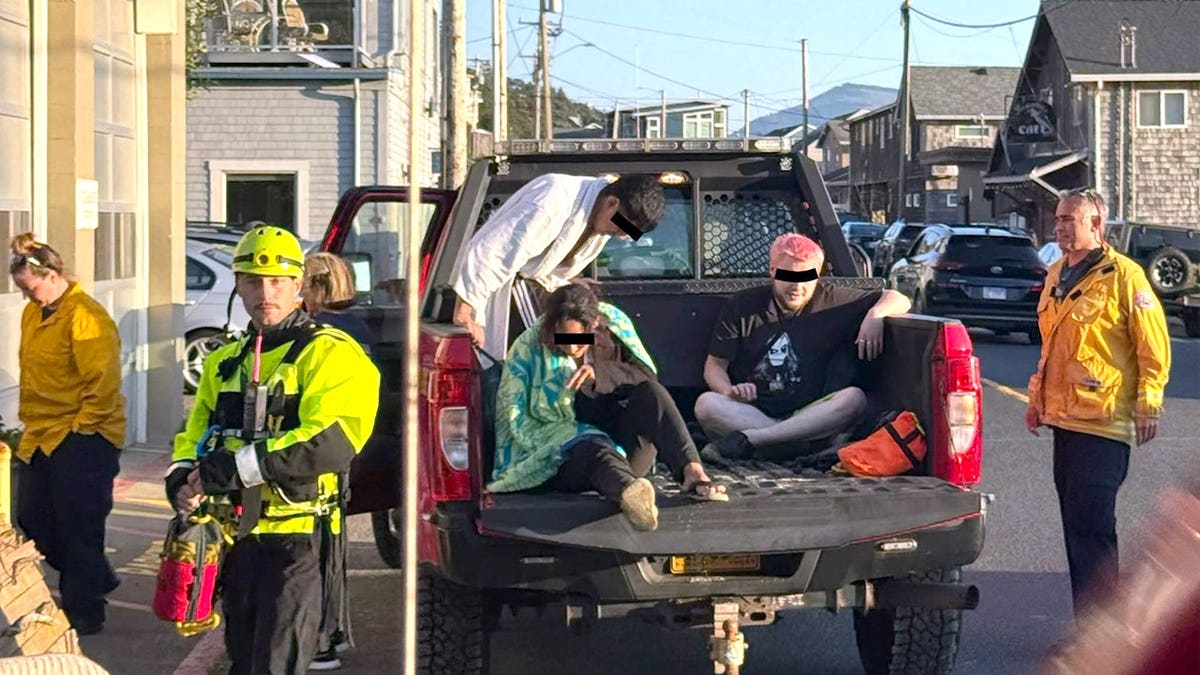
The Netarts-Oceanside Fire District rescued three adventurous tourists who became trapped by the tide and spelled out SOS with nearby sticks. Officials later warned others not to repeat the mistake. (Netarts-Oceanside Fire District)
The tourists suffered only minor bumps and bruises during the ordeal.
Afterward, Chief McBrayer urged visitors to take the hazards of Oregon’s isolated coastal coves seriously.
“You have to ask a local or check a tide app on a phone for tide information,” he said.
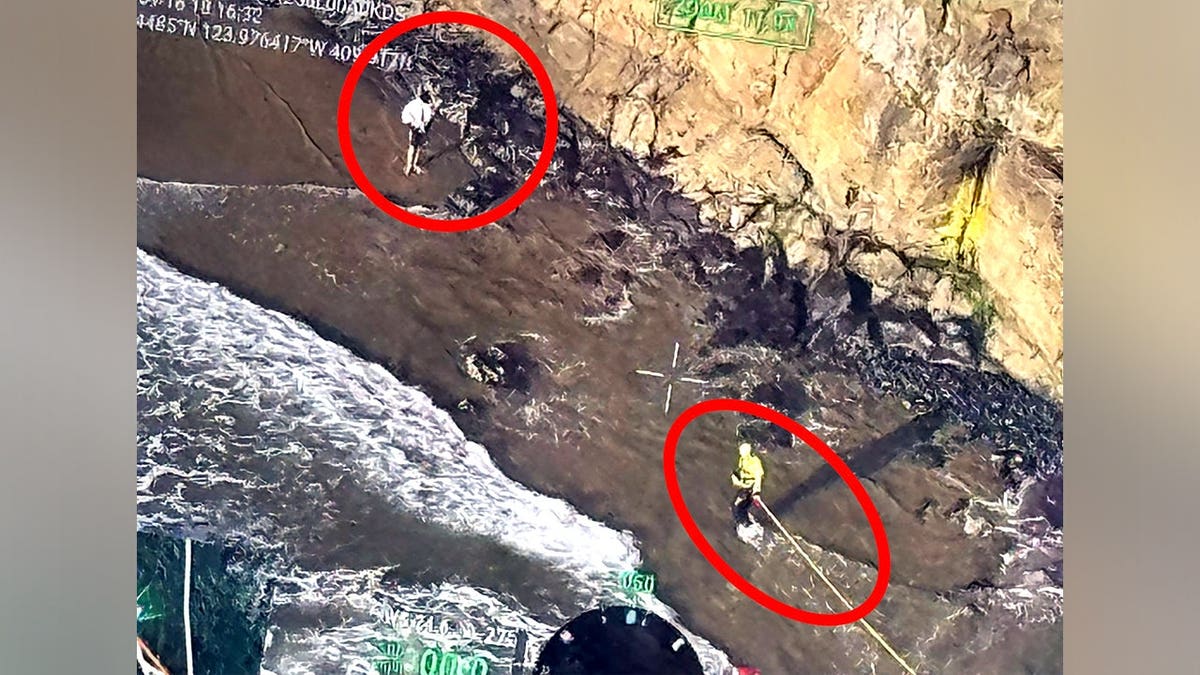
According to the report, drone footage showed the stranded tourists after an emergency 911 signal was sent from the beach, where ordinary cell service was unavailable. (Netarts-Oceanside Fire District)
Lost Boy Beach sits on Oregon’s northern coast, just south of a towering basalt cliff, and its ominous name comes from a century-old local legend. Regional lore says a young boy drowned after becoming trapped by the incoming tide. Although the story has never been verified, the name has endured for roughly 100 years—a lasting warning about the cove’s unpredictable and potentially deadly conditions.
The hidden beach lies between Short Beach to the north and Tunnel Beach, also known as Star Trek Beach, to the south. Access has long been considered dangerous. Short Beach eventually gained a community-built “stairway of 100 steps” around 2000 to reduce the risk of visitors slipping and striking their heads on the cliff. Lost Boy Beach, however, has never had a safe overland route.
Traveling to the beach from either direction remains extremely hazardous and is only marginally possible during rare extreme low tides, which occur just a few times each year.