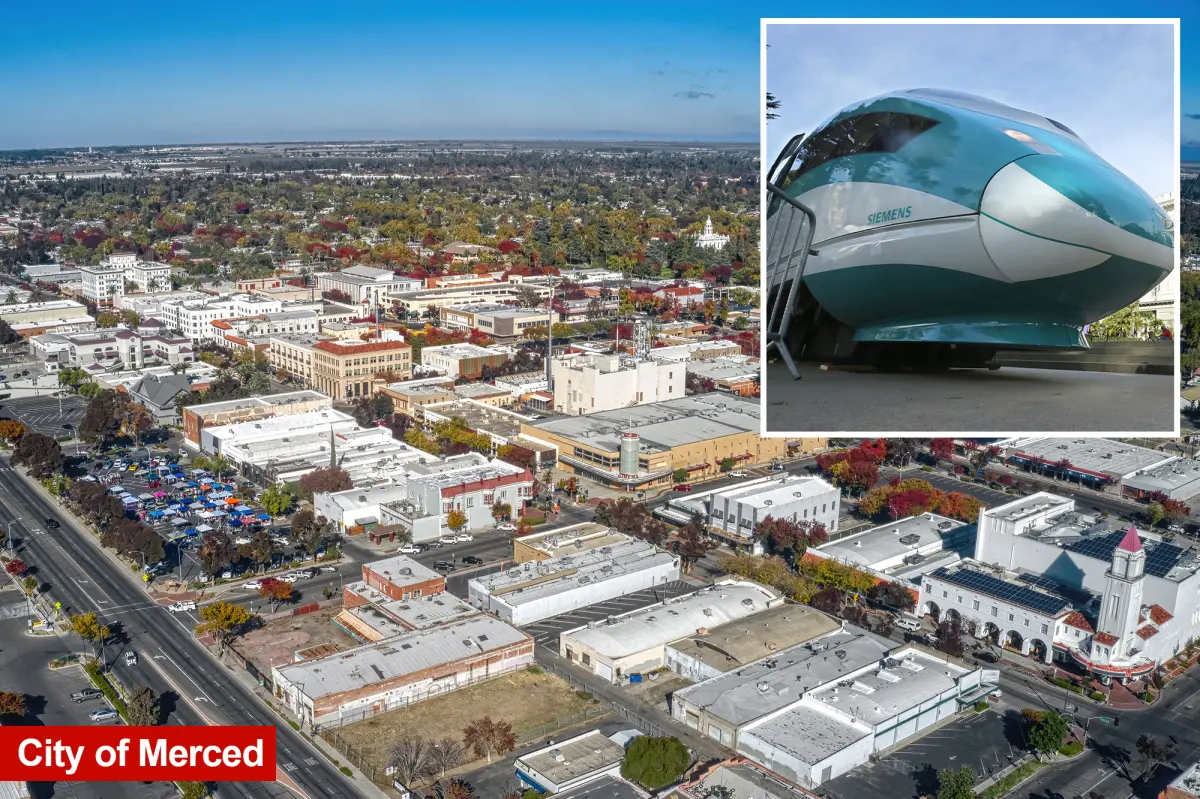

California’s long-delayed high-speed rail project is facing another challenge from local community organizations near Merced, which have sent a legal demand ordering the agency to halt work on a planned station in the rural area.
The California Rural Legal Assistance and the Community Alliance for a Sustainable Economy are among the groups accusing the rail authority of violating state law by altering the route through the Central Valley. They issued a cease-and-desist letter last week.
“The HSRA simply has no legal authority to start implementing the project in a way that deviates
from the one the Legislature and the public have funded for the last decade,” the letter stated.
The letter says the California High-Speed Rail Authority issued a summer request seeking companies to design and build the Merced-to-Madera segment. The two Central Valley cities are approximately 33 miles apart.
However, the request describes the route as extending from an area south of Mission Avenue, outside Merced, to Madera.
The organizations allege that this conflicts with state law, which calls for “a new combined station in downtown Merced.”
They warned that the alleged route change could trigger another lawsuit against a project already facing multiple legal challenges.
“The High Speed Rail Authority has shown a consistent disregard for California state law and the role of the California legislature by unilaterally deciding to re-route the high speed rail system, shift station locations, and downgrade the entire Central Valley segment to single-track,” the organizations wrote.
The proposed rerouting reportedly appeared for the first time in the rail authority’s new business plan this year. Discussion of the plan raised questions about whether it complied with legal requirements, including those governing the new route.
The route changes may be tied to the project’s severe financial strain. The rail system could run out of money by the end of 2027, and the California High-Speed Rail Authority’s inspector general has warned that additional financing is needed to prevent that outcome.
One estimate puts the project’s total cost at $231 billion, with completion pushed to about 2039. The rail authority, however, placed the cost at $126.3 billion following a reassessment this year.
Under the financial pressure, the troubled bullet train could be forced to scale back its initial operating segment, potentially excluding both Merced and Bakersfield from the first route.
California could instead direct its remaining funds toward a much shorter stretch between Madera and Poplar Avenue in rural Kern County. The proposed endpoint is largely surrounded by farmland and orchards, High-Speed Rail Project Inspector General Benjamin Belnap told KCRA.
Merced is not the only community pushing back. Nearby Bakersfield, the city of Shafter and developer Lennar Homes are moving forward with plans for 1,200 homes in the same area off Highway 99 where the rail authority intends to build tracks.
Mayor Chad Givens said the housing development could force the rail authority to move its planned trains. He told The Fresno Bee that the city would go to court to defend the proposed project.
“You’ve got a city and a pretty high-volume developer willing to fight against high-speed rail,” Givens said.
The project has also come under scrutiny over its soaring price tag and questions about whether public funds are being used effectively.
This month, the High-Speed Rail Authority’s inspector general said contractors working on the project had improperly spent hundreds of millions of taxpayer dollars on first-class travel, Uber rides and other unauthorized expenses.
The revelations come as Republicans continue to criticize the project as a dead end.
“California families can barely pay their rent,” Assembly Republican Leader Alexandra M. Macedo (R-Tulare) said in a statement Tuesday.
The project is far from complete since workers broke ground on the project in 2015. Only this year did the ill-fated rail project enter what officials called the “track-laying phase.”
The California Post reached out to the High-Speed Rail Authority for comment on the cease-and-desist letter.