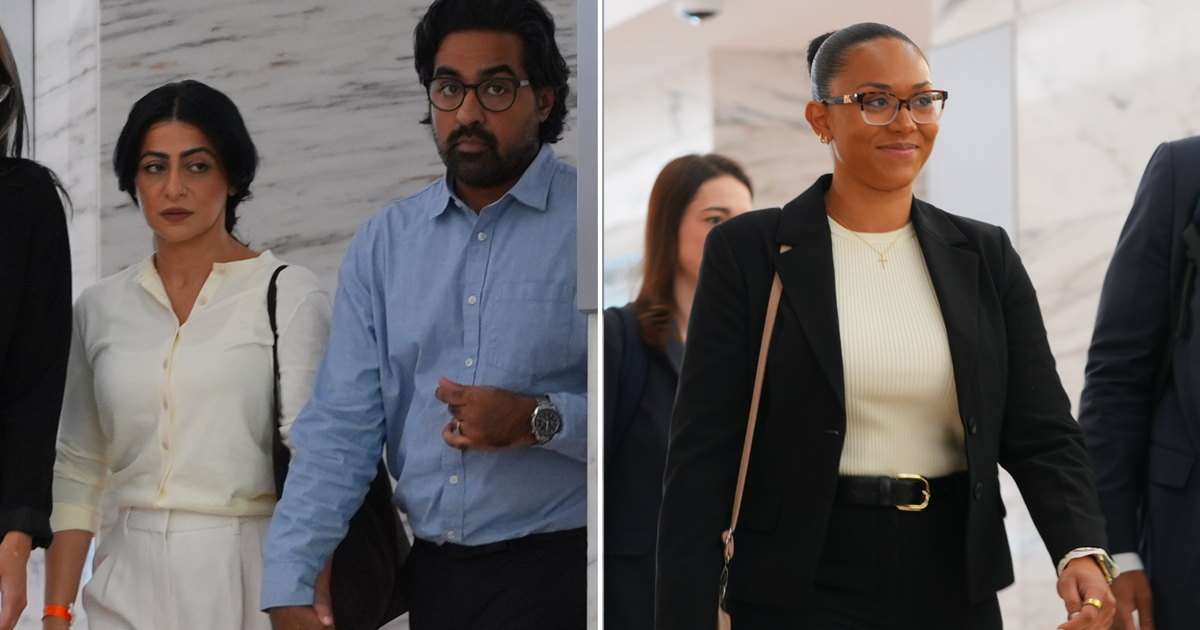

Washington — The Supreme Court on Tuesday declined to step into a custody dispute involving a California couple and the surrogate who gave birth last month to a baby with a rare, life-threatening heart condition.
Justice Elena Kagan turned down an emergency request from McKenna West, who asked the justices to suspend a California court ruling that recognized Omar Ahmed and Nausheen Gilkar as the child’s legal parents.
Kagan oversees emergency applications from California and several other Western states.
At the center of the dispute is a surrogacy agreement between West, Gilkar and Ahmed. Court filings say the contract permitted the couple to request an abortion if prenatal testing revealed a fetal abnormality.
West, who lives in Alaska, became pregnant with the couple’s baby boy in December. A 20-week anatomy scan in April, however, found that the fetus had hypoplastic left heart syndrome, a severe and potentially fatal defect that blocks normal blood flow through the heart, according to the U.S. Centers for Disease Control and Prevention.
Following the diagnosis, court documents say, Ahmed and Gilkar asked West to terminate the pregnancy. She refused, traveled to Texas and gave birth last month. West refers to the boy as Gabriel, while the couple calls him Rumi. Texas generally prohibits abortions after about six weeks of pregnancy.
Before the birth, Ahmed and Gilkar petitioned a California court to establish their parentage. The court granted the request and ruled that they were the boy’s legal parents.
The newborn underwent surgery in Texas shortly after his birth, after Attorney General Ken Paxton intervened and obtained a court order directing the hospital to provide lifesaving treatment. Paxton has since withdrawn from the case. The operation, called the Norwood procedure, is generally the first of three surgeries performed during the early years of life for children with hypoplastic left heart syndrome, the CDC says.
A Texas court separately ruled that Ahmed and Gilkar, rather than West, have authority over the boy’s medical decisions.
West nevertheless asked the Supreme Court to set aside the California order naming Ahmed and Gilkar as the child’s parents. Her attorneys argued that the couple was trying to stop the boy from receiving lifesaving treatment and said West would be unable to act to preserve his life unless the justices intervened.
West’s lawyers also argued that, under Texas law, she would likely be considered the child’s legal mother because she delivered him in the state.
In a filing with the Supreme Court, attorneys for Ahmed and Gilkar disputed that account. They said the couple had been making sure the baby received lifesaving treatment and “are committed to doing so for the rest of his life.”
“Respondents have been with their child around the clock in a hospital’s pediatric intensive care unit,” the lawyers wrote. “The child has been receiving critical medical care by his team of doctors at the consent and direction of Respondents.”
They warned that Supreme Court intervention would create confusion and disruption over who could make medical decisions for the child. The couple’s attorneys also challenged West’s claim that emergency action was necessary, saying Ahmed and Gilkar were already authorizing the medical care she sought for the baby.