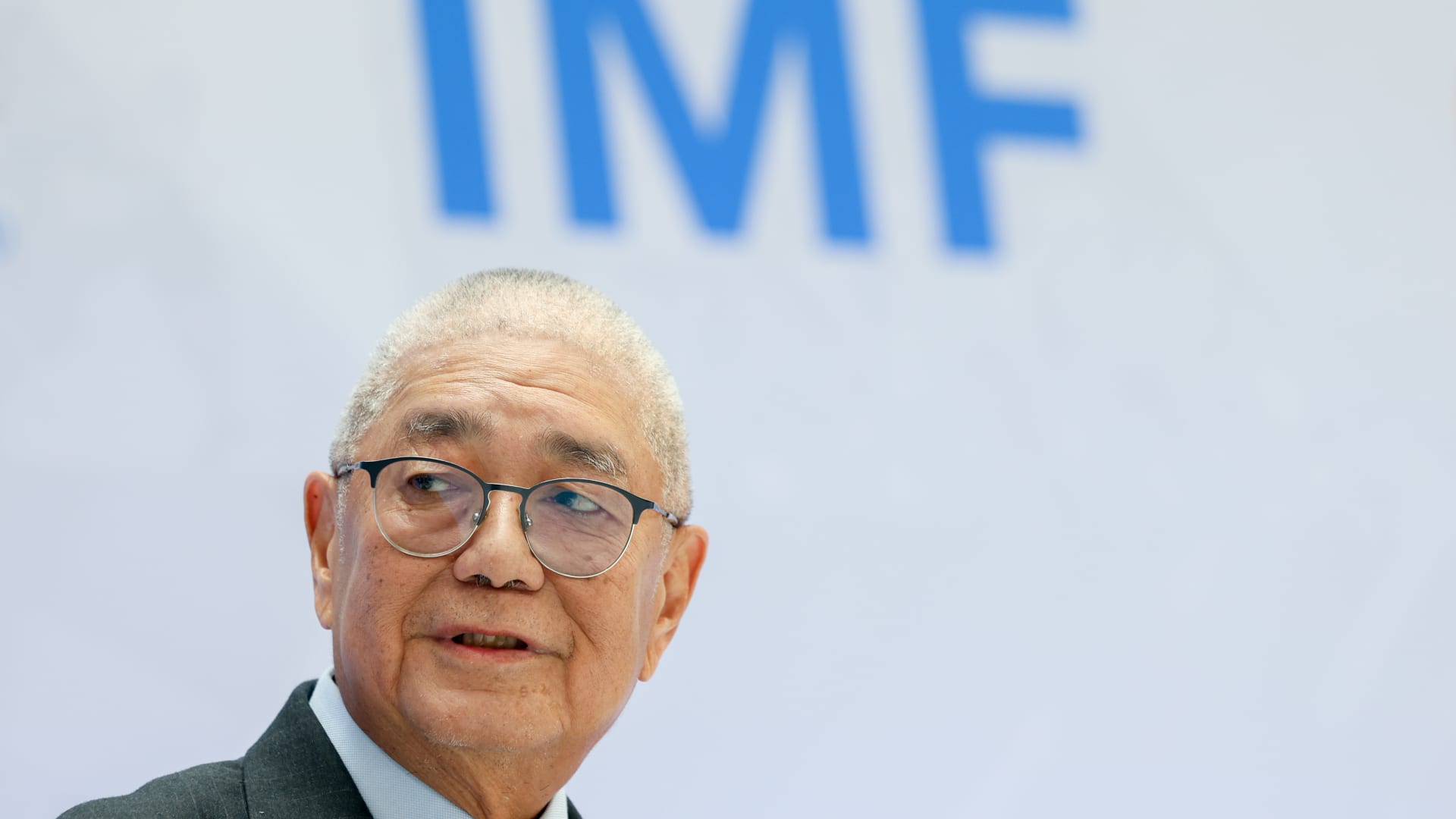

Eli Remolona, governor of the Bangko Sentral ng Pilipinas, attends the International Monetary Fund (IMF) and World Bank Spring Meetings at the IMF headquarters in Washington, DC, US, on Friday, April 25, 2025.
Bloomberg | Getty Images
BANGKOK — The Philippine central bank is preparing for a potentially devastating “Godzilla” El Niño alongside a prolonged oil shock as it works to contain inflation that has climbed to a three-year high.
Eli Remolona, governor of the Bangko Sentral ng Pilipinas, said the central bank is now modeling policy scenarios based on both oil prices and the severity of the weather phenomenon. Speaking Wednesday on a panel at the IMF and World Bank annual meetings in Bangkok, he described two possibilities: “the regular, ordinary El Niño, which is bad,” and a “Godzilla El Niño,” which he said would be “really, really bad.”
The sharpest effects of El Niño on consumer prices have yet to emerge, Remolona said, with the biggest impact expected between November and February. He added that preserving price stability remains the Philippine central bank’s top priority.
“We’re holding our breath,” Remolona said, “but we have to be prepared for the worst.”
The risk of more severe weather is adding to the strain on one of Southeast Asia’s most vulnerable economies. Philippine inflation rose to 7.2% in September from 6.1% in August, while rice prices surged 18%, data from the Philippine Statistics Authority showed.
As the world’s largest rice importer, the Philippines is particularly exposed to disruptions in food supplies. Agriculture Secretary Francisco Tiu Laurel has cautioned that another drought could reduce domestic output. Increased Philippine purchases could further tighten a global rice market already affected by El Niño and export restrictions. The UN Food and Agriculture Organization has lifted its rice price index for six straight months, bringing it to a 20-month high.
The Bangko Sentral ng Pilipinas raised its benchmark interest rate by 25 basis points to 5% in August in an effort to bring runaway inflation under control.
The central bank is expected to raise rates by another quarter percentage point to 5.25% next week, followed by an additional increase of the same size in December, Aris Dacanay, senior ASEAN economist at HSBC Bank, wrote in a note Wednesday.


