

Static Media
When Hollywood ground to a halt in March 2020 because of the COVID-19 pandemic, animation was one of the few areas of filmmaking that continued moving forward. Since animated projects could largely be completed remotely, they avoided many of the production delays and disruptions that affected live-action movies. The steady arrival of animated features offered a welcome sense of hope during an unstable period for cinema—and proved that the medium could keep creating, even amid a global health crisis.
Animation in the 2020s has done far more than simply survive. The decade has already produced a remarkable collection of films spanning genres, countries, visual styles, and ambitious themes. The medium has no single definition, and the strongest animated movies of the decade make that diversity impossible to ignore. Based on subjective opinion, the five films ranked below—from least to greatest—stand out as especially vivid examples of contemporary animated artistry.
These selections also showcase animation’s extraordinary range, moving from hand-drawn elegance to striking computer-generated imagery inspired by earlier visual traditions. Despite the real-world pressures facing the film industry, the decade’s best animated features demonstrate that creativity remains abundant—and perhaps more adventurous than ever.
5. Little Amélie or the Character of Rain
GKIDS
Directors Maïlys Vallade and Liane-Cho Han turned “Little Amélie or the Character of Rain” into far more than a beautiful film. Its watercolor-influenced 2D animation glows with vivid color, personality, and wonder. The movie adopts the perspective of infant Amélie (Loïse Charpentier) as she explores the world around her family’s home in Kobe, capturing the excitement and awe of encountering familiar surroundings for the first time. Every image reflects the magnificence of that newly discovered world.
Amélie’s experience anchors “Character of Rain,” which, like “The Florida Project,” follows a child confronting the difficult realities of the adult world. Those complications surface through Amélie’s friendship with her nanny, Nishio-san (Victoria Grosbois), a tender relationship between French and Japanese women viewed with disapproval in post-World War II society. Alongside its visual splendor, the film’s concise 77-minute runtime delivers considerable emotional weight, including several quietly devastating moments.
The film moves gracefully between intimate sorrow and spectacular imagery, balancing both extremes without losing its humanity. “Little Amélie or the Character of Rain” is the kind of animated achievement that makes the medium feel limitless.
4. Look Back
GKIDS
Many of 2024’s standout animated films pursued enormous scale, kinetic action, and sweeping adventure. One of the year’s most impressive artistic achievements, however, was much quieter. Kiyotaka Oshiyama’s “Look Back” centers on Fujino (Yuumi Kawai) and Kyomoto (Mizuki Yoshida), two young artists who form a friendship through their shared love of drawing. Their personalities could hardly be more different, and Kyomoto’s isolation makes their connection seem unlikely. Yet their bond becomes deeply meaningful to both of them.
At its heart, “Look Back” explores the relationships that give life its meaning. Ordinary afternoons spent sketching can seem insignificant at the time, only to become memories that remain vivid for years. Oshiyama’s adaptation of Tatsuki Fujimoto’s 2021 manga captures those small interactions with remarkable sensitivity. Midway through, the story takes a tragic turn toward darker material, giving the film a new emotional force. Past and present, regret and grief begin to collide, while the filmmakers maintain their close attention to the subtle details that make the characters feel real.
With its moving story and remarkably concentrated 58-minute runtime, “Look Back” leaves little room for emotional distance. Its graceful animation and heartfelt characters make the film exceptionally difficult to finish without shedding a tear.
3. Flow
Janus Films
Silent cinema remains a singular art form. Classics such as “Sunrise: A Song of Two Humans” and “The Gold Rush” were created before filmmakers could combine synchronized sound with moving images, yet they demonstrated just how expressive pictures alone could be. The era’s many nightmarish silent horror films further reveal the creative power of the form. Although new silent features are rare, modern works such as “Hundreds of Beavers” continue that tradition. So does the 2024 Latvian film “Flow,” which also ranks among the finest cat movies ever made.
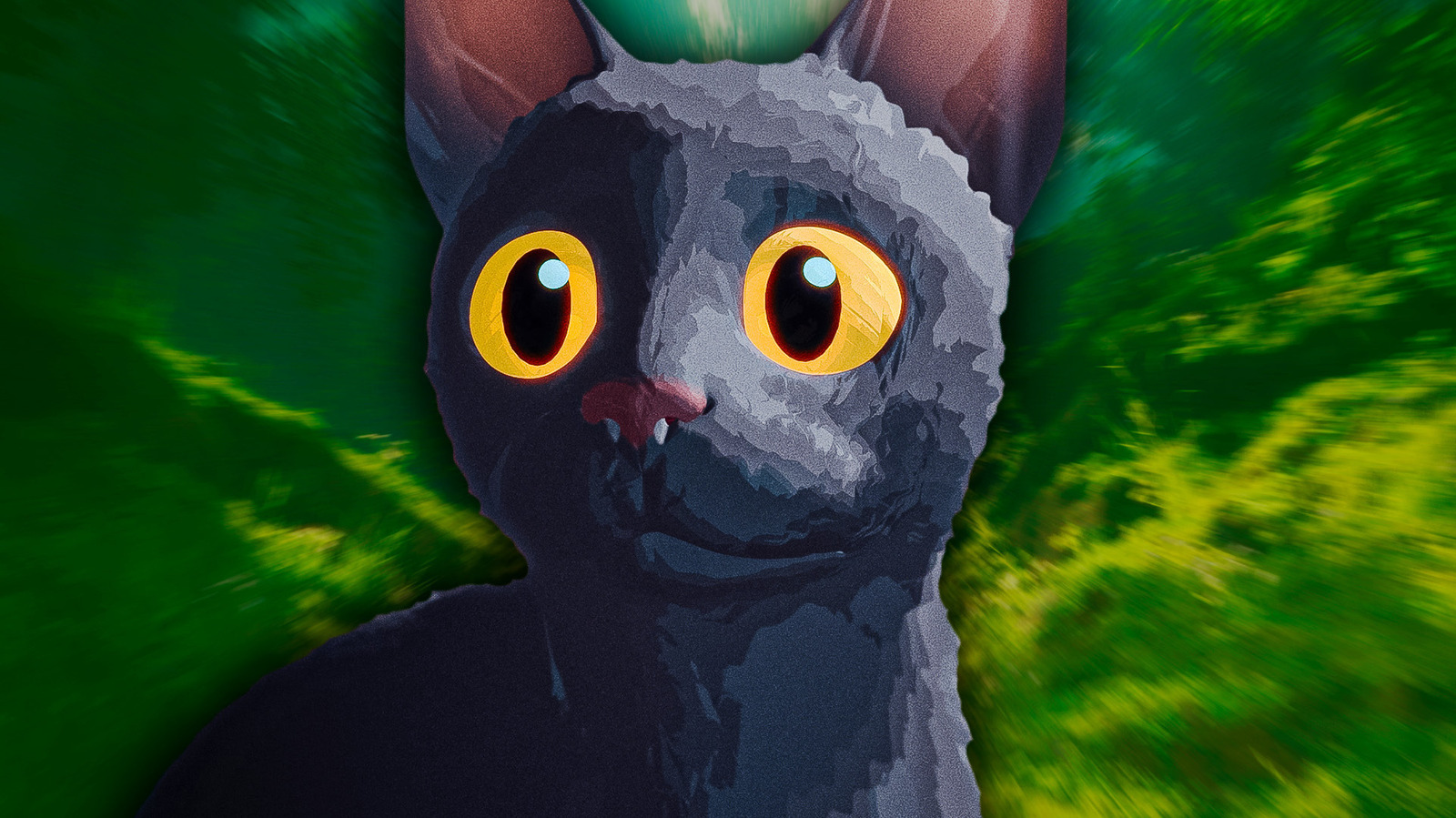
“Flow” follows a black cat trying to survive after a devastating flood overwhelms his world. Forced onto a makeshift boat, he travels with an unlikely group of companions, including a lemur, a dog, and a capybara, as they encounter one strange challenge after another. Writer-director Gints Zilbalodis, working with co-writer Matīss Kaža, builds the film around pure visual storytelling. Its premise proves that a curious cat and a vividly imagined world can hold an audience’s attention without traditional dialogue-driven exposition.
More importantly, “Flow” trusts viewers to interpret its story rather than explaining every detail. The film’s ability to inspire empathy for animals who are never turned into humanlike characters is one of its boldest and most affecting qualities.
2. Flee
Neon
The finest documentaries bring forward testimonies and experiences that could not be expressed as powerfully through another cinematic form. “Flee,” released in 2021, fully embraces that possibility. This animated documentary follows Amin Nawabi as he recounts his life, from being born in Afghanistan and growing up as a refugee to coming to terms with his queerness.
Director Jonas Poher Rasmussen uses animation to visualize Nawabi’s memories, many of which have no surviving photographs or video footage. The film’s visual approach shifts with its emotional register, including sparser animation during especially painful passages. These choices convey the many layers of a man whose identity and experiences have too often been reduced or erased by political systems that treat people as outsiders. Nawabi’s story is so compelling that its place at the center of a feature-length film feels entirely natural.
Among the film’s most unforgettable moments is the sequence in which Nawabi’s brother discovers and reacts to his sibling’s queerness. Nawabi has carried an extraordinary number of experiences throughout his life, many of which he was forced to keep hidden. By combining the intimacy of documentary filmmaking with animation’s freedom, “Flee” finally gives his perspective a powerful and deeply affecting form.
1. Spider-Man: Across the Spider-Verse
Sony Pictures Releasing
Even after all the critical acclaim and blowing everyone away at the box office, it’s easy to forget that this “Spider-Man: Into the Spider-Verse” sequel is simply an exceptional movie. Beyond leaning into the exciting heightened possibilities of animated storytelling; it’s also a love letter to many different styles and visual aesthetics, as embodied by the varying ambiances of the multiversal Spider-heroes. Anything is possible in animation, and “Across the Spider-Verse” beautifully spreads that idea across an entire, joyous movie.
Beyond those iconic visuals, “Across the Spider-Verse” is exemplary filmmaking in every way imaginable. The way this and the first “Spider-Verse” deliver scripts so pervasively energetic yet packed with small emotional moments is glorious to witness. Meanwhile, the maximalist imagination informing every inch of this enterprise extends to Daniel Pemberton’s phenomenal score. The soundscape of “Across the Spider-Verse” throws out exciting new noises and instruments at the viewer, a perfect auditory parallel to the equally unpredictable animation. Truly anything goes.
There’s no shortage of accomplishments one could lay at the feet of “Spider-Man: Across the Spider-Verse,” including technically being the best female-led superhero movie of all time. Being a 140-minute microcosm of all of animation’s most mind-melting and richly human possibilities, though, is a particularly nifty achievement.


