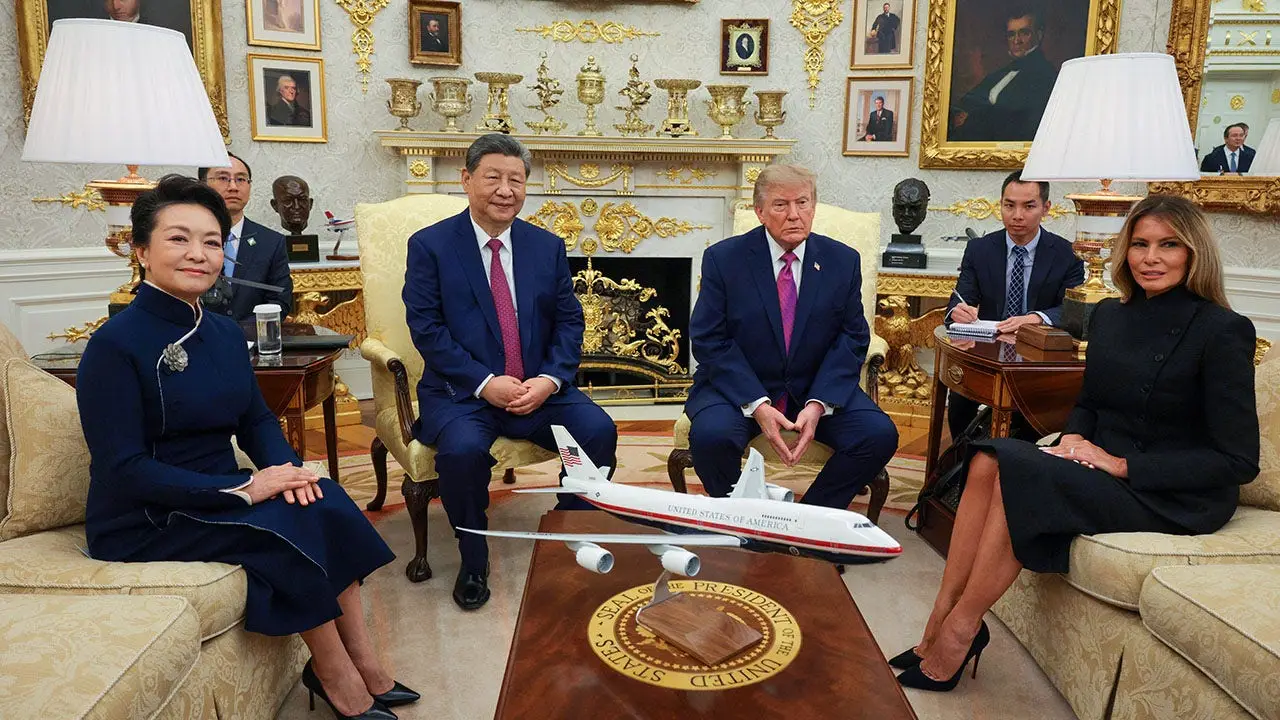

TAIPEI — Taiwanese officials were closely monitoring the outcome of President Donald Trump’s state visit with Chinese President Xi Jinping in Washington, D.C., last week for any indication that U.S. policy toward Taiwan might shift.
Xi’s visit drew intense attention in Taiwan, which remains a frequent target of threats from Beijing. On Saturday, scholars, a retired U.S. military officer and Taiwan’s deputy foreign minister gathered at Taipei’s Institute for National Policy Research (INPR) to assess what the third Trump–Xi meeting of Trump’s current term could mean for the island. Most of the panelists predicted that Washington’s Taiwan policy would remain unchanged.
“Both of them got what they want and what they need,” Kuo Yu-jen, INPR’s vice president and a professor at National Sun Yat-sen University’s Institute of China and Asia-Pacific Studies, told News Outlet. Trump can highlight economic gains from his negotiations with Xi, while Xi can return to Beijing after receiving the prestige of a high-profile welcome in the United States, Kuo said. He described claims that Trump had “sold out” Taiwan as excessive speculation.
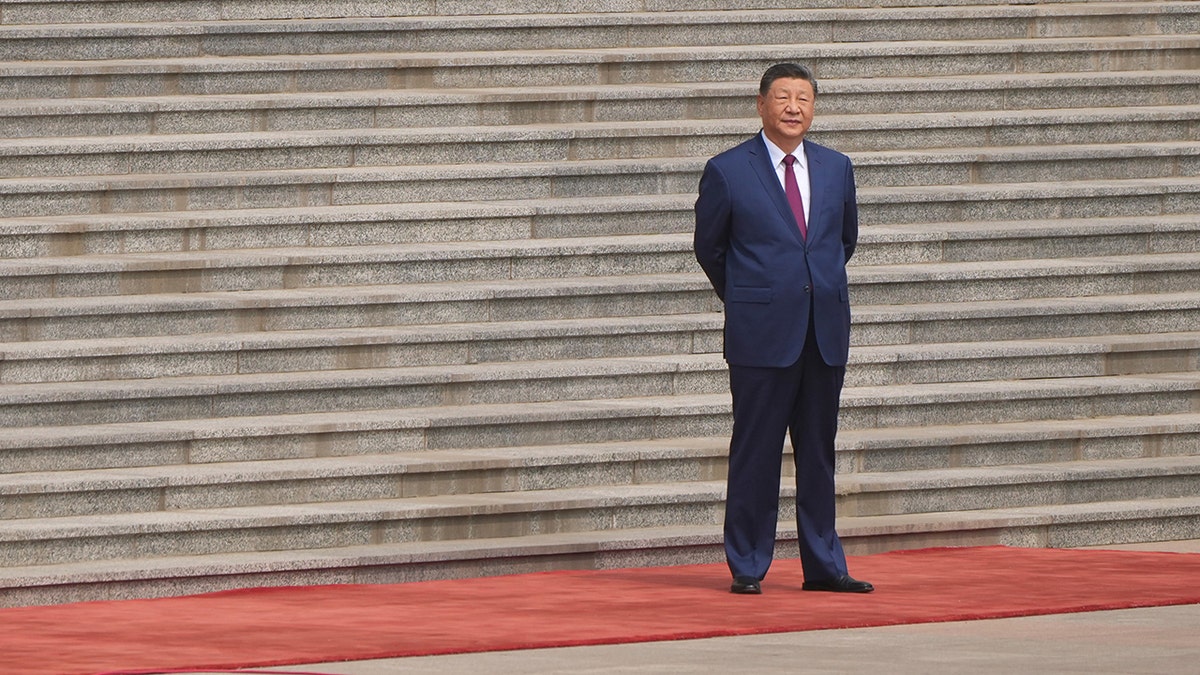
China’s President Xi Jinping arrives to welcome President Donald Trump at the Great Hall of the People, Thursday, May 14, 2026, in Beijing. (Mark Schiefelbein/AP Photo)
As expected, Xi reportedly urged Trump to state that the United States opposes Taiwan independence. Washington has traditionally used more carefully worded language, saying it does not support Taiwan independence. To the relief of Taiwan’s government, Trump retained that distinction.
In an exclusive interview with News Outlet after the forum, Taiwan’s Deputy Foreign Minister François Wu said Beijing is seeking more than a change in diplomatic phrasing. China wants the international community to regard Taiwan as an internal Chinese matter, Wu said. If Beijing succeeds in establishing that view, it could argue that other nations have no right to respond to Chinese actions against the island.
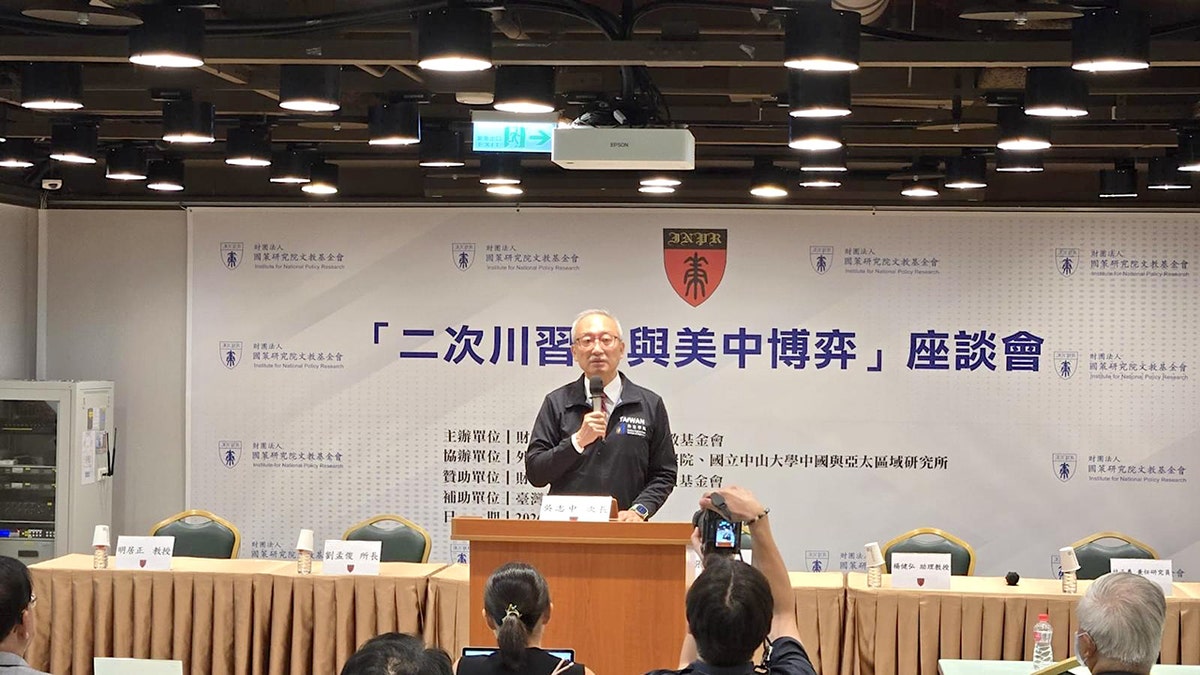
Taiwan’s Deputy Foreign Minister François Wu speaks at the Institute for National Policy Research (INPR) in Taipei on Sept. 26, 2026. (Eryk Michael Smith for News Outlet)
“The so-called independence of Taiwan is just an issue made specifically by the Chinese government,” Wu said. Taiwan already has its own president and government, elected by its people, as well as its own territory and currency, he said. “We just don’t need to declare any independence. We are a sovereign country.”
Before Trump’s May visit to China, Wu had voiced concern that Taiwan could become a bargaining chip. “What we are most afraid of is to put Taiwan on the menu of the talk between Xi Jinping and President Trump,” he told Bloomberg at the time.
China’s Foreign Ministry said Xi had called on Trump to maintain the “correct position” of opposing Taiwan independence. Taiwan’s Foreign Ministry issued a swift response despite a public holiday, rejecting Beijing’s characterization and reiterating the island’s position on its sovereignty.
SEE ALSO: Florida Pickleball Dispute Escalates as Fitness Executive Takes Legal Action
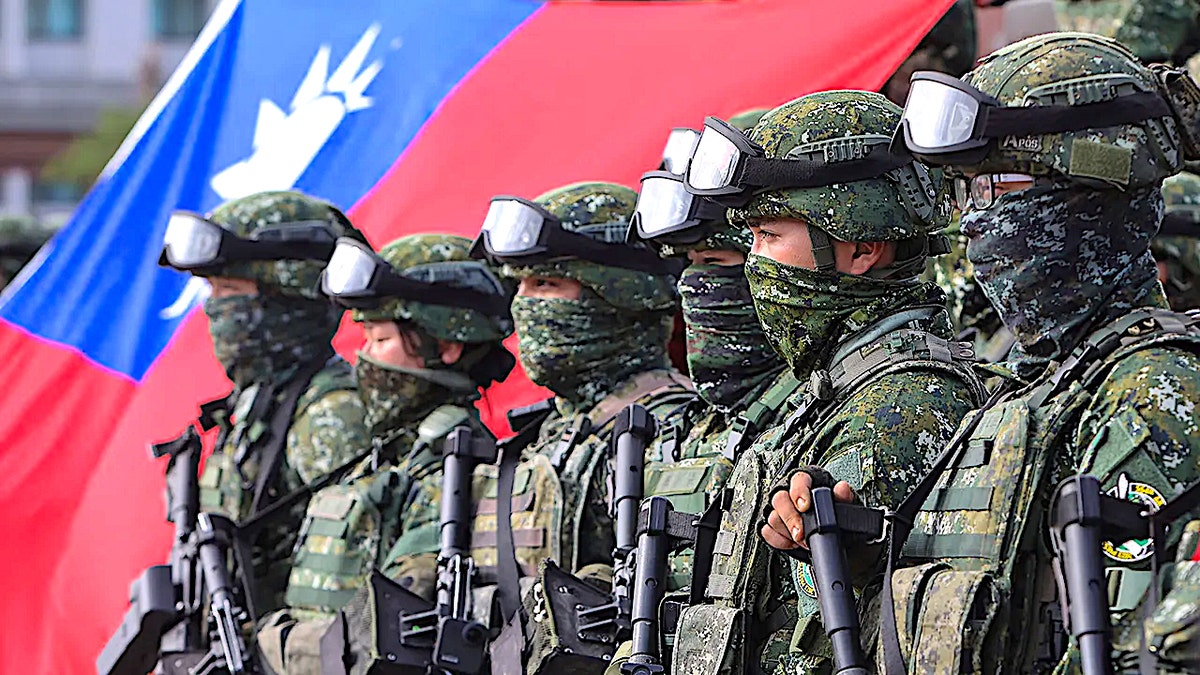
Soldiers pose for group photos with a Taiwan flag after a preparedness enhancement drill simulating the defense against Beijing’s military intrusions, ahead of the Lunar New Year in Kaohsiung City, Taiwan on Jan. 11, 2023. (Daniel Ceng/AP Photo)
The White House summary of Xi’s visit announced no change in U.S. policy toward Taiwan. Instead, it highlighted more favorable tariff treatment for US$30 billion in goods moving in each direction, the creation of an artificial intelligence incident communication channel and U.S. concerns over rare earths and other critical-mineral supplies.
Even so, the meeting fueled questions in Taiwan about what Xi may have secured from Trump behind closed doors. Analysts said any agreement involving Taiwan would likely become apparent only through decisions made in the coming months. Taipei is awaiting Trump’s approval of additional arms sales, visits by senior U.S. officials and a possible U.S. transit stop for Taiwan’s president. Beijing opposes all three, leaving Trump to balance relations with China, continued support for Taiwan and his own policy priorities.
Dong Li-wen, executive director of the government-funded Foundation on Asia-Pacific Peace Studies, said the two leaders appear to share an approach of postponing the most difficult decisions while waiting for conditions to change. For Xi, Dong said, this is a long-term strategy; for Trump, it is a short-term tactic. The two governments can continue discussions and defer issues they cannot resolve, but their broader strategic rivalry remains intact.
The dispute over Taiwan’s status dates back nearly 80 years. China claims the island as part of its territory, although the People’s Republic of China has never governed Taiwan. The Republic of China government moved to Taiwan in 1949 after Chinese Nationalist forces lost the civil war to Mao Zedong’s Communists.
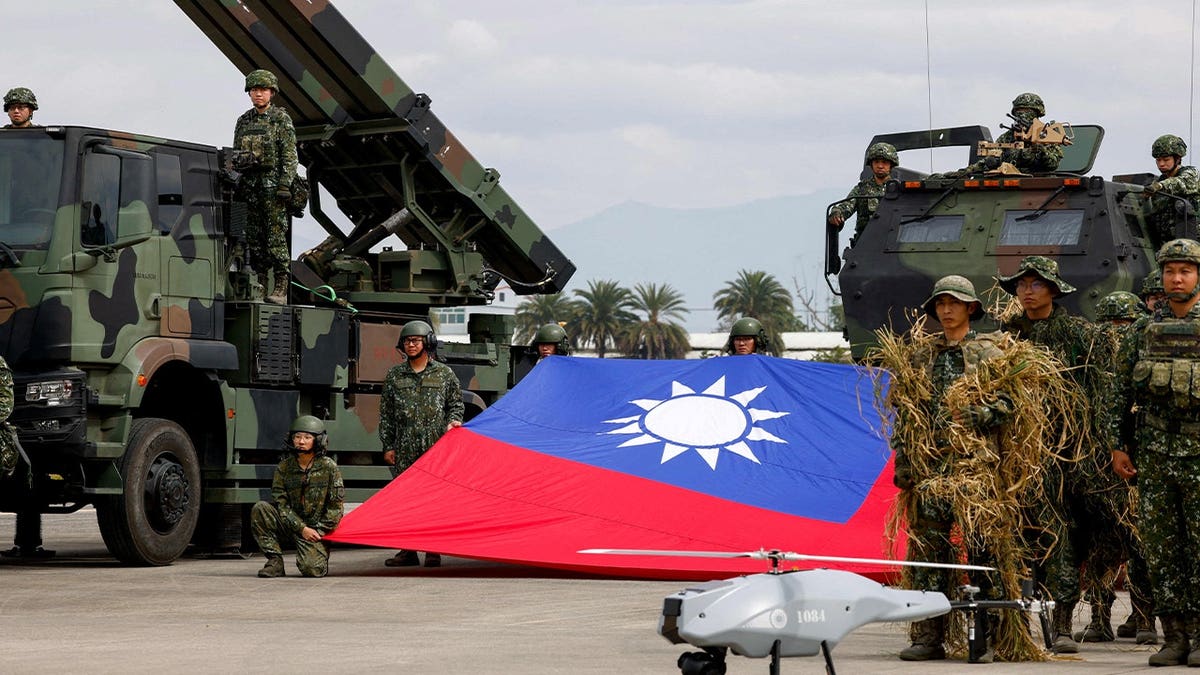
President Donald Trump suggested Monday that U.S. arms sales to Taiwan could factor into broader negotiations with China, drawing a swift response from Taiwan’s president and reigniting debate in Washington over the future of longstanding U.S. policy toward the island. (Ann Wang/File Photo/Reuters)
The governing Democratic Progressive Party’s 1999 Resolution on Taiwan’s Future defines Taiwan as an independent, sovereign state known as the Republic of China under its current constitution. Every democratically elected Taiwanese president has expressed a similar view in interviews with international media. Those leaders include Lee Teng-hui, who spoke to The Washington Post in 1997; Chen Shui-bian, who spoke to the BBC in 2010; Ma Ying-jeou, who spoke to CNN in 2010; and Tsai Ing-wen, who spoke to the BBC in 2020. Current President William Lai Ching-te made the same case to Time in 2024, adding the frequently repeated position that the Republic of China and the People’s Republic of China are not subordinate to one another.
According to Deputy Foreign Minister Wu, Taiwan intends to defend that status quo, under which the island functions as a de facto independent state. Xi left Washington after reiterating Beijing’s demands, while analysts at the forum said the impact of any effort to influence U.S. policy would soon be visible in decisions on arms sales and other matters. Some predicted that future weapons packages could be reduced in scope or “unbundled.”
Ross Darrell Feingold, a political analyst and assistant professor in Tamkang University’s Department of Diplomacy and International Relations, told News Outlet separately that Taiwan’s domestic political calendar could also shape U.S. decisions. A local election is scheduled for November, followed by presidential and legislative elections in January 2028. “Although the U.S. is likely to back President Lai’s re-election; agreeing to arms sales, visits by Trump administration officials or Lai’s desired transit stop in the U.S. will need to be balanced against coming across as too blatantly interfering in Taiwan’s election, as well as the inevitable anger from China.”