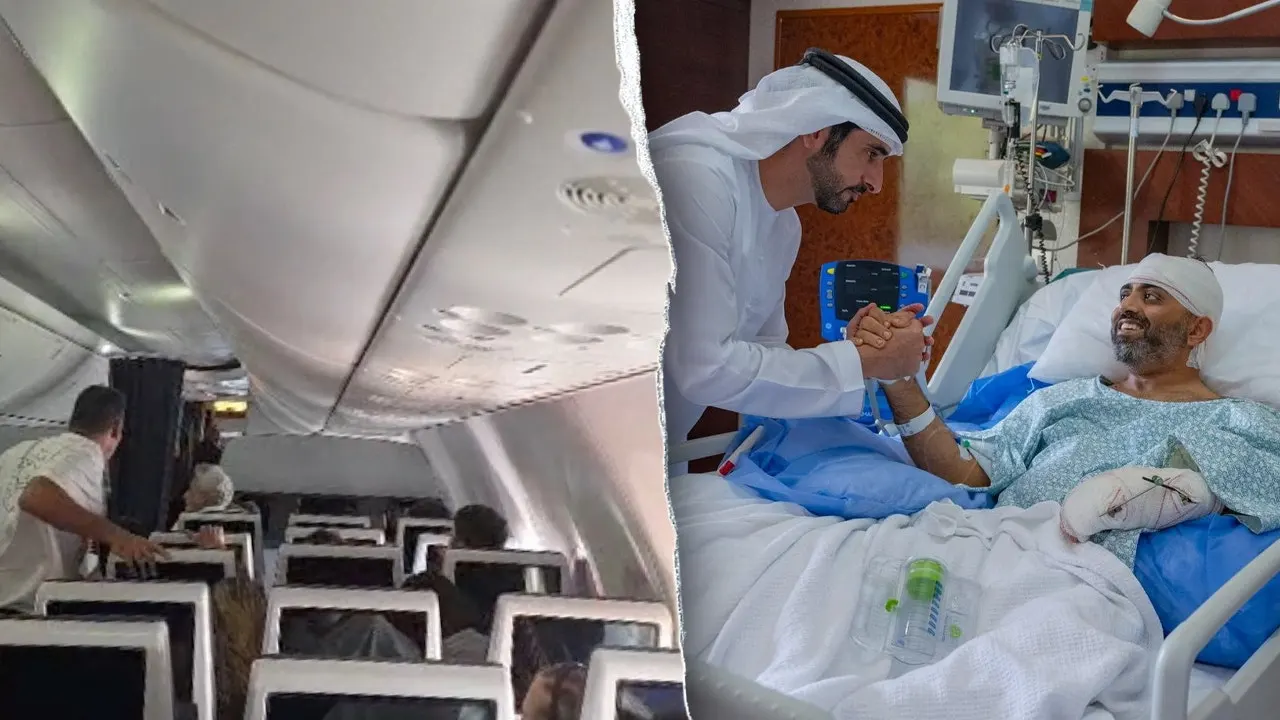

A former Delta Air Lines pilot who once served as a military aide carrying the nuclear football for President Bill Clinton is warning that extremist networks could potentially emerge within foreign airline companies. His concern follows allegations that a FlyDubai copilot assaulted the captain of an Israel-bound flight, sending the aircraft into a perilous dive.
“It’s possible that terror cells can exist inside airline companies—overseas, probably a lot easier than here, but it’s certainly a possibility,” retired Air Force Lt. Col. Buzz Patterson told News Outlet on Thursday. He said the Justice Department should examine the possibility “really closely.”
The incident involved a FlyDubai flight traveling from the United Arab Emirates to Tel Aviv. After the copilot allegedly attacked the captain during the journey, the Boeing 737 diverted and made an emergency landing in Tabuk, Saudi Arabia. The aircraft carried 174 passengers and eight crew members. Investigators are examining the motive, including possible terrorism and mental health issues—two scenarios Patterson said raise serious questions about aviation safety and national security.
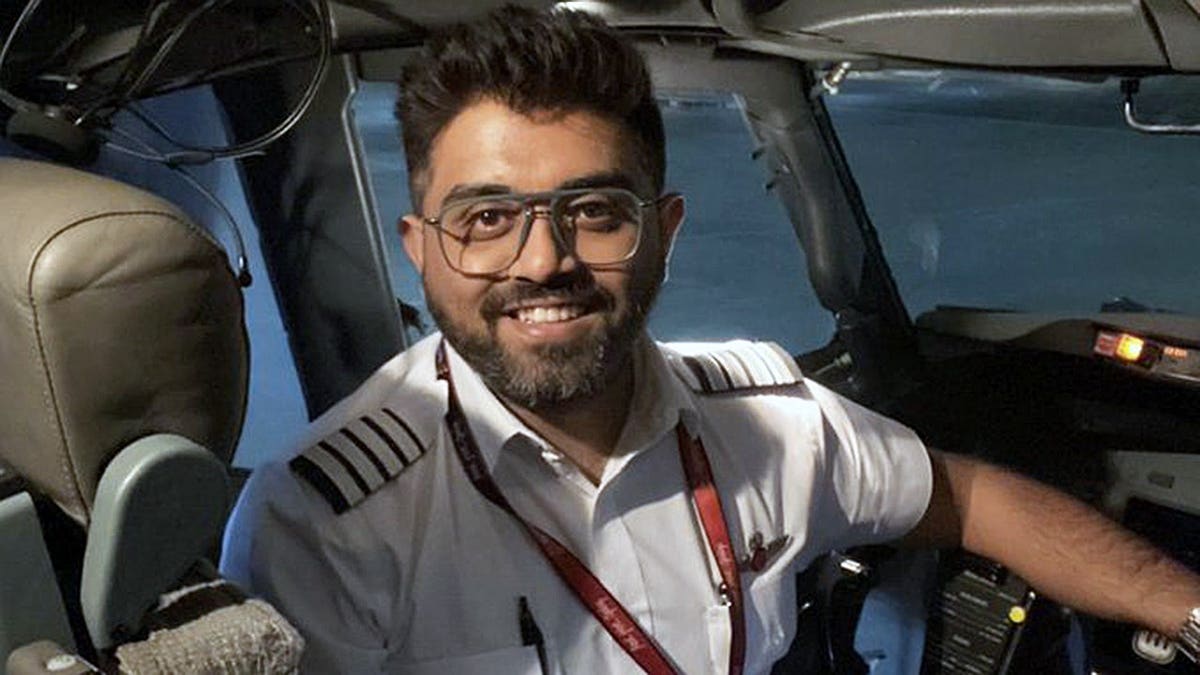
Captain Smit Machchhar, the Indian pilot allegedly attacked aboard the FlyDubai flight bound for Israel on Wednesday, Sept. 30, 2026, was praised by retired Lt. Col. Buzz Patterson as a “hero” after pressing the control that opened the cockpit door during the assault. (Israel Foreign Ministry)
Patterson said airlines may have difficulty identifying a pilot who becomes radicalized after joining a company, particularly if that individual keeps those views private. “If he doesn’t tell his company or his buddies, you’re never gonna know,” he said, adding that many existing safeguards depend heavily on employees voluntarily reporting their activities. He warned that airlines may increasingly discover that some people currently qualified to fly should not be operating aircraft.
The concerns came as reports indicated that a crash ax stored behind the copilot’s seat on the Boeing 737 was allegedly used to strike the captain during an apparent attempt to seize control of the plane.
Patterson, who flew multiple versions of the 737 throughout his career, explained that the aircraft is equipped with a crash ax in the cockpit, positioned behind the copilot. The tool can be used to break through a cockpit door or windows during an emergency, he said. If it was used in the alleged assault, Patterson described the attack as particularly brutal because of the weapon’s design.
Israeli Prime Minister Benjamin Netanyahu told “FOX & Friends” on Thursday that the copilot appeared to have been exposed to “Islamist radical indoctrination.” He cautioned that officials would need several days to establish whether the man had any connection to Iran. President Donald Trump later expressed the belief that such ties existed.
Patterson said international airlines, along with some U.S. carriers, recruit from a broad pool of applicants seeking positions as pilots and aircrew members. He said he had contacted Transportation Secretary Sean Duffy to share his concerns, arguing that the broad reach of the hiring process can sometimes attract people who may not be suitable for airline work.
According to Patterson, airlines generally conduct extensive checks involving an applicant’s background, medical records and aviation history. However, he said those systems may not detect changes in a person’s behavior or beliefs that emerge after employment, including possible radicalization.
He also pointed to the limited familiarity pilots may have with the colleagues assigned to fly alongside them. Crew members may have little insight into one another’s personal circumstances or mental health, Patterson said.
“You never know what you’re gonna bring to the table, what you’re gonna find in the cockpit next to you when you first get there,” he said. Pilots frequently work with different colleagues rather than the same crew, meaning they may be meeting a fellow pilot for the first time in most cases.
Patterson said the opening conversation between pilots can offer some insight into a colleague’s background, family life and current circumstances. But he acknowledged that even a careful conversation cannot reveal everything. “You never know who you’re getting,” he said.
Patterson also argued that the presence of a crash ax inside the cockpit represents a security vulnerability, regardless of the limited and random screening that U.S. commercial flight crews may undergo at airports.
Before official accounts identified the crash ax as the suspected weapon, Patterson said the tool was readily accessible inside the 737. He noted that one pilot could easily stand up to stretch in the cramped cockpit, creating an opportunity to reach for the ax.
Pilots occasionally leave their seats briefly to move around and restore circulation during a flight, Patterson explained. In that confined space, he said, a copilot could potentially grab the ax while standing—and the consequences could be devastating.
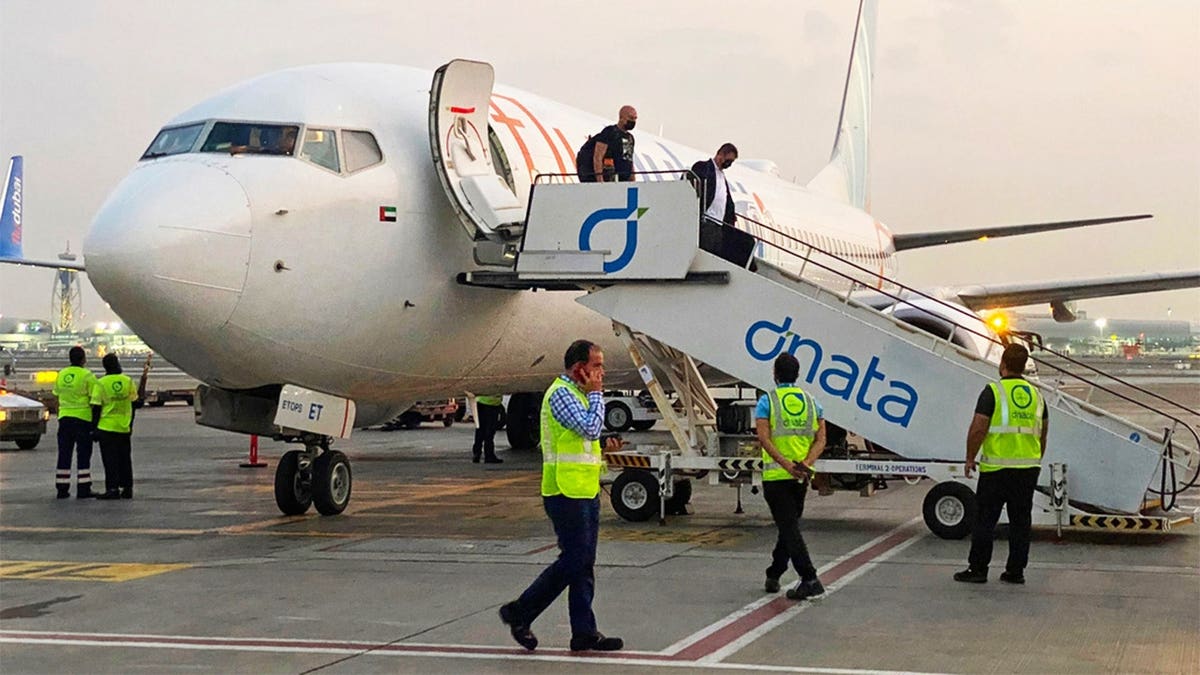
Israeli tourists disembark from a FlyDubai aircraft that flew from Ben-Gurion International Airport in Tel Aviv to Dubai, United Arab Emirates, on Nov. 8, 2020. (AP Photo/Malak Harb)
The reported attack, Patterson said, highlights the need for the United States to examine both its domestic airline hiring practices and the foreign crews operating aircraft in American airspace.
“The United States needs to take a close look at not only who we are allowing to operate heavy machinery in this country—and by heavy machinery, I mean aviation—but also who we are hiring for those positions of authority,” Patterson said. He added that officials should pay particular attention to foreign airline personnel permitted to fly into U.S. airspace.
Netanyahu told Fox News that the FlyDubai copilot was an Omani national who had been able to pass through what he described as a “loophole” in Israel’s policy restricting pilots from countries that do not maintain diplomatic relations with Israel.
While “9/11 changed everything in terms of aviation for everybody,” clearly there is far more work to be done to ensure airline safety, he concluded.
“You never know what you’re carrying on the back of of the airplane,” he said. “Sometimes the guy you’re flying with is a wild card and sometimes the guys in the back the airplane are a wildcard. And I think that just some companies do the job, the security job, and they do the vetting screening better than other companies do.”