
A kayaker fishing off the Malibu coast was reportedly bitten by a shark Sunday morning, sustaining at least two injuries to the lower part of his body.
The incident took place at approximately 8:30 a.m. near the popular café at Paradise Cove, according to Traffic News Los Angeles.
The man was fishing from his kayak when a small shark allegedly bit him, sending him into the water, TLNA reported.
Preliminary accounts described the animal as a possible mako shark. The shark reportedly returned and bit the kayaker a second time.
Another fisherman who saw the encounter rushed to help, pulling the injured man from the water and onto his boat.
The victim then called his girlfriend, a retired lifeguard, who alerted emergency responders by dialing 911.
Los Angeles County lifeguards arrived and assisted in bringing the man safely to shore. He was later taken by ambulance for medical treatment.
The California Post has contacted Los Angeles County lifeguards seeking additional information, including confirmation of the reported shark attack, an update on the victim’s condition and clarification about the animal’s possible species.

Authorities have not publicly identified the shark or released further details about the extent of the kayaker’s injuries.
RELATED: Half of Scotland’s Wild Swimming Hotspots Found Polluted
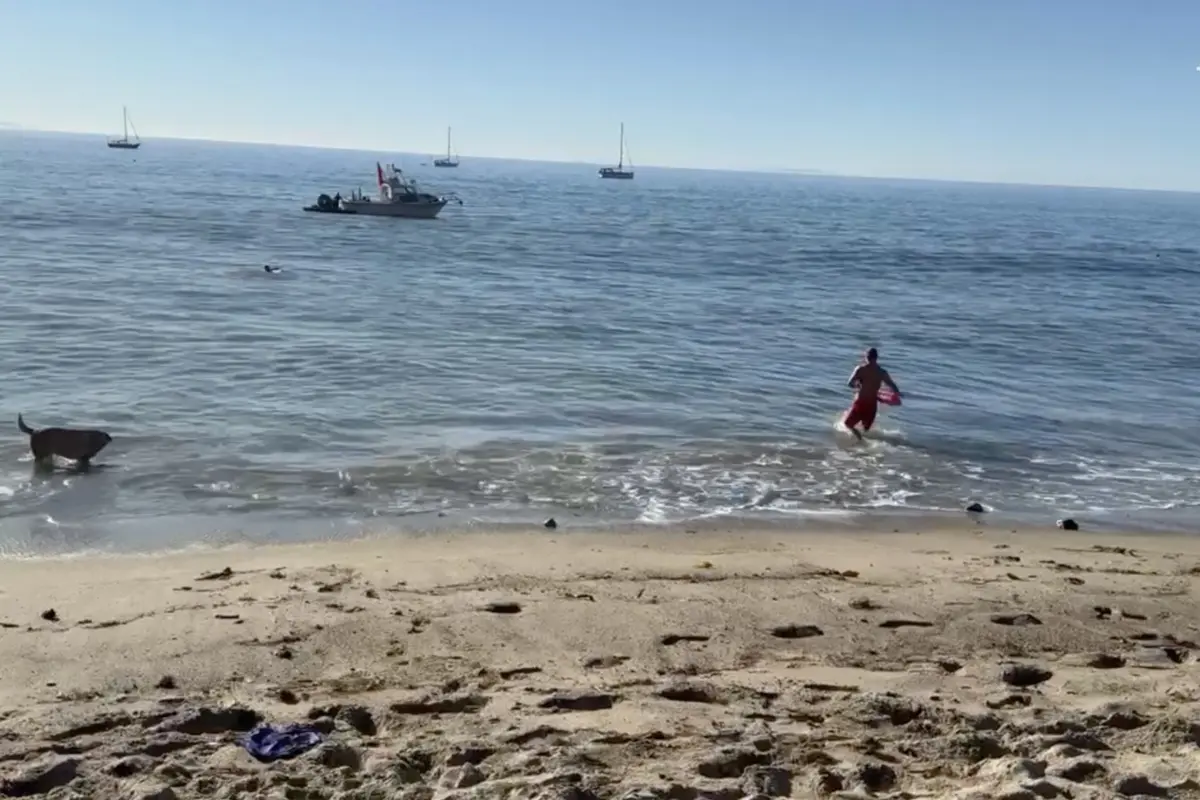
Video captured at the scene shows a lifeguard moving quickly through the water as the rescue operation unfolded.
The footage appears to show relatively calm waters along the Malibu shoreline, with a small boat positioned nearby during the response.
A man is also seen swimming toward the boat, though the video does not establish whether he is the kayaker involved in the reported attack.
The shark itself is not clearly visible in the recording, and the footage contains no obvious detail that would independently verify the reported encounter.
Officials are continuing to examine the circumstances of the incident.
The report comes as lifeguards and beachgoers across Southern California remain mindful of possible encounters with marine wildlife.
Sharks may enter shallow coastal waters for a variety of reasons, most often while searching for food. Warmer temperatures, schools of baitfish and shifting tides can move prey closer to shore, attracting sharks to those areas.
In Southern California, sharks can swim relatively close to the coastline year-round, although activity often rises during the warmer months. Certain species also rely on shallow coastal zones as nursery habitat, especially when young sharks are present.
Shark activity may also increase around dawn and dusk, when limited visibility and the movement of prey can create more favorable feeding conditions.