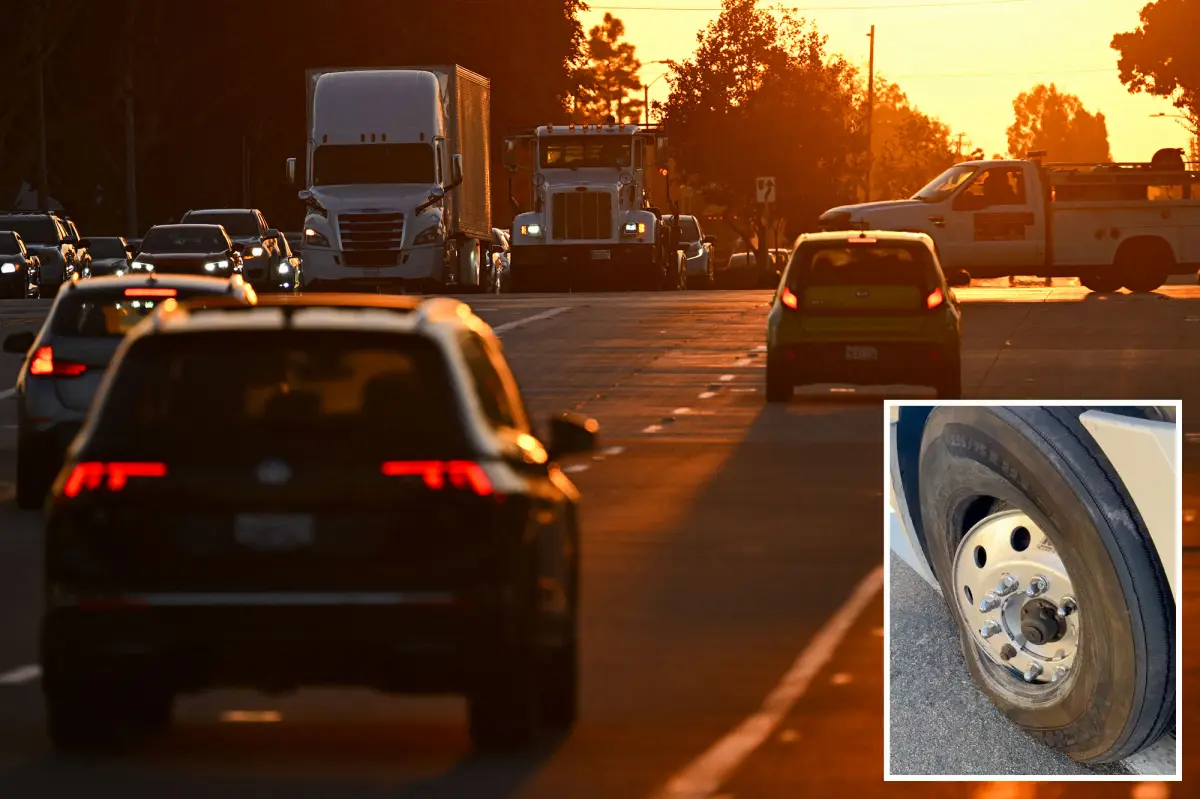

Southern California’s relentless heat wave is complicating the morning commute, prompting officials to urge drivers to inspect their tires for potentially dangerous damage.
Triple-digit temperatures can cause tires to blow out, become overinflated or develop cracks, raising the risk of a serious crash.
“Warm pavement that our tires drive on and the increased pressure from the heat, all of those different circumstances definitely make driving potentially a little bit more dangerous, especially if we don’t maintain our tires and vehicles,” California Highway Patrol Officer Jordon Church told ABC 7.
A tire blowout can quickly turn into a dangerous roadway emergency. Officials say underinflation is the leading cause of blowouts. Drivers who experience one should remain calm, move to the roadside when possible and call 911.
Heat can also push tire pressure higher, resulting in elevated readings while driving. According to the Department of Transportation, overinflated tires may make a vehicle more difficult and dangerous to handle. Tire pressure can increase by roughly one pound per square inch for every 10-degree rise in temperature.
READ MORE: AOC Privately Says El-Sayed Win Would Prove Left Can Win Anywhere
Drivers should confirm that their tires are inflated to the recommended level and check the tread with a penny. Insert the penny into the shallowest part of the tread with Abraham Lincoln’s head facing downward. If the head is covered, the tires have adequate tread; if Lincoln’s head or hairline is visible, it may be time to replace them.
The prolonged Southern California heat wave has shattered October records. The National Weather Service said downtown Los Angeles has experienced its longest-ever four-day run of triple-digit temperatures, tying the record for the longest such stretch in any month this year.
Nine daily high-temperature records were set across Southern California, including in downtown Los Angeles, Oxnard, Camarillo, at LAX, Burbank, Long Beach, Woodland Hills and Santa Ana.
Extreme heat warnings remain in effect across much of Los Angeles and Ventura counties. Residents are encouraged to reduce outdoor activity, drink plenty of fluids and check on family members, friends and neighbors.
CBS Los Angeles Chief Meteorologist Paul Deanno described the intensity of the heat wave as “rare territory” for Los Angeles.
“A gallon of gas cost 30 cents in the summer of 1963. That is the last time we had five straight days above 100 degrees in downtown LA until today.”