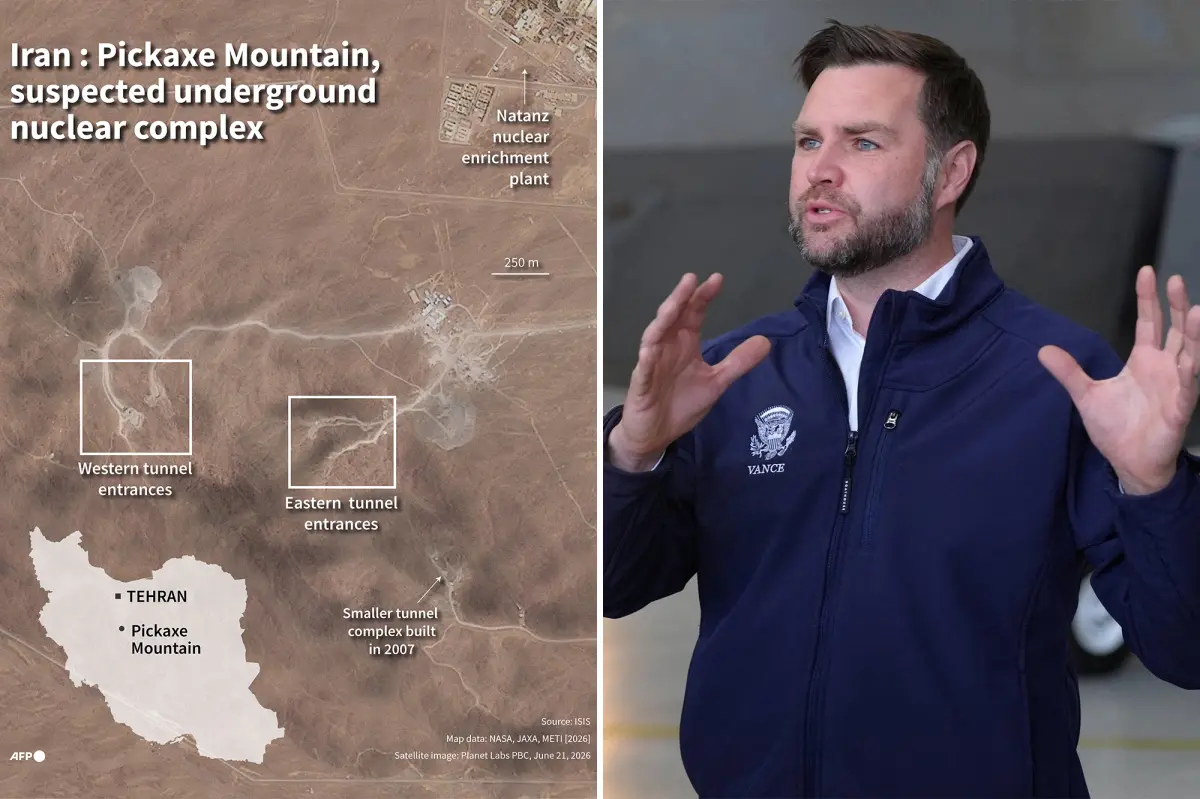

In an exclusive interview with Reuters, Vice President JD Vance said Iran would have to make a substantial reduction in its nuclear enrichment program before the United States would agree to end the seven-month conflict. He also acknowledged that Washington still does not fully understand how decisions are made inside Tehran.
Vance, who has long questioned the wisdom of prolonged US military engagements overseas, has emerged as a central figure in efforts to negotiate an end to the war. He helped secure a temporary peace arrangement in June, but the deal unraveled soon afterward.
The conflict has sent shock waves through global energy markets and created a growing political challenge for President Donald Trump and Republicans as they approach the November midterm elections.
Speaking Monday after a campaign appearance in Alaska, Vance said Iran would need to take verifiable steps to reduce its enrichment capabilities. Promises that it might scale back its program at some point in the future, he suggested, would not be enough.
“If you don’t want a nuclear weapon, then why do you need 60% enriched fuel?” Vance said. “If you want to demonstrate that commitment, you don’t produce highly enriched fuel. That’s a very basic threshold issue.”
“If they want to demonstrate that they are not pursuing a nuclear weapon, they need to do something meaningful about their enrichment capacity,” he added.
The United States and Iran have traded proposals in recent weeks as both sides explore a possible path to ending the war and reopening the Strait of Hormuz, a crucial route for international energy shipments. Trump rejected Tehran’s latest proposal and has warned that US military action could expand after the midterm elections.
Vance said the administration remained willing to pursue diplomacy, but insisted that any deal would have to include tangible nuclear concessions from Iran.
“We’re not going to trade words for actions,” Vance said.
UNCLEAR HOW IRAN MAKES DECISIONS: VANCE
The negotiations have been further complicated by uncertainty in Washington over who has the authority to make final decisions in Tehran.
Vance said US officials have been communicating with Iranian President Masoud Pezeshkian and Foreign Minister Abbas Araqchi. However, he questioned how much influence either man holds within Iran’s governing structure, particularly after US-Israeli strikes at the beginning of the war killed Supreme Leader Ayatollah Ali Khamenei.
“One of the things we’ve learned is that it’s not entirely clear how their country makes decisions,” Vance said. Trump separately said Tuesday that his “biggest problem” was that no one knows who is running Iran.
MORE STORY: Andy Burnham’s Troubling Ties to Manchester City’s Owners Examined
Iranian Foreign Ministry spokesperson Esmaeil Baghaei pushed back on that assessment Sunday, saying US officials know exactly which Iranian representatives they are dealing with and understand the country’s decision-making process.
“The real problem is the opposite,” Baghaei said at a weekly news conference. “It is the contradictory positions and mixed messages coming from US officials.”
Vance also told Reuters that he has spoken directly with military commanders to assess conditions on the battlefield. He dismissed reports of serious shortages of critical ammunition and said Iranian forces can occasionally attack commercial vessels in the Strait of Hormuz, but have largely failed to stop energy shipments from moving through the waterway.
Although Vance is frequently described as the White House’s principal negotiator, he declined to say whether he was personally directing the peace talks.
“We’re certainly involved,” he said. “Ultimately, the president of the United States is driving things.”
The war, which costs roughly $3 billion a month, has become a prominent issue on the campaign trail. Rising fuel and energy prices have left Trump and Republican candidates defending the administration’s strategy in closely contested states that could determine control of Congress.
Vance has worked to soften attacks on Trump’s handling of the conflict, urging voters not to allow the war to discourage them from supporting Republican candidates in next month’s elections.
In Alaska, Vance campaigned for Republican Senator Dan Sullivan, who is facing a competitive reelection contest against Democratic challenger Mary Peltola. Although Trump won the state by 13 percentage points in 2024, rising living costs have made Alaska a more competitive political battleground.
Before speaking with Reuters, Vance focused much of his speech on affordability concerns, especially around energy. Alaska’s remote locale makes consumer goods more expensive, and energy production is a key industry.
Rally attendees roared when Sullivan nearly introduced Vance as the president of the US, rather than the vice president. Vance is seen as a leading Republican contender to succeed Trump in the White House.
Vance told Reuters afterward that he had not decided whether to seek the presidency in 2028.
“I’m inherently a procrastinator,” he said. “I really haven’t thought about it much.”