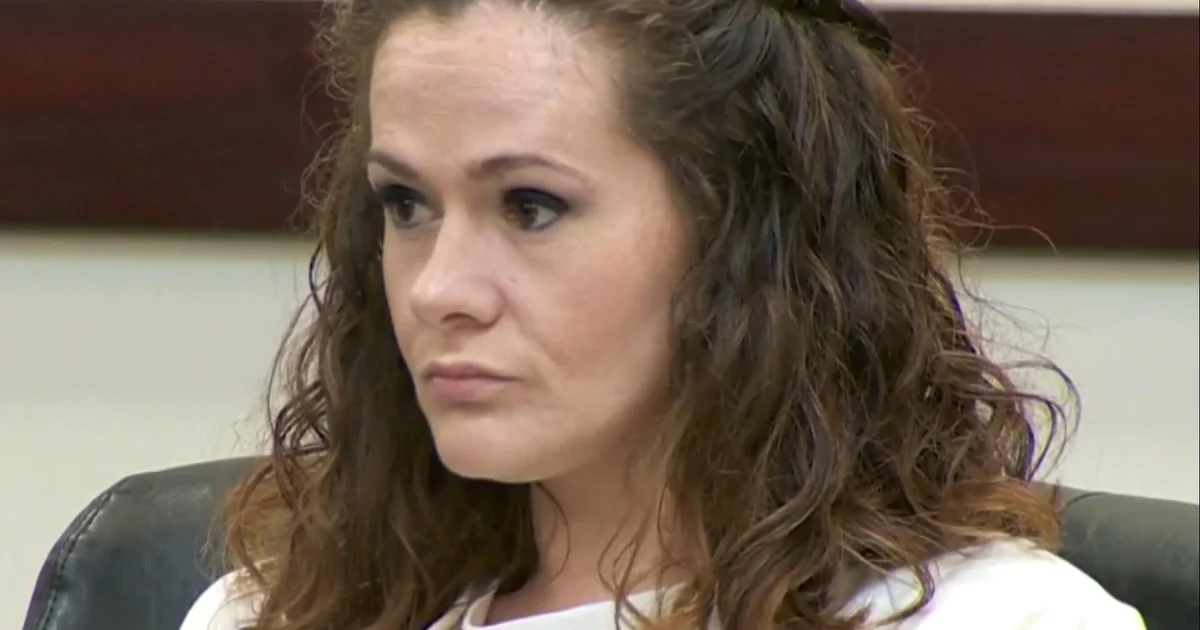

Christa Pike developed pneumonia, a blood clot and severe swelling in her arms and hands after regaining consciousness at a Tennessee hospital, according to her attorneys. The death row inmate had survived a botched execution by the state just days earlier and was initially unable to swallow or move her arms and hands.
“Her hands looked like if you were to blow up a surgical glove,” attorney Randy Spivey said at a news conference Wednesday. “It was extraordinary.”
Spivey said Pike’s attorneys were told Monday that she was brain-dead and would likely be taken off life support. By the following day, however, she had awakened and begun speaking, he said.
“I don’t have an explanation for what happened,” Spivey told reporters after a hearing in Davidson County Chancery Court. Pike was initially confused and disoriented, he said, but by Wednesday she had begun recalling details of the failed execution.
Along with the lung infection and a blood clot in her arm, Pike developed a swallowing problem that prevented her from eating. Her arms and hands are “tremendously swollen,” Spivey said, adding that doctors do not yet know how much movement or function she will regain.
Pike is the only person known to have survived an execution attempt in the United States, according to the Death Penalty Information Center.
Court grants request for evidence
Before providing the health update outside the Davidson County courthouse Wednesday, Pike’s attorneys attended an emergency hearing. They asked the Tennessee Department of Correction to preserve records and other evidence related to the failed lethal injection.
Chancellor I’Ashea Myles granted the request, ordering the state to preserve “relevant evidence” from its Sept. 30 attempt to execute Pike. The order covers drugs, IV lines, needles, catheters, medical supplies, restraints, gurneys and anything else present in the execution chamber during the procedure.
Myles also ordered the preservation of waste materials, including packing supplies and labels, along with written and digital records. That includes communications sent through encrypted platforms, witness statements and correspondence about equipment or problems involving the administration of the execution drugs.
She specifically instructed the state “not to lose, misplace, accidentally delete, any information that may be pertinent to this litigation.”
“To any extent that any information or any evidence has already been discarded, deleted, destroyed or no longer exists, I want [the Tennessee Department of Correction] to take an affirmative step to try to claw back that information and put in policies and procedures, while this incident litigation is pending, to ensure that no information is discarded or destroyed,” Myles said.
Execution aftermath
Staff administered two doses of a lethal injection drug to Pike, 50, but her legal team confirmed shortly after the failed procedure that she was alive and had been taken to a hospital. Her attorneys said Tuesday that she had regained consciousness and was speaking from her hospital bed.
ALSO READ: Death Row Inmate Christa Pike’s First Words After Brain Death Scare
Pike’s attorneys said Tuesday that she remained in “critical medical care” while hospital staff worked to clear the lethal drug pentobarbital from her system. Her prognosis was still uncertain, they said, and she was expected to face, at minimum, “a long recovery.”
The legal team has renewed its appeal to Tennessee Gov. Bill Lee to commute Pike’s death sentence. Her attorneys want the sentence changed to life in prison without parole, which would prevent the state from attempting another execution—typically the course of action when an inmate survives a botched execution. Although other people have survived failed execution procedures, Pike is the only known inmate in the modern U.S. death penalty era to remain alive after lethal chemicals were actually administered.
“The state has made no promises that Ms. Pike will not be subject to a future execution,” Luke Ihnen, one of Pike’s attorneys, told the court Wednesday. He said the evidence sought from the correctional department could help the defense develop arguments aimed at preventing another execution attempt.
Pike’s attorneys filed an emergency motion Friday seeking an order requiring the correctional department to “preserve all relevant physical, written and electronic evidence” connected to the failed execution. They described that material as evidence that the Tennessee Department of Correction inflicted “cruel and unusual punishment” through “deliberate indifference to her basic medical needs and reckless disregard of basic medical practices and their own lethal injection protocol.”
The attorneys accused correctional staff responsible for Pike’s execution of improperly establishing the IV line used to deliver the lethal drugs. They also alleged that staff failed to recognize a “blown vein,” allowing pentobarbital to spread through her body and resulting in a painful, botched execution. Ihnen also pointed to the secrecy surrounding execution protocols and procedures in Tennessee and elsewhere in the United States, saying it makes death penalty litigation especially difficult.
“We don’t know what they have, because they won’t tell us,” Ihnen said in court. “And so the preservation order seeks the broadest possible preservation of evidence.”
Case history
Lee rejected Pike’s clemency petition and denied her request for a commuted sentence before her scheduled execution last week. After the failed execution, he canceled the one remaining execution set to take place in Tennessee by the end of the year and ordered an investigation into what went wrong. The Tennessee correctional commissioner has since resigned, although an official statement from the agency said its staff had followed protocol.
Pike was convicted in 1995 of the brutal murder of her classmate, 19-year-old Colleen Slemmer. She was 18 when the killing occurred and spent more than 30 years on Tennessee’s death row. For most of that time, Pike was the only woman awaiting execution in the state and was held in near-total isolation. She was the first woman Tennessee had attempted to execute in more than 200 years and the first person the state had tried to execute in modern times for a crime committed at age 18, 19 or 20.
Prior to Pike’s botched injection, her case had garnered public interest as human rights leaders and advocacy groups rallied against her death sentence, raising issues with her age at the time of her conviction and long history of mental illness and childhood abuse. But those who strongly support her execution, including prosecutors and jurors in Pike’s original trial as well as judges who presided over that case and many of her appeals, have countered that capital punishment is warranted given the horrific nature of her crime. Among them is Slemmer’s mother, May Martinez.


