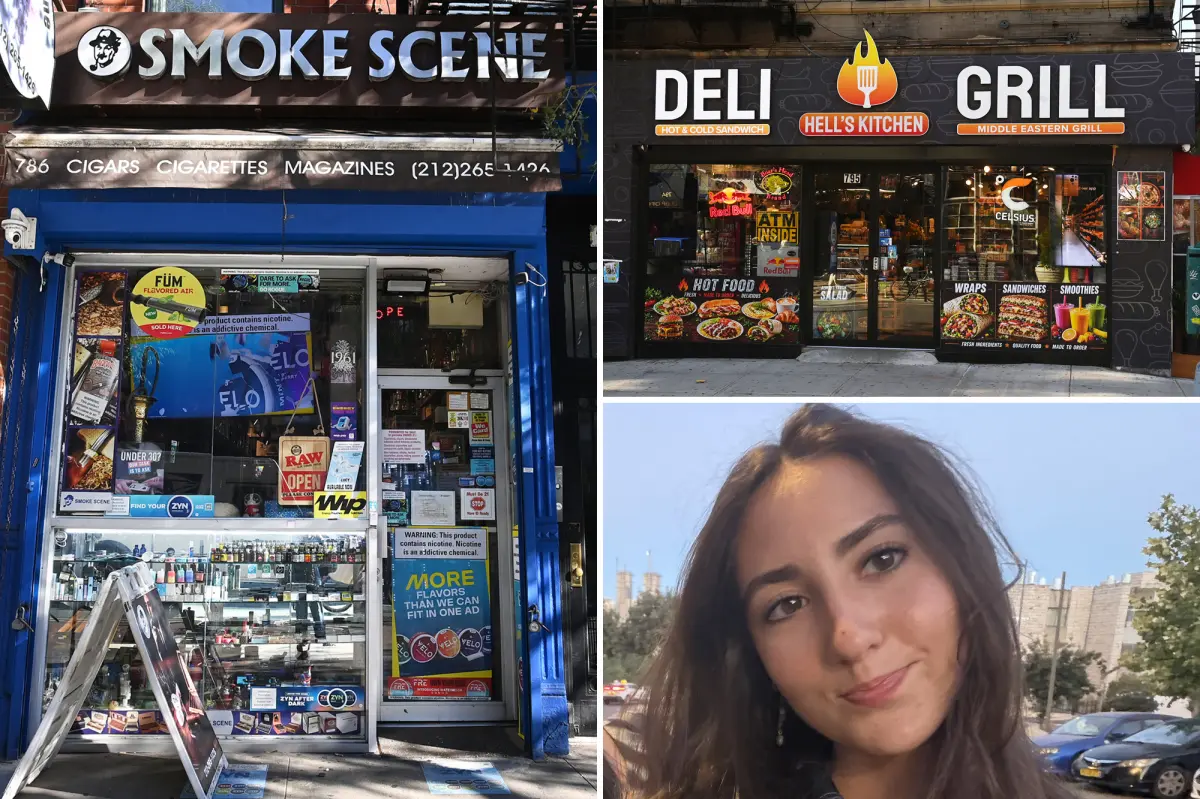

A weeks-long investigation by The Post found that nearly half of the Manhattan smoke shops visited by an underage reporter were prepared to sell her highly addictive, opioid-like kratom products without asking to see identification.
New York law prohibits anyone under 21 from purchasing products containing or derived from kratom, a South Asian plant associated with euphoric and sedative effects.
Sidney Blasco, 20, visited 18 smoke shops along Eighth Avenue in Hell’s Kitchen and found kratom products available at every location. Only nine employees requested a valid ID.
Seven shops refused to serve Blasco after she could not establish that she was 21. At two others, employees merely asked her age and did not require identification. Blasco did not buy anything during the investigation.
“There are many little smoke shops around. They sell whatever they want because they don’t have the license or anything,” Rohi Bati, 38, the manager of Esmoke at 40th Street and Eighth Avenue, told Blasco after she identified herself as a reporter.
Bati was among the employees who requested Blasco’s identification and declined to sell her any products.
Smoke shops increasingly stock pills, tablets, powders, beverages and gummies containing 7-OH, a kratom-derived compound that experts say is 13 times more potent than morphine. Critics have labeled the substance “gas station heroin.”
RELATED: Discarded Trash Cracks 41-Year-Old Seaside Resort Town Murder
Many of these products come in brightly colored packaging designed to look like candy or energy drinks, raising concerns about their appeal to young customers.
Rich Marianos, a former ATF official and executive with the Tobacco Law Enforcement Network, said the results were hardly surprising given the reputation of some smoke-shop operators.
“These guys [smoke shops] are such bad actors … So why would you expect them to say, ‘Are you 21?’” Marianos said. “They’re giving all this stuff to kids.”
Experts and anti-kratom advocates are increasingly alarmed by how accessible the drug appears to be for young New Yorkers. In smaller amounts, kratom can act as a stimulant; at higher doses, it can produce sedative effects.
Wendy Chamberlain, founder of the nonprofit Kratom Danger Awareness, said she has assisted hundreds of people struggling with addiction since launching the organization in 2022. She began the group two years after her 38-year-old son, Joseph Chamberlain, died of an accidental kratom overdose at his home in upstate New York.
“We get people of all ages, including 17- to 19-year-olds,” Chamberlain said. “I suggest they speak with their parents and doctors, and I help them locate local resources or free treatment.”
Representatives for Mayor Zohran Mamdani, the New York City Health Department and the NYC Department of Consumer and Worker Protection did not respond to requests for comment.


