
A further 650 prisoners are due to be released across England and Wales today as part of Labour’s controversial early release programme.
Those being freed include inmates serving sentences of up to two and a half years for a range of offences, including violent crimes and domestic abuse.
The scheme, introduced to tackle severe overcrowding in prisons, allows eligible offenders to leave after serving one-third of their sentence instead of the previous halfway point.
It began earlier this month with around 700 prisoners being released. All were serving sentences of less than 19 months.
Eligibility will widen every month as the policy is rolled out. By its tenth and final expansion, scheduled for early June, it will apply to prisoners given sentences of 12 years or more.
Officials estimate the measures could result in as many as 50,000 prisoners being released early each year.
However, unlike Labour’s previous early release initiative—which has seen more than 70,000 offenders freed—the Ministry of Justice will not provide a separate figure showing how many people have been released under the latest scheme.
Instead, those benefiting from major sentence reductions will be included within existing prison statistics, making the precise number impossible to identify independently, officials have confirmed.

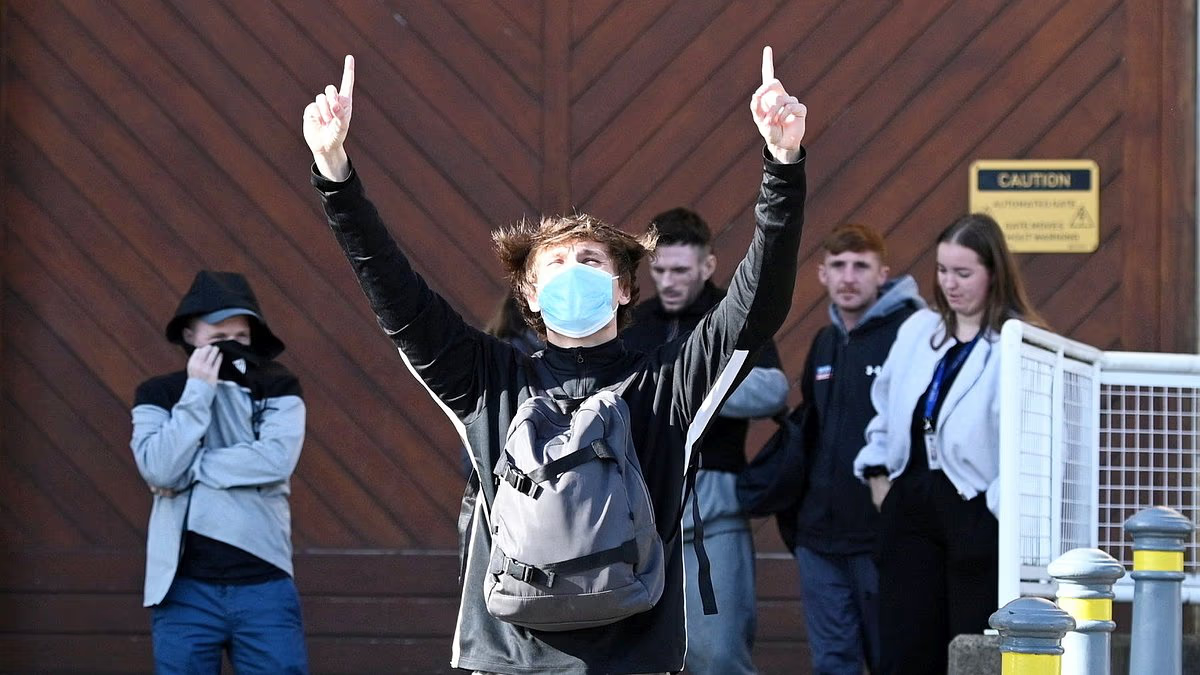
People celebrated outside HMP Leeds as Labour’s latest early release programme began on October 1
Critics say the lack of detailed figures will prevent the public and MPs from seeing the full extent of Prime Minister Andy Burnham’s early release policy.
Nick Timothy, the Shadow Justice Secretary, accused Labour of withholding information to conceal the scale of what he described as its latest failed prison policy.
“They must come clean and explain why they refuse to publish this data,” he said.
He added: “Thousands of dangerous criminals are being freed from prison early by Labour, with some immediately beginning crime sprees and others even going on to kill.”
“Only the Conservatives have a fully costed plan to build 50,000 more prison places, ending early release for good and ensuring we can put violent and serious repeat offenders behind bars.”
On October 1, the first day of the programme, about 700 prisoners left jails across England and Wales after those serving terms of up to 19 months became eligible.
There is currently no overall data showing how many of those released have gone on to commit further offences.
But a senior Metropolitan Police officer warned last week that one offender freed through the scheme had allegedly committed a string of new crimes with “astonishing” speed.
Prolific offender Michael Bogle, 38, later admitted 11 shoplifting offences and was sent back to prison.
Bogle, a registered sex offender, had previously been photographed leaving HMP Wandsworth on the first day of the early release programme. When asked whether he had a message for Mr Burnham, he replied: “Keep the early release going. It’s good.”
Greater Manchester Police separately reported that eight men had been arrested within days of their early release in connection with alleged offences including robbery, domestic abuse and drug-related crimes.
The Conservatives have repeatedly warned the PM’s programme poses an ‘acute threat’ to public safety.
Prisoners previously due to serve 40 or 50 per cent of the sentences handed down by the courts are now being freed after serving just 33 per cent.
As the scheme is rolled out in the coming months, criminals convicted of certain violent or sexual offences who were previously eligible for release after serving two-thirds of their sentence will instead be let out at the halfway stage.
MORE STORY: California Mother, 86, Dies Saving Pet From Oncoming Traffic
It is a mammoth expansion of Labour’s previous early release scheme, launched in September 2024 to create space in the overcrowded prison estate.
On the new scheme’s first day, a succession of criminals thanked the PM for letting them out.
Outside HMP Brixton in south London, serial thief David Elliott announced he planned to immediately reoffend.

Prolific offender Michael Bogle, 38, was freed from HMP Wandsworth on the first day of the programme, and committed fresh crimes with ‘astonishing’ speed, police said
‘I’ve got 360 convictions and an addiction to stealing,’ he said.
‘I’m gonna go stealing again. Whatever I get, whatever I get.’
One prisoner leaving HMP Durham said: ‘Justice system, what justice system? Thank you Andy Burnham.’
Another, walking out of HMP Cardiff, was asked if he had a message for the PM and replied: ‘Thank you very much and don’t get me back here again, bro.’
Conservative leader Kemi Badenoch has announced plans to build 50,000 new jail places if her party wins the next General Election, increasing the size of the prison estate by more than 50 per cent.
MoJ documents showed Labour’s scheme will be a ‘new permanent approach’ and that, after the first day of releases in each group, the early releases will ‘continue on a business-as-usual basis’.
It added: ‘For context, approximately 4,500 offenders are released from custody in a typical month.’
The majority of those criminals will benefit from the new early release terms, brought into law by the Sentencing Act earlier this year.
The Government has refused to disclose how many prisoners are projected to be let out early in total.
However, Labour’s first attempt at an early release scheme was leading to between 3,000 and 4,000 early releases every month.
The new programme is wider in scope, with some serious violent offenders becoming eligible for the first time.
It is likely to see about 50,000 offenders a year freed early, once excluded groups are taken into account.
Life-sentenced prisoners, such as murderers, and those serving extended sentences are ineligible.
Other categories of violent and sexual criminals are also excluded after public outcry led to a series of U-turns by Mr Burnham over the summer.
An MoJ spokesman said: ‘We inherited a prison system on the brink of collapse.
‘If we had failed to act the police would have been forced to halt arrests, putting communities at untold risk.
‘Our changes are part of a long-term overhaul of sentencing, ending the crisis in our prisons and keeping dangerous offenders behind bars.
‘The Sentencing Act follows an independent review and was fully scrutinised by Parliament.’


