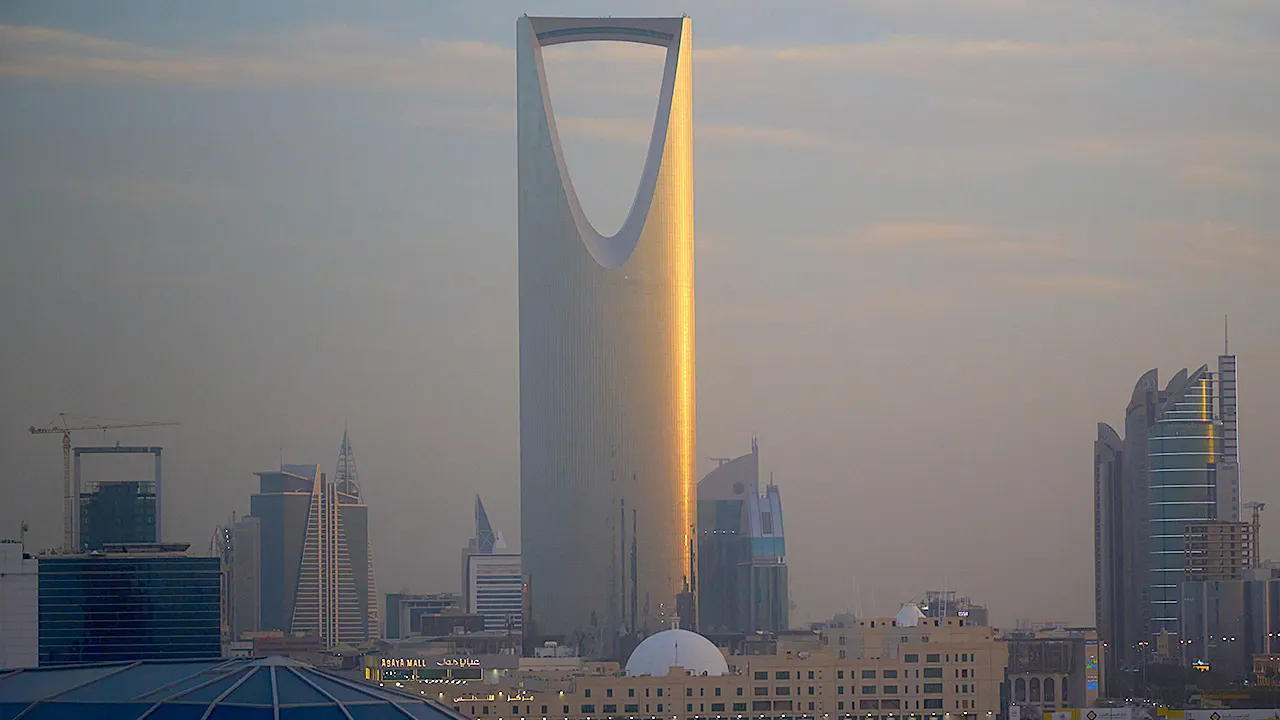

Workers at one of Riyadh’s most recognizable skyscrapers were told to remain at home Sunday as a series of attacks linked to Iran-backed Houthi rebels heightened security concerns in Saudi Arabia and fueled fears that the broader Middle East conflict could expand.
The warning followed a statement from the Saudi-led coalition that air defenses had intercepted two drones near Riyadh, another over the Eastern Province and two ballistic missiles in southern Saudi Arabia overnight. Authorities had earlier issued a security alert for the capital, which was also posted on X.
Kingdom Centre, the 99-story landmark that dominates Riyadh’s skyline, instructed office staff to work remotely until further notice, according to Agence France-Presse (AFP).
The building houses offices for several prominent international organizations and companies, including Merrill Lynch, consulting firm McKinsey & Company and the International Monetary Fund.
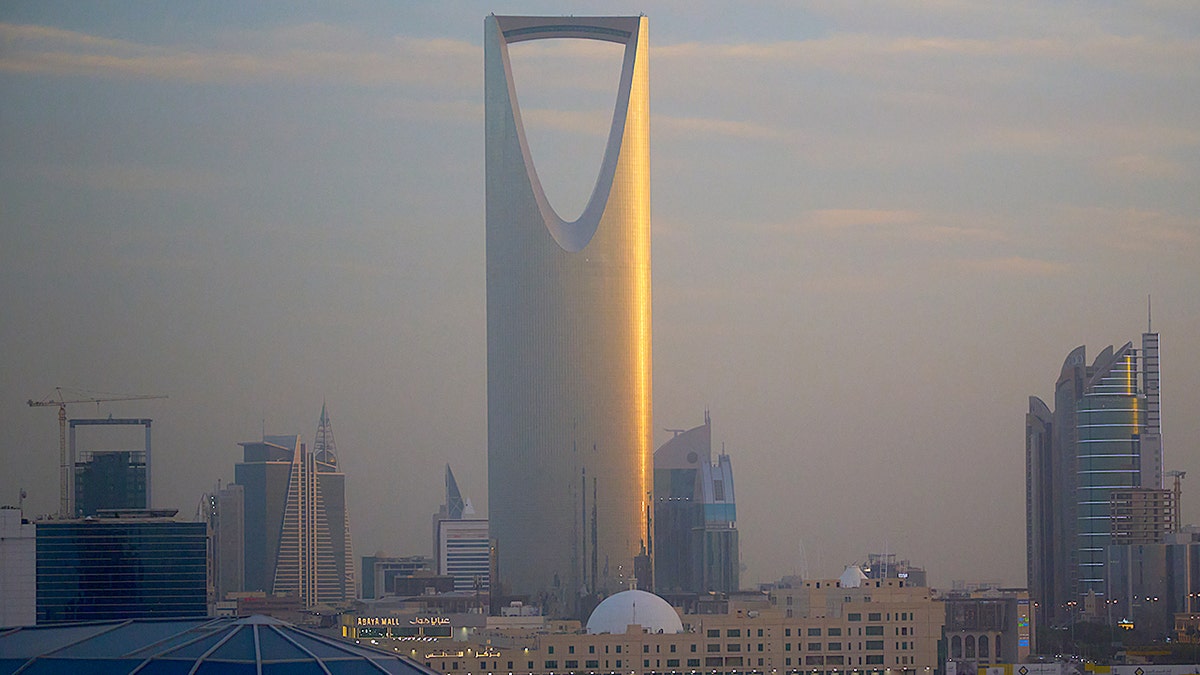
Employees at Riyadh’s iconic Kingdom Centre were ordered to work from home as Houthi attacks increased security concerns across the Saudi capital. (Jaap Arriens/NurPhoto via Getty Images)
“Please be advised that remote working arrangements are mandatory for all office employees at Kingdom Centre, effective immediately and until further notice,” building management said in an email obtained by AFP.
Staff were told not to return to their offices. The shopping center located at the tower’s base continued operating and remained open to visitors.
Management did not give a specific explanation for the decision. The order came, however, as a succession of Houthi drone and missile attacks disrupted life in the Saudi capital.
The latest security measures follow a deadly Oct. 10 strike on King Khalid International Airport, where 13 people were killed and more than 300 were injured.
A separate attack the next day left one person dead and 11 others wounded, according to previous reporting by News Outlet.
Airport services have faced major disruptions, while Riyadh schools have expanded remote-learning arrangements in response to the continuing threats.
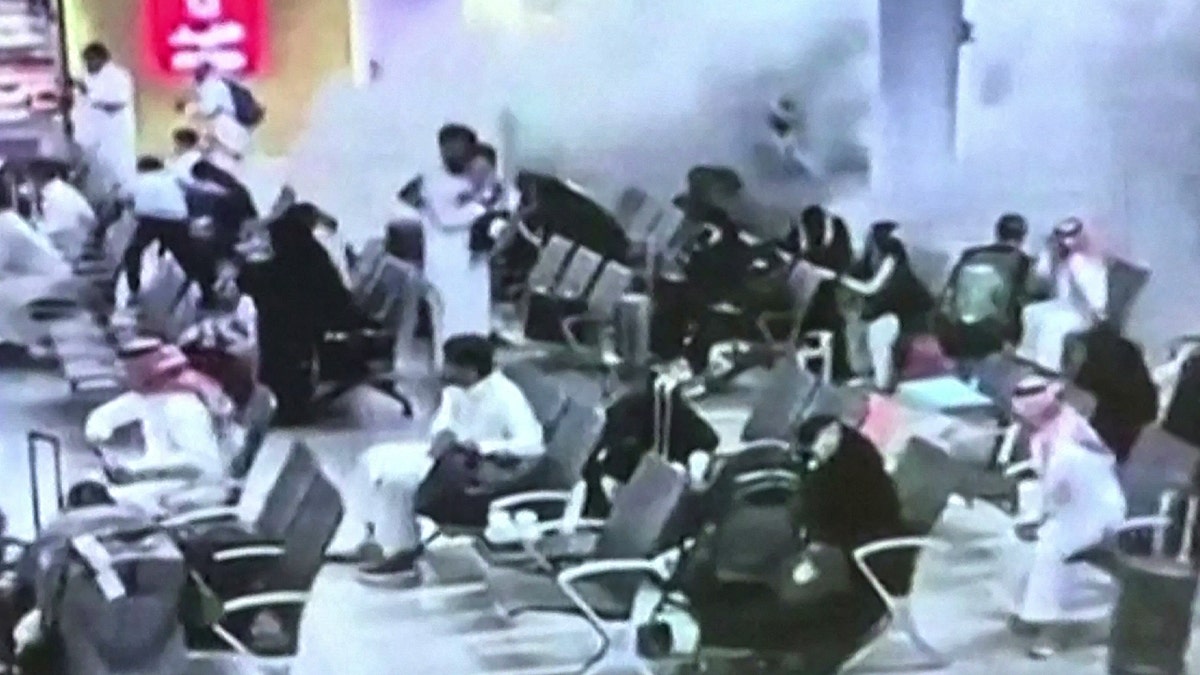
The Houthis have also targeted Abha International Airport in Saudi Arabia. (AFPTV / AFP via Getty Images)
The escalating tensions coincided with a report from Saudi Arabia’s military that two personnel had died in a helicopter crash near the country’s southern border with Yemen.
Maj. Gen. Turki al-Maliki, a spokesperson for the Saudi-led coalition, said an AH-6i reconnaissance helicopter went down in the Najran region because of a technical failure. Both crew members were killed.
Saudi civil defense officials said separately that six people were injured Sunday after a hostile projectile hit a residential area in Najran. Three homes and three vehicles were damaged.
At the same time, Egypt took steps toward potentially offering military assistance as Saudi Arabia faces intensifying attacks from the Houthis.
Egyptian President Abdel Fattah el-Sissi called for an emergency parliamentary session to approve defensive military support for Saudi Arabia should Riyadh request it, Reuters reported.
Parliament was expected to resume deliberations Monday.
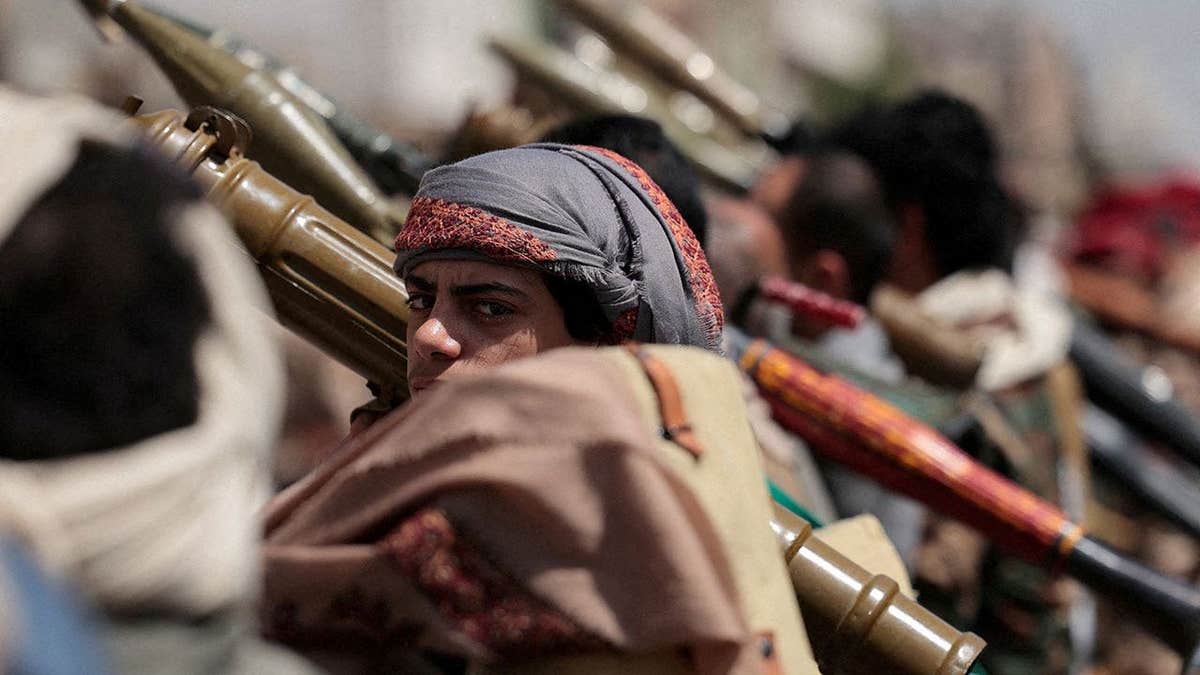
A Houthi supporter watches a pro-Iran demonstration in Sanaa, Yemen, as the U.S.-Israel conflict with Iran continues on April 6, 2026. (Khaled Abdullah/Reuters)
The Egyptian presidency said Cairo stood ready to provide Saudi Arabia with the support needed to protect its security, stability, territorial integrity and Islamic holy sites.
The statement followed a meeting of Egypt’s National Defense Council chaired by el-Sissi and attended by senior government and military officials.
Egyptian Foreign Minister Badr Abdelatty also spoke with Saudi Foreign Minister Prince Faisal bin Farhan about regional developments and the importance of de-escalation, according to a post on X.
The potential involvement of Egypt, which has one of the Arab world’s largest militaries, could significantly expand the regional response to the Houthis.
The Iran-backed group now controls Yemen’s capital, Sanaa, and much of the country’s north.
Fighting with the Saudi-led coalition, which supports Yemen’s internationally recognized government, has intensified amid the broader U.S.-Israeli conflict with Iran.