
American households are confronting what Sen. Elizabeth Warren describes as a “food insecurity crisis,” after inflation added roughly $22 billion to food costs while billions of dollars in food-stamp assistance were cut. Rising inflation has intensified the strain, the Massachusetts Democrat said.
In an Oct. 21 letter to Agriculture Secretary Brooke Rollins, Warren argued that higher grocery bills and reductions to the Supplemental Nutrition Assistance Program have delivered a “one-two punch” to millions of families.
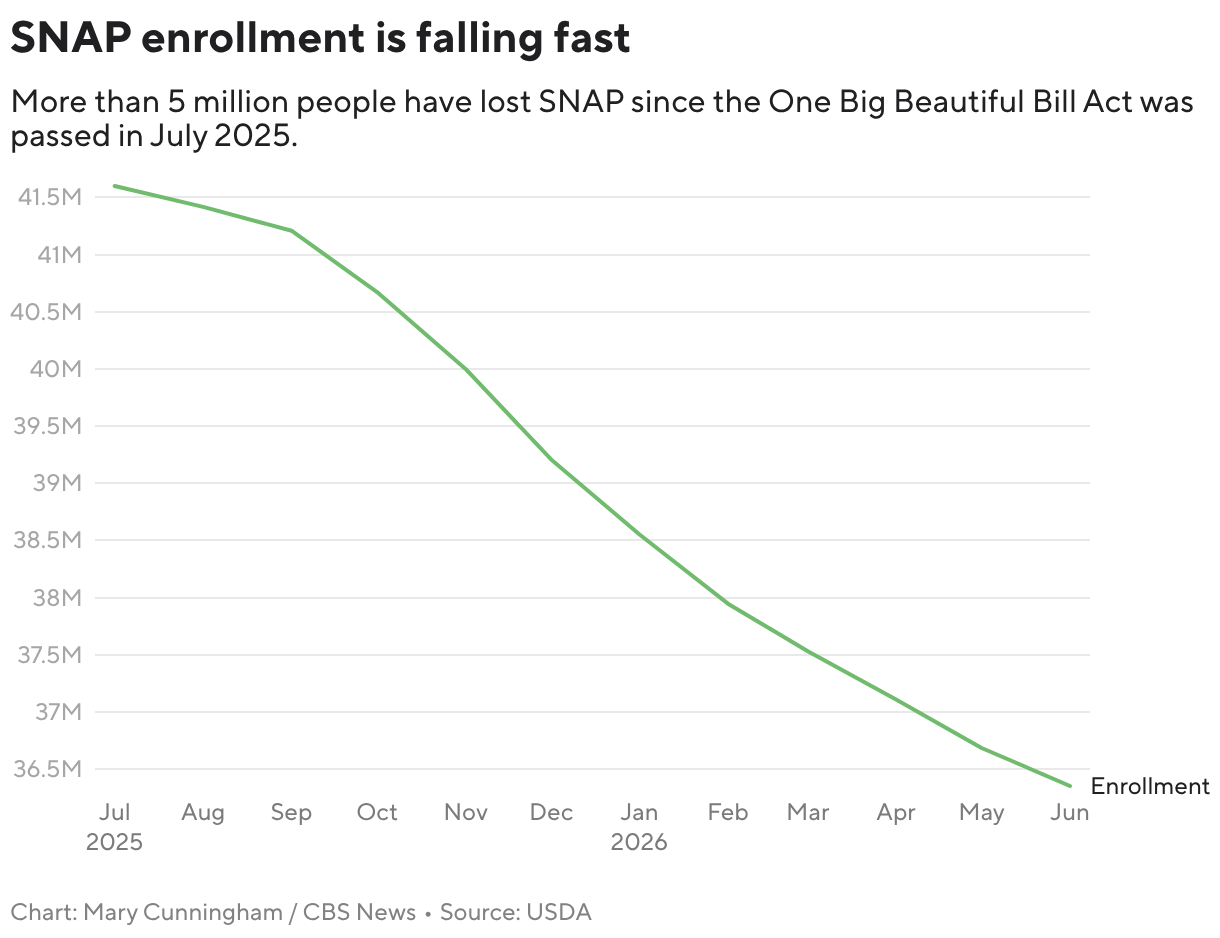
Warren urged the U.S. Department of Agriculture to work with Congress to reverse SNAP policies that have contributed to 5.2 million people losing benefits since July 2025.
SNAP enrollment has fallen to its lowest point since 2019, and anti-hunger advocates expect participation to decline further as additional changes take effect. The One Big Beautiful Bill Act, a tax-and-spending law signed by President Trump in 2025, expanded work requirements and transferred more of SNAP’s costs to the states. Experts say those provisions have made it harder for people to enroll.
The USDA suspended its annual food-insecurity report in 2025, calling the study “redundant, costly [and] politicized.” However, a May analysis by the Federal Reserve Bank of New York documented “a remarkable increase in food insecurity,” particularly among households with lower incomes, less education and young children.
The New York Fed reported earlier this year that 10% of U.S. families said they lacked enough food and that their children occasionally went without meals—more than twice the 4% recorded in 2020. Among families earning less than $50,000 a year, nearly one in five reported insufficient food, up from about 7% six years earlier.
Warren said her office created a “food misery index” to estimate the combined effect of rising grocery prices and declining SNAP participation. “The index combines the more than $17.2 billion in rising grocery prices—calculated by inflation-adjusting consumer expenditures—with the more than $5.1 billion in lost household SNAP benefits,” she wrote to the USDA.
The USDA and the White House did not respond to requests for comment.
RELATED: Caroline Flack’s Brother Struggled After Her Death, Inquest Hears
Reversing the SNAP changes would require Congress to approve new legislation. In the meantime, anti-hunger groups and state organizations are pressing lawmakers to postpone portions of the OBBBA, including a rule that would force states with high payment-error rates to take on billions of dollars in additional costs beginning in October 2027.
The USDA remains SNAP’s chief federal regulator and rule-maker, giving the agency some flexibility in how the program is administered. The department, for example, approved requests from some states to prohibit SNAP recipients from purchasing soda and candy. A federal judge ruled earlier this year, however, that the Agriculture Department had gone beyond its legal authority in imposing the rules.
Warren also cited President Trump’s tariffs as another factor driving food prices higher. According to recent New York Fed research, higher import duties imposed last year lifted U.S. inflation by about 2.9 percentage points through February. The researchers said goods prices would have declined in the absence of those tariffs.