
A California fisherman swam back to shore after a suspected shark attack capsized his kayak roughly a mile offshore and damaged it beyond the point of staying afloat, fire officials said.
The fisherman was near Leffingwell Landing in Cambria at about 9:30 a.m. Monday when an object struck the bottom of his kayak, sending him into the water, according to a Facebook post from the Cambria Fire Department.
He climbed back into the kayak and began paddling toward land, but holes in the hull allowed water to pour inside. He ultimately had to swim the remaining distance to shore.
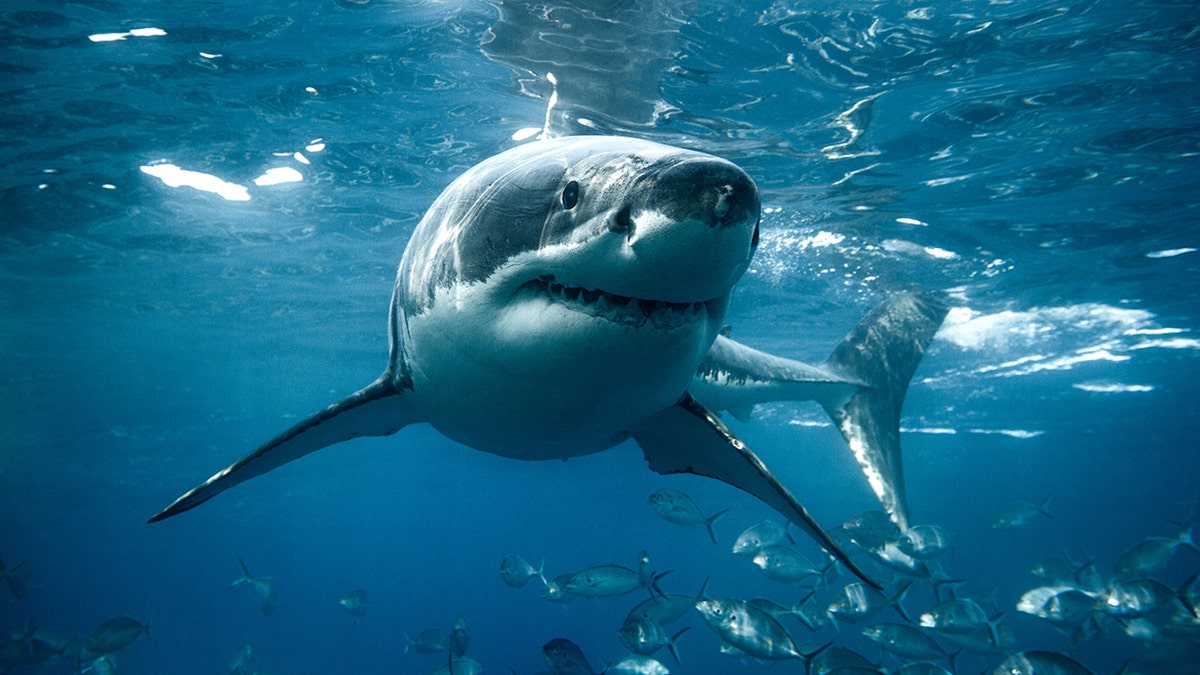
A great white shark swims underwater. A California fisherman escaped injury after a suspected shark encounter off the coast of Cambria. (iStock)
The fisherman made it to shore uninjured, the fire department said.
Firefighters arrived after he reached land and used a rescue boat to retrieve the damaged kayak, his fishing equipment and personal belongings.
Dr. Chris Lowe, of California State University, Long Beach’s Shark Lab, examined photographs of the damage and said it was reasonable to suspect a shark caused it, according to the fire department.
Officials cautioned, however, that a shark’s involvement has not been conclusively established.
The incident follows other reported shark encounters in the area. In May 2012, a shark struck a fishing kayak near Leffingwell Landing, sending fisherman Joey Nocchi into the water and damaging his vessel. Nocchi was not injured, according to California Department of Fish and Wildlife records and contemporary reports.
A similar incident was reported by fisherman David Zamora near Cambria in 2019. According to local news outlet KSBY, a roughly 10-foot great white shark bit his kayak about two miles offshore from Leffingwell Landing. Zamora fell into the water, climbed back into the kayak and was rescued by a nearby boater. He was not injured.
California has recorded 233 shark incidents since 1950, including 36 involving kayaks or canoes, according to Department of Fish and Wildlife figures updated in January 2026. The data includes cases in which sharks contacted kayaks, surfboards or other equipment, even when no one was hurt.
State wildlife officials note that some encounters with white sharks may involve exploratory bites as the animals investigate unfamiliar objects, including kayaks. That behavior does not necessarily mean the shark was trying to attack or prey on a person.
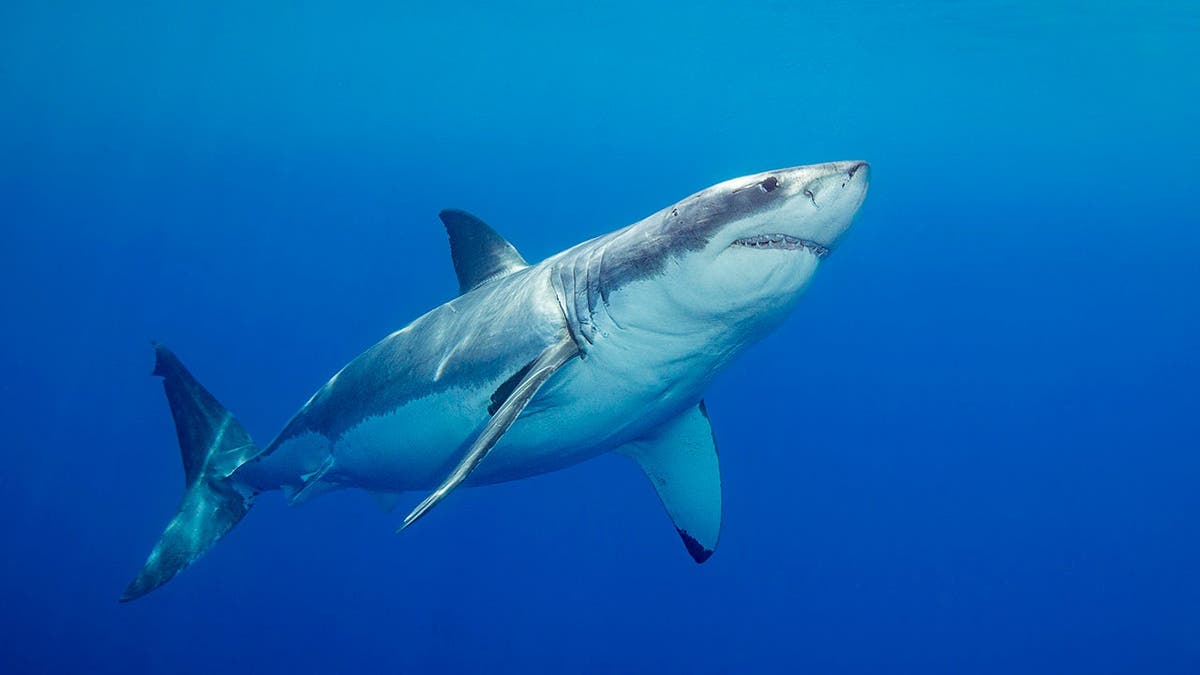
A great white shark swims in a file photo. (Design Pics Editorial/Universal Images Group via Getty Images)
After Monday’s suspected encounter, the Cambria Fire Department urged people using the ocean to take extra precautions, stay alert to their surroundings and avoid entering the water when sharks are visibly active.
The department also advised anyone facing an immediate danger or emergency to call 911.


