
Australia should be confident enough to welcome people from every part of the world—and equally confident in explaining what membership of Australian society entails.
That should not be a controversial position. Yet the migration debate too often collapses into a false choice between those who view every newcomer as a threat and those who regard any concern about immigration as evidence of moral failure.
What happened to nuance in that binary argument?
Welcoming migrants is a policy choice. Ensuring that integration succeeds is a responsibility of government. That is where politicians need to do the hard work.
It demands considerably more than issuing visas, appearing at citizenship ceremonies and making speeches celebrating Australia’s diversity.
For integration to succeed, governments must first explain what people are joining when they become Australian citizens.
Multiculturalism recognises that different cultures can coexist, and that is valuable. But on its own, it does not identify the principles that unite people as Australians.
Those principles include democracy, equal citizenship, freedom of expression and freedom of religion—including the right to reject religion entirely in our secular society. Respect for equality between men and women must also be part of the expectations placed on new arrivals.

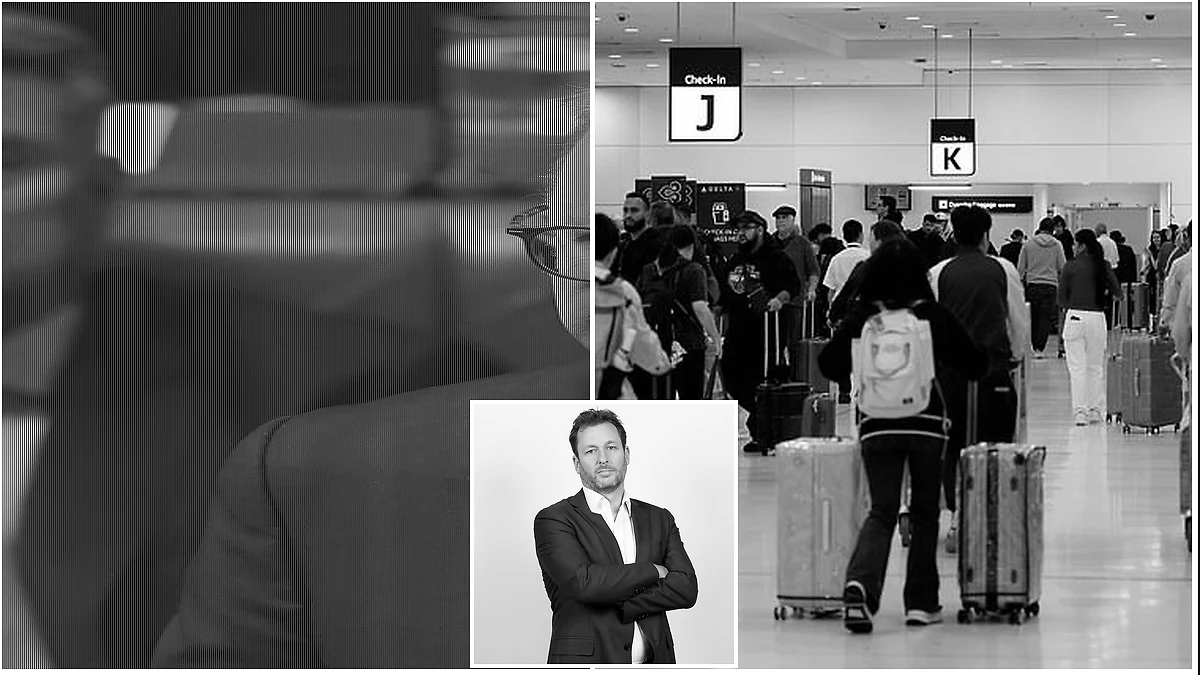
Australia should be confident enough to welcome people from anywhere while clearly explaining the responsibilities of belonging to our society (stock image)

Governments that expect migrants to integrate must ensure they have the tools and support to do so (Pictured, Prime Minister Anthony Albanese in Parliament House on Tuesday)
These are not unreasonable expectations. They are commitments set out in the federal government’s own Australian Values Statement. The real question is whether those commitments carry weight beyond the words on the page.
Forced marriage offers one example. The Australian Federal Police received 118 reports in 2024/25, compared with 91 the previous year.
Thankfully, the numbers remain relatively small, but the increase is significant. As society becomes more modern, the hope must be that such cases continue to decline.
A young woman’s right to choose her own husband must outweigh the demands of her family. Her freedom cannot depend on whether exercising it might upset someone claiming to represent her community or culture.
There is nothing respectful about leaving a woman vulnerable to people who seek to deny her rights—rights that everyone else in Australia is entitled to enjoy.
Protecting her freedom is exactly what a successful multicultural society should do.
The same standards must apply to families who arrived in Australia last week and to those whose ancestors came with the First Fleet. There can be no exceptions.
There is also the practical task of giving people the means to participate fully in Australian society.

Net overseas migration added more than 500,000 people in 2022-23 before falling to 306,000 in 2024-25 (file image)
SEE ALSO: Alexander Brothers’ Model Wives Skip Court Sentencing Hearing
Consider English proficiency. Australian Bureau of Statistics (ABS) analysis of the 2021 Census found that 82 per cent of permanent migrants who had arrived within the previous five years were proficient in English, compared with 91 per cent of those who had arrived more than a decade earlier.
That’s not bad, all things considered, but there has been a drop-off.
Being able to speak to your child’s teacher, understand workplace instructions or explain your symptoms to a doctor is fundamental to independence in an English-speaking country like ours.
Governments that want people to integrate should make sure that they have the tools to do it.
We also need to be able to house new arrivals. Net overseas migration added more than half a million people in 2022-23. It fell after that, dropping to about 306,000 in 2024-25, which was still a sizeable intake.
The post-pandemic catch-up helps explain the surge, but it doesn’t conjure up the homes, classrooms and services all these new arrivals need.
The National Housing Supply and Affordability Council reported that Australia completed 177,000 dwellings in 2024, against an estimated underlying demand for 223,000. That is a shortfall of 46,000 homes in a single year.
Migration is far from the only cause of the shortfall in housing availability. Planning failures, construction costs, labour shortages and years of inadequate supply all matter too.

Integration requires some understanding of what people are actually joining when they become Australian citizens, Peter van Onselen writes
But a government aware of such constraints has an obligation to account for them when setting the migration policy, year in, year out.
When housing becomes harder to secure and services struggle, resentment can (unfairly) be directed at new arrivals who neither wrote the migration rules nor failed to plan the infrastructure.
Migrants deserve better than arriving in a country whose government hasn’t adequately prepared for them.
Existing residents deserve better than being lectured about tolerance when they are living with the consequences of poor policy planning by governments.
There is no contradiction between welcoming migration and questioning the scale of it.
Too many political commentators trapped inside the Canberra bubble, living a world away from the pressures other major Australian cities are grappling with, think otherwise.
It’s also reasonable to support cultural diversity at the same time as insisting on common civic obligations. The two propositions can go together.
Australia’s identity will continue to evolve. But that evolution requires sound judgement about what is worth keeping, rather than an embarrassed reluctance to defend anything at all.
Our politicians need to lead but they also need to reflect the sentiments of voters.
EXPLORE MORE: Final Hours of Yorkshire Zoo Tiger Attack Victim Revealed


