
The Trump administration has privately advised its Gulf allies to prepare for a brief but intense military operation against Iran once the midterm elections conclude.
The warning was delivered to several Arab governments in the Gulf through diplomatic and military channels, according to The Wall Street Journal.
US forces across the region are already making preparations, replenishing weapons stocks and positioning bombers and fighter aircraft for potential strikes.
An additional Patriot missile-defense battery is being transported from Texas to Israel, while American personnel have been relocated from Middle Eastern bases considered vulnerable to Iranian retaliation.
Although Trump has pledged not to launch an attack before the midterms, he has yet to issue a final order. Officials say he is increasingly inclined toward a major strike after the election, potentially targeting Iranian infrastructure and nuclear facilities.
“We may do another little Epic Fury,” the president said at a rally last week, invoking the heavy US-Israeli bombing campaign carried out in the spring. He added: “Or they’ll agree.”
Iran has warned, both publicly and through private channels, that any assault would trigger attacks on civilian and economic targets throughout the region.
Diplomats and Middle Eastern mediators are rushing to restart negotiations before another round of airstrikes begins. Their efforts have made limited progress, however, as Washington insists on addressing Iran’s nuclear program while Tehran maintains stringent conditions for talks.

Israel has prepared its own target list, while Prime Minister Benjamin Netanyahu continues to advocate renewed attacks aimed at weakening Iran and eventually toppling its regime

The Pentagon is spearheading planning for potential US strikes on Iran after the midterm elections

A second Patriot missile-defense system is being sent from Texas to Israel as US troops leave Middle Eastern bases exposed to possible Iranian attacks
Another carrier strike group and a Marine expeditionary unit are expected to reinforce the roughly 20 US warships already operating in the region next month, although some ships may be rotated out.
Israel has also developed its own operational plans and target lists. Prime Minister Benjamin Netanyahu remains determined to renew military action against Iran, with the broader goal of weakening and eventually removing its government.
MORE STORY: In Serbia, Man Shouting ‘Allahu Akbar’ Killed Outside Israeli Embassy
The White House declined to address what it called “sensitive military plans that may or may not exist.” It said Trump continues to consider every option to prevent Iran from obtaining a nuclear weapon.
A renewed bombing campaign would mark a major departure from the current strategy of economic pressure. Months of sanctions and a naval blockade have sharply restricted Iran’s oil exports, disrupted much of its air travel and reduced overland commerce.
By mid-October, the conflict had cost an estimated $47.1 billion, excluding damage to US military bases, according to figures provided to lawmakers.
The fighting has also pushed up gasoline prices and other household expenses, increasing political pressure on Republicans with the midterm elections only days away.
Polling indicates that voters in several closely contested states are moving away from the Republican Party, a trend that could threaten its control of both the House and Senate.
About $29 billion of the total spending was devoted to munitions, including Tomahawk cruise missiles and Patriot interceptors.

Iran has warned through public statements and private messages that an attack could bring strikes on civilian and economic sites across the region

Renewed airstrikes would reverse the current economic campaign, which has used sanctions and a naval blockade to suppress Iran’s oil exports for months

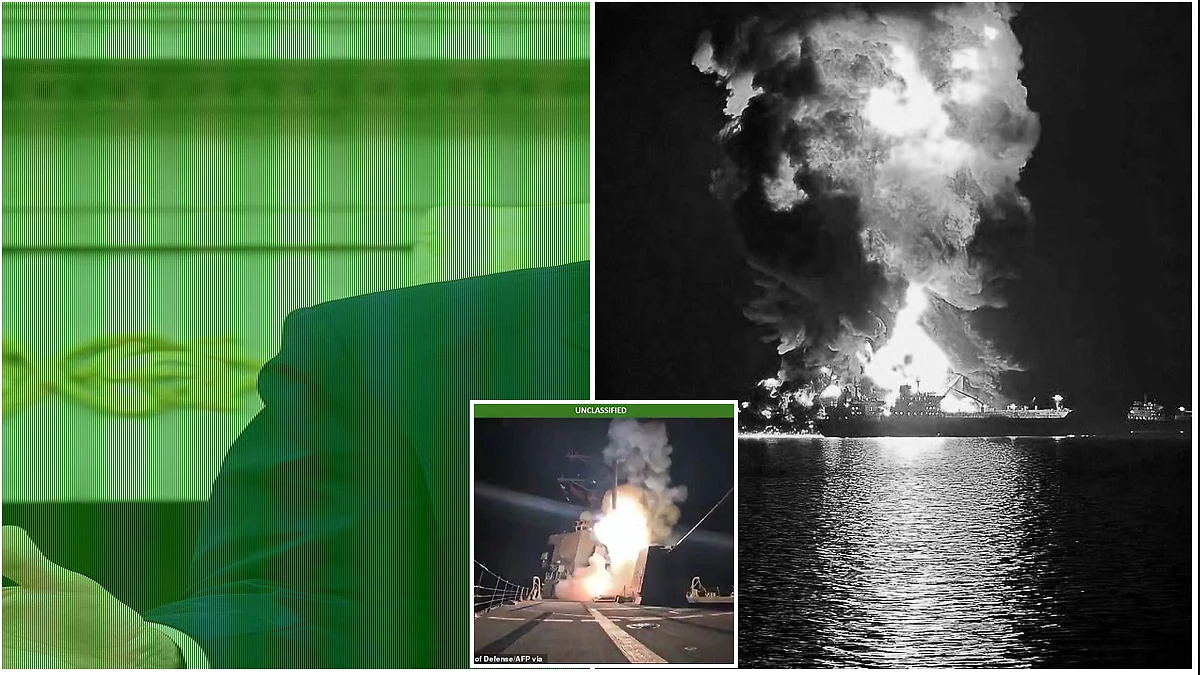
An oil tanker burns after an Iranian strike in the ship-to-ship transfer area at Khor al-Zubair port near Basra, Iraq, late Wednesday, March 11
Iran issued comparable warnings before the conflict began and later carried them out, striking US bases, diplomatic compounds, energy infrastructure and airports across the Gulf.
Any new Iranian response would come as the United States and its Gulf partners work to replenish missile-defense systems depleted by repeated barrages.
Iran is still believed to possess hundreds, possibly thousands, of missiles. It is also rebuilding its ballistic-missile arsenal using stored components, a pace that has raised serious concern among Israeli officials.


