
Andy Burnham has finally confirmed what Westminster has suspected for months: this was a Budget designed with an election in mind.
At first, he insisted there would be no general election until 2029. Then that timetable shifted to 2028.
Yesterday, the possible polling date moved forward again, to October 2027. After Chancellor John Healey addressed the Commons, the Prime Minister tried to dismiss speculation that he might call an election this year. Yet, while responding to a Budget that produced no dramatic surprises, he accidentally revealed rather more than intended.
“I don’t know how many times I’ve done this now, but yes, I can rule out calling a general election in the next 12 months,” he said. In doing so, he came close to confirming that voters will go to the polls by the end of next year.
Last week, I spoke to a senior Treasury minister about the Budget. “What you have to remember is there’s no such thing as a ‘small Budget’,” they said. “No, there aren’t going to be any major headline-grabbing announcements on tax or spending. But it’s still going to be a significant moment.”
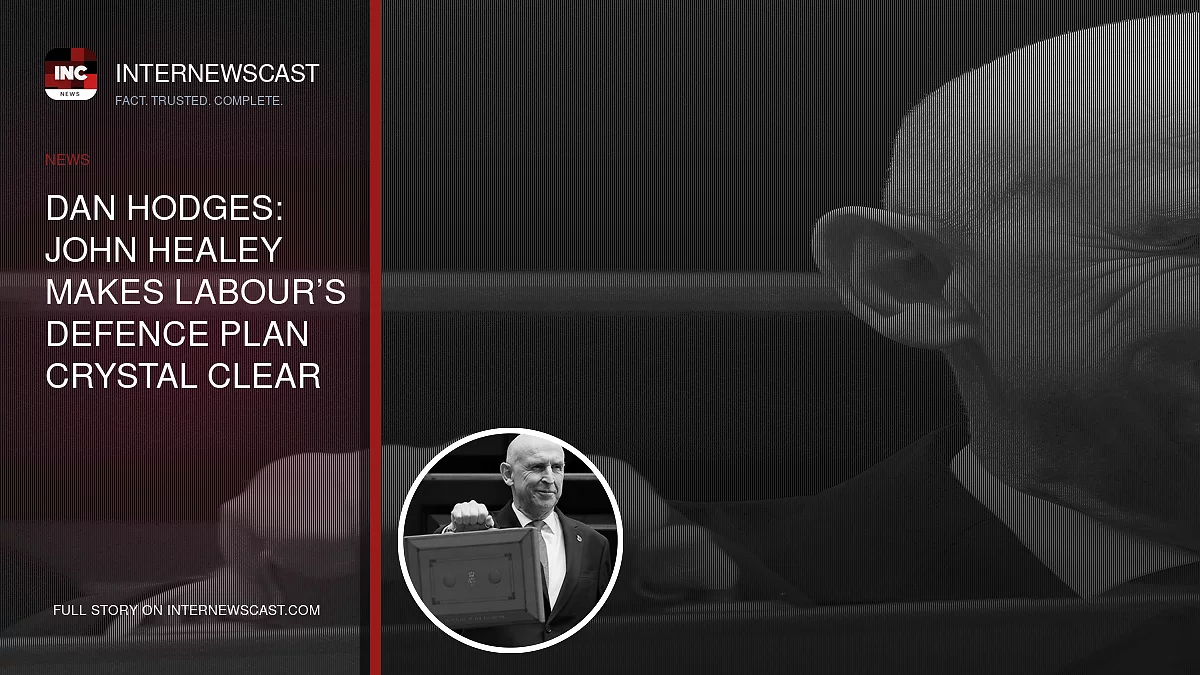
It was certainly significant. John Healey’s cautious, incremental approach to the economy made it clearer than ever that the Government is preparing for a snap election in 2027.
The Chancellor was strikingly frank about the difficulties confronting the country. Donald Trump’s war in the Middle East, he warned, had created enormous uncertainty across the global economy. “We did not want this war,” he declared.
“We rejected calls from the Leader of the Opposition to jump two-footed into it. It is a war that has driven up costs on British families and businesses. Inflation, which was due to fall, has now risen, driven by higher oil prices.”
He acknowledged that working families were still being squeezed by the cost-of-living crisis, while British companies faced unprecedented economic pressures. With debt continuing to climb, he admitted that additional tax would have to be raised, albeit in what he described as a “balanced way”.
Taken together, the Chancellor painted a bleak picture of the economy. Such circumstances would ordinarily demand difficult choices, tough medicine and bold ideas to put the country back on course.
Yet there were no genuinely hard choices. The medicine amounted to little more than a spoonful of honey, while the radical, unconventional thinking Andy Burnham promised in his party conference speech last month was conspicuous by its absence.

John Healey’s cautious economic incrementalism makes it clearer than ever that the Government is preparing for a snap election in 2027, writes Dan Hodges

The bold, unconventional thinking Andy Burnham promised in his party conference speech last month was nowhere to be found in today’s Budget
Instead, economic policy was pushed aside in favour of openly populist politics. Twenty million households in council tax bands A to D would receive £100 before the election, paid directly into their bank accounts. The Chancellor naturally avoided calling it a bribe, describing it instead as “energy support”.
There had been speculation that Healey might abandon the Prime Minister’s promise to transfer the remaining £1.2 billion surplus from the miners’ pension fund to former miners.
Such a move would have undermined his efforts to strengthen Labour’s left flank and alarmed MPs representing marginal Red Wall seats. They, and the miners, had no reason to worry. Healey announced that every penny of the fund would be transferred, prompting loud cheers.
Military and defence specialists had been similarly concerned by reports that Healey might retreat from his demand, reinforced by his dramatic resignation as defence secretary, for defence spending to reach 3 per cent of GDP by 2030.
CHECK THIS OUT: Explosion Prompts Emergency Response at Iowa Quaker Oats Factory
Once again, those fears were put to rest. The commitment would be honoured, he said, although he offered no explanation of where the money would come from. That question could be left for another time — or, more precisely, for the day after the next election.
Over the past week, Andy Burnham has repeatedly tried to persuade the country that he has no intention of rushing to the polls. Yet his Chancellor was, at times, almost comically clear about the Government’s true intentions.
Healey announced that the VAT cut would continue until July 2027, as would the freeze on fuel duty. But the clearest signal came in his announcement on the banks. In an effort to balance — or at least make slightly less unbalanced — the books, he chose an obvious target: a 3 per cent bank surcharge to “support ordinary people”.
Then, turning towards Kemi Badenoch, he appeared to fire the starting pistol for the general election campaign. “I challenge the Leader of the Opposition, does she support today our support for British families and British firms?” he asked. “And does she back the action we’re taking to pay for it?”
It was a barely concealed political trap — one Healey has set and intends to spring next year. In that sense, it reflected the entire Budget.
As a package of pre-election giveaways, the Chancellor’s offer was relatively modest. But Kemi Badenoch was right to point out that the Government’s credit card is already close to its limit, while financial markets are examining the monthly statements with growing concern.
That left Healey with little room for political generosity. So he and Burnham chose to postpone the painful treatment, telling the patient that bed rest and herbal remedies would be sufficient for now.
In the short term, that approach may succeed. No 10 and No 11 skilfully managed expectations before the Budget. The “bloodbath” forecast by the Government’s opponents failed to materialise, and voters still recovering from Rachel Reeves’ 2025 tax bombshell may greet this announcement with relief.
But that relief is unlikely to last. The “breathing space” promised by the Chancellor will soon run out.
The reality is that, despite its populist tone, this Budget did nothing to tackle the fundamental structural weaknesses in the British economy. With war raging in the Middle East, it contains no measures capable of significantly boosting growth. Debt is surging, inflation is rising, public spending is accelerating and the deficit is expanding. Healey’s fiscal headroom is shrinking, yet yesterday’s announcements barely touched any of those problems.

Mr Burnham and Mr Healey have postponed the difficult decisions, clearly deciding that nothing should jeopardise Labour’s recovery in the polls
Just before the conference season began, Andy Burnham said there would be no general election before 2029. But unless John Healey had opened his speech by declaring, “This is a Budget for a 2027 election,” it is difficult to imagine how he could have made the Government’s intentions any clearer.
If the Prime Minister genuinely intended to “go long”, Healey would have followed the established template. The difficult decisions would have been made now: spending cuts would have been announced, tax rises would not have been postponed, and the pre-election giveaways and political traps would have been held back for later.
Then, in 2028 or 2029, the Chancellor could have delivered the familiar message: “We asked you to make some sacrifices. You did. Now you see the benefits.”
Instead, the difficult decisions have been deferred. Burnham and Healey have evidently decided that nothing should endanger Labour’s recovery in the polls — or close the door on a snap election next year.
Andy Burnham can deny it until he is blue — or red — in the face. This was a nakedly cynical, politically shrewd Budget designed for an election.


