
Prime Minister Benjamin Netanyahu’s governing coalition fell well below the 61-seat threshold needed for a parliamentary majority Thursday, as updated election results revealed a sharp increase in support for Arab parties and opened the door for opponents to challenge his grip on the Knesset.
By 4 a.m. ET Thursday, or 10 a.m. local time, 93.8% of ballots had been counted, including votes from the double-envelope tally. Netanyahu’s right-wing and religious alliance was projected to hold 53 of the Knesset’s 120 seats, while the opposition bloc led by former military chief Gadi Eisenkot was projected to win 48. The two main Arab parties were expected to take 19 seats combined, potentially giving the anti-Netanyahu camp a 67-seat majority.
The preliminary count showed Netanyahu’s Likud as the largest single party with 26 seats. Eisenkot’s Yashar followed with 21, while former Prime Minister Naftali Bennett’s Beyachad was projected to receive 12.
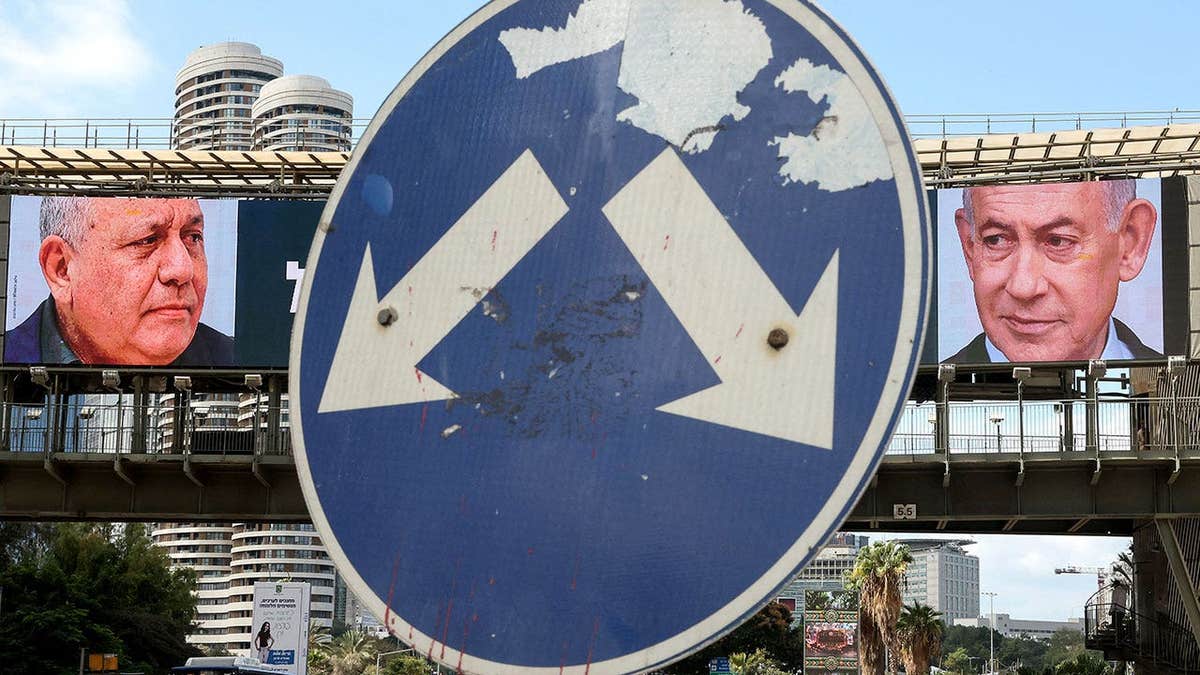
A road sign stands in front of a large billboard featuring Prime Minister Benjamin Netanyahu and Yashar party leader Gadi Eisenkot, in Ramat Gan on Oct. 20, 2026. (Jack Guez/AFP via Getty Images)
The numbers leave both Netanyahu and Eisenkot short of the 61 seats required to form a government without partners, setting the stage for complex coalition talks and possibly another national election.
The most significant change came from Arab communities, where voter participation climbed dramatically compared with the previous election and could alter Israel’s political landscape.
About 80% of Arab voters cast ballots, according to the Israel Democracy Institute, compared with 53.2% in 2022. The 2026 figure remains subject to revision.
The Joint List was projected to capture 11 seats and Ra’am eight. Together, the parties would hold 19 seats—nearly twice the 10 seats won by Arab parties in 2022.
Nationwide turnout stood at 77.7% when polls officially closed at 10 p.m., the highest election-night participation recorded at that point since 1999, according to the Central Elections Committee.
The surge in Arab voting could become pivotal in determining Israel’s next government. While Eisenkot and other opposition figures said during the campaign that they would not bring Arab parties into a governing coalition, those parties could still help the opposition replace Knesset Speaker Amir Ohana, a Netanyahu ally, and influence the legislative agenda before a new government is established.
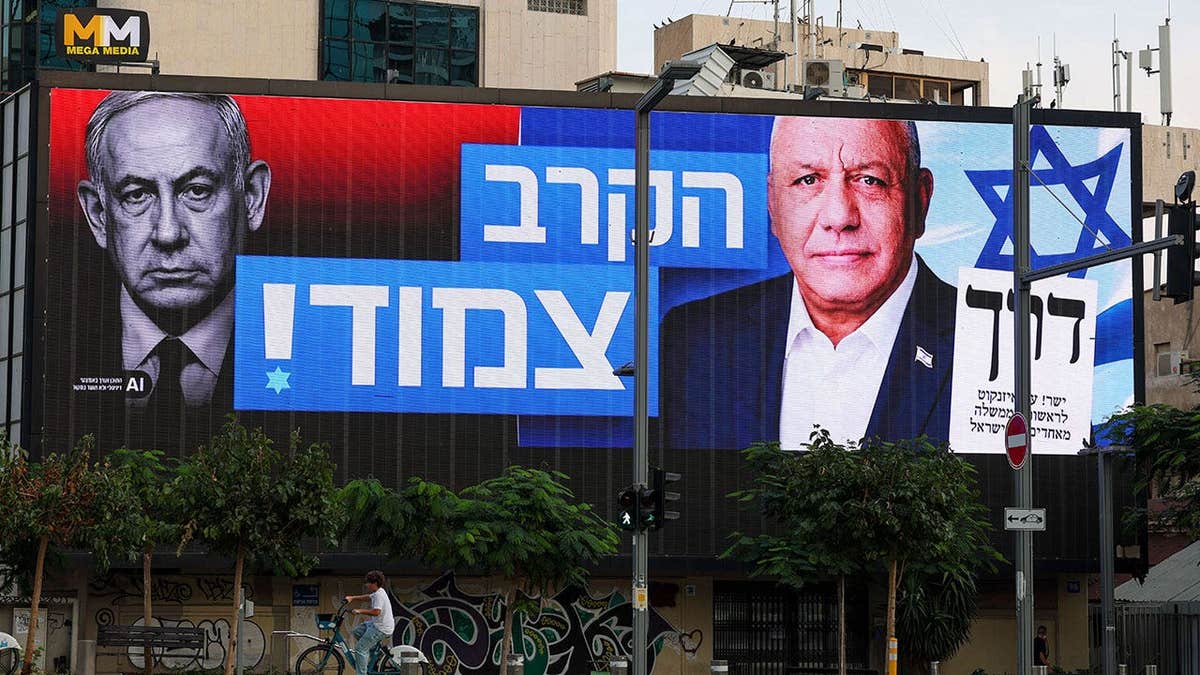
Posters of Gadi Eisenkot and Benjamin Netanyahu are displayed on billboards ahead of the Knesset elections, in Tel Aviv, Israel, on Oct. 25, 2026. (Nir Keidar/Anadolu via Getty Images)
Qatar allegations intensify political battle
The political confrontation grew more intense Thursday after Channel 12 reported that large sums allegedly originating in Qatar may have been used to influence turnout in Arab communities.
N12 reported that some of the money may have moved through financial networks, including currency exchanges, that were previously used to send funds to terrorist organizations.
The claims have not been independently verified. Investigators have not determined whether foreign money entered the campaign or whether any election-related laws were broken.
According to Channel 12, Shin Bet Director David Zini briefed Central Elections Committee Chairman Justice Noam Sohlberg on intelligence involving possible foreign interference. Sohlberg then ordered an inquiry.
In a letter reported by N12, Sohlberg directed the domestic security service to examine the allegations and gather evidence that could confirm or refute them. He asked for a report within seven days, pointing to the narrow window available while ballots were still being counted.
Sohlberg’s letter did not name Qatar as the alleged foreign power. N12 identified Qatar in its own report.
Qatar rejected the accusations, saying Israeli politicians were attempting to pull the Gulf state into the country’s internal political struggle after the vote.
“We categorically deny allegations that Qatar has interfered in Israeli elections or funded any activities intended to influence their outcome,” Qatari Foreign Ministry spokesperson Dr. Majed Al-Ansari wrote on X.
Al-Ansari described the reports as part of a “disinformation campaign” by Israeli politicians and media allies. He said Qatar had variously been accused of funding Netanyahu, Israel’s left wing and, most recently, Arab voters.
“If these claims were to be believed, Qatar would apparently own all of Israel,” he wrote. Al-Ansari said Qatar should not be blamed for the political failures of Israeli leaders, adding that the country had no role in the election and would continue its diplomatic and humanitarian work in the region.
Acting Central Elections Committee Director General Dean Livne also dismissed the allegations in a letter to Yesh Atid lawmaker Vladimir Beliak, a member of the committee. “The Knesset elections were conducted lawfully. The integrity of the elections at polling stations was rigorously safeguarded, and to the best of our knowledge, there is no basis for allegations of systematic violations of election integrity.”
Even so, the claims quickly became part of the political dispute over whether opposition parties should work with Arab lawmakers.
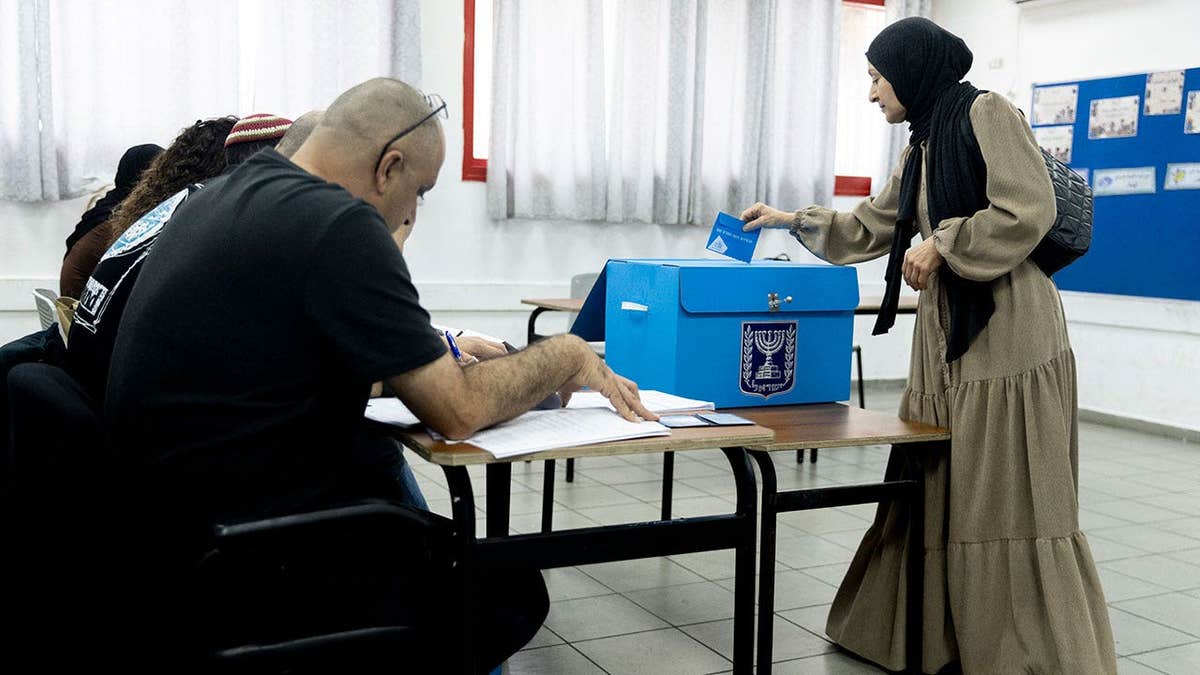
An Arab-Israeli woman casts her ballot during Israel’s general elections on Oct. 27, 2026, in Umm El Fahem, Israel. (Amir Levy/Getty Images)
Netanyahu and Likud had already questioned the legitimacy of the Arab parties’ gains. Before the Qatar allegations were reported, Likud accused them of winning through voter fraud, though those claims had not been substantiated.
Likud said Thursday that the alleged foreign involvement made any partnership with the Arab parties unacceptable.
MORE ON THIS: Fox News Host Cuts Off Fired-Up Trump During Live Interview
“After it became clear that foreign actors attempted to take control of the Knesset, it is obvious that no Zionist party must cooperate with Ra’am and the Joint List, replace the Knesset speaker using votes bought with cash, or establish a government dangerous to Israel,” the party said.
Investigators have not established that parliamentary seats were secured with purchased votes.
Hauser Tov, a political correspondent for Haaretz, wrote on X that Likud’s statement appeared aimed at stopping the opposition from using its possible majority to remove the Knesset speaker.
Israeli journalist Amir Tibon wrote on X that the effort to block such a move may be connected to fears that the Knesset could establish a state commission of inquiry into the Oct. 7 attacks. He said the panel could examine Qatar’s activities involving Gaza and Israel.
Eisenkot addressed the accusations after meeting with Shin Bet Director David Zini. “Foreign involvement in Israel is unacceptable and profoundly serious, particularly when it involves a country that funds and supports Hamas,” Eisenkot said. “It is serious when it occurs in the Prime Minister’s Office, and it is serious if it occurs in the electoral process.”
He urged the Shin Bet to conduct a full investigation and impose the strongest available penalties on anyone found to have threatened the integrity of the election.
Eisenkot also accused Netanyahu and his allies of running “an illegitimate influence operation targeting the Israeli public,” saying it was designed to delay the release of the results and cast doubt on the legitimacy of the newly elected Knesset.
Political analyst Amit Segal warned against assuming that the allegations would invalidate the election.
“The likelihood of the entire election being invalidated is extremely slim, given the time constraints,” Segal wrote on X. He said the controversy could instead fuel negotiations over a unity government or lead to another election.
Yair Golan, leader of the Democrats party, meanwhile called on opposition leaders to move rapidly toward forming a government.
“The people have spoken. Sixty-seven seats demanded change,” Golan wrote Thursday on X. He said he planned to meet with political partners and coalition negotiators throughout the day and would “leave no stone unturned” to carry out what he described as the voters’ mandate.
His remarks highlighted the central challenge facing the opposition: whether parties united against Netanyahu can set aside their differences, particularly over working with Arab lawmakers.
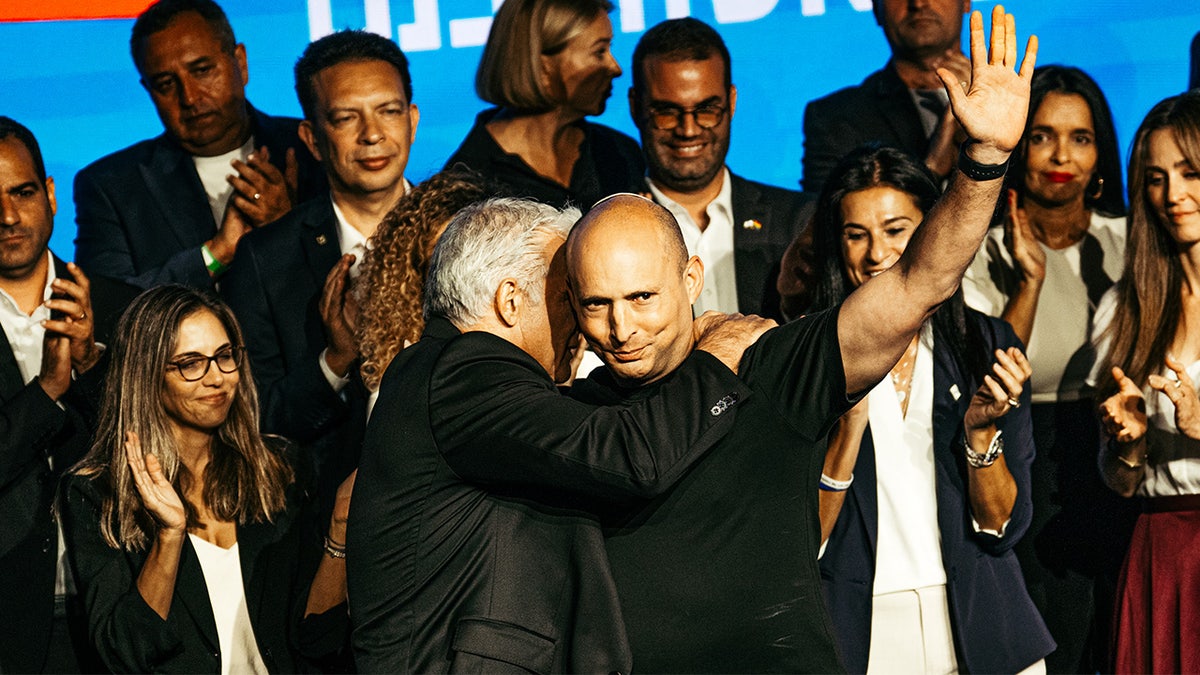
Could Trump help broker a unity government?
One possible outcome is a national unity coalition bringing together Netanyahu’s Likud and Eisenkot’s Yashar, while leaving out both the Arab parties and Netanyahu’s far-right partners.
That scenario could appeal to figures close to President Donald Trump, who publicly backed Netanyahu before the election.
Ynet diplomatic correspondent Itamar Eichner reported that sources close to Trump said the president wanted far-right National Security Minister Itamar Ben-Gvir kept out of the next government. Finance Minister Bezalel Smotrich could also be excluded, according to the report.
A separate Ynet report said Trump allies had reached out to Israeli political figures to gauge support for a unity government and indicated a preference for a stable coalition without Ben-Gvir.
Trump has not publicly supported a particular coalition formula.
When Axios asked Wednesday whether he might participate in efforts to create a Netanyahu-led unity government, Trump replied, “I will take a look.”
A Netanyahu-Eisenkot partnership would face serious hurdles. Eisenkot repeatedly promised voters he would not join a government led by Netanyahu, while Netanyahu’s far-right allies have objected to any attempt to remove them from power.
The ultra-Orthodox parties could offer another path to a majority. Netanyahu’s projected 53 seats include 14 held by Shas and United Torah Judaism, long-standing allies of his.
Adding those 14 seats to Eisenkot’s projected 48-seat opposition bloc would create a narrow 62-seat majority on paper. Yet the coalition would immediately confront a major dispute over military service. Eisenkot has pledged to broaden compulsory service for ultra-Orthodox men, while religious parties have sought to retain exemptions for yeshiva students.
Differences among the parties within Eisenkot’s bloc would further complicate such an agreement.
For now, the foreign-interference claims remain under review, and the preliminary results continue to show Netanyahu’s coalition without enough seats to govern independently.
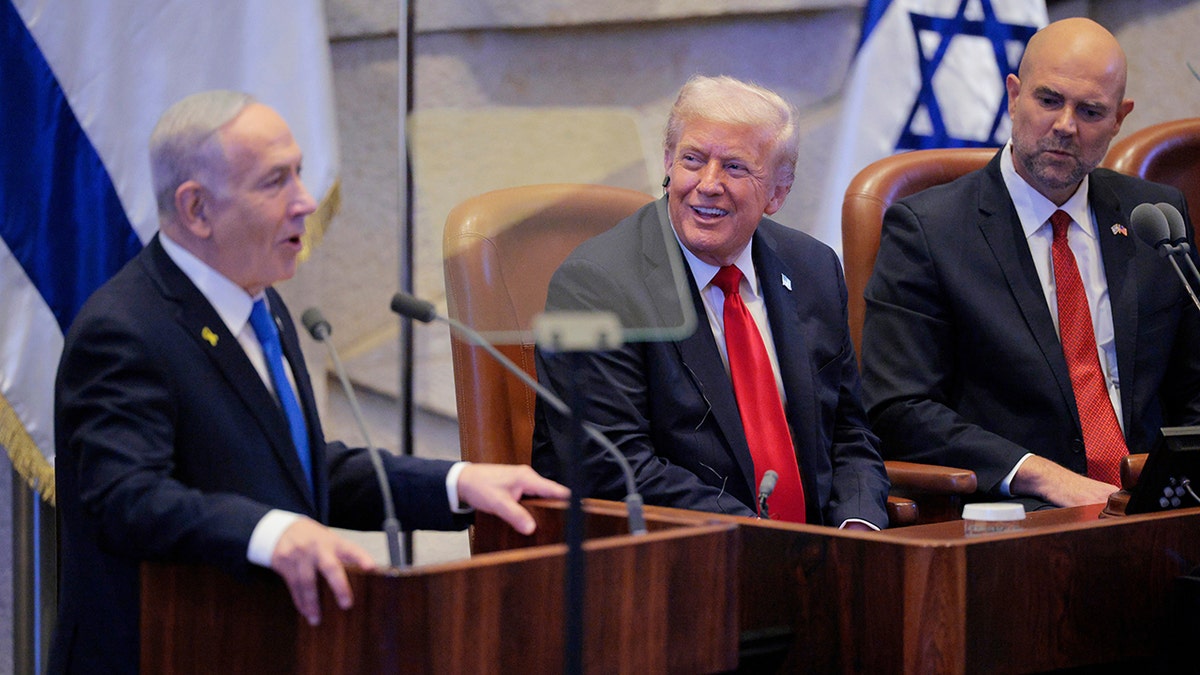
Israeli Prime Minister Benjamin Netanyahu addresses the Knesset as President Donald Trump and Amir Ohana, speaker of the Knesset, listen, Oct. 13, 2025, in Jerusalem. (Chip Somodevilla/Pool via AP)
Netanyahu will continue serving as caretaker prime minister until a new government is formed—a process that may take weeks or extend even longer.