
Prime Minister Benjamin Netanyahu’s political alliance made gains Wednesday as Israel continued counting ballots from its first national election since the Hamas-led massacre of Oct. 7, 2023. Even so, the bloc remained below the threshold needed to govern, raising the prospect of another prolonged political stalemate.
With roughly 70% of the vote tallied, Netanyahu’s right-wing and religious parties had secured 54 of the Knesset’s 120 seats, while the leading opposition bloc held 47 and Arab parties held 19, according to partial results cited by Israeli media. Netanyahu’s Likud party was in front with 27 seats, followed by former military chief Gadi Eisenkot’s Yashar party with 20.
Netanyahu and Eisenkot each declared victory Tuesday night. But voters who spoke with News Outlet said that, while they had anticipated a close contest, the changing results and uncertainty surrounding the next coalition had left them unsure about Israel’s political future.
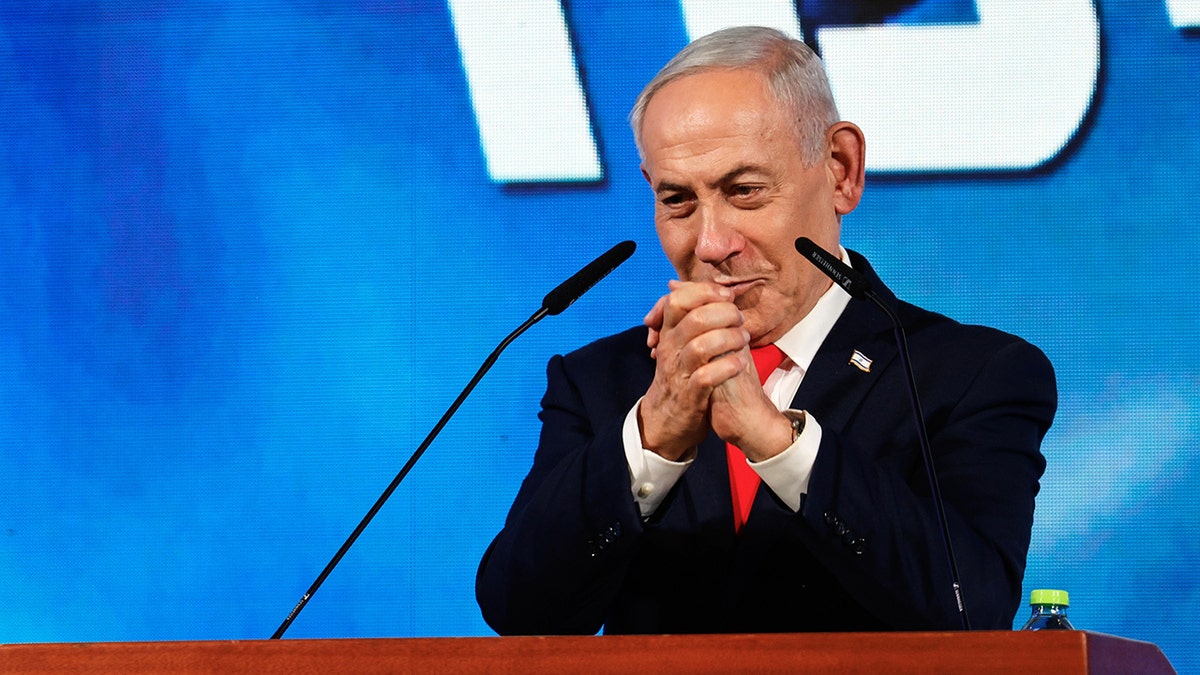
Israeli Prime Minister and Likud leader Benjamin Netanyahu addresses supporters at the party’s headquarters in Jerusalem after the first exit polls were released in Israel’s legislative election on Oct. 28, 2026. (Olivier Fitoussi/picture-alliance/dpa/AP Images)
Although Netanyahu’s alliance led among the blocs, parties outside his coalition controlled 66 seats, enough for a potential majority if the opposition can coordinate and win adequate support from Arab lawmakers.
The figures represented a reversal from the first exit polls released Tuesday evening, which sparked celebrations at Eisenkot’s campaign headquarters in Tel Aviv. Eisenkot urged Netanyahu to acknowledge the result and leave office. Netanyahu later told supporters in Jerusalem that Likud was the nation’s largest party and called for a strong right-wing government.
The contest has now moved beyond voting and into the difficult stage of negotiating a governing coalition.
President Donald Trump claimed Wednesday that his endorsement helped Netanyahu outperform expectations, arguing that his support changed the direction of the race.
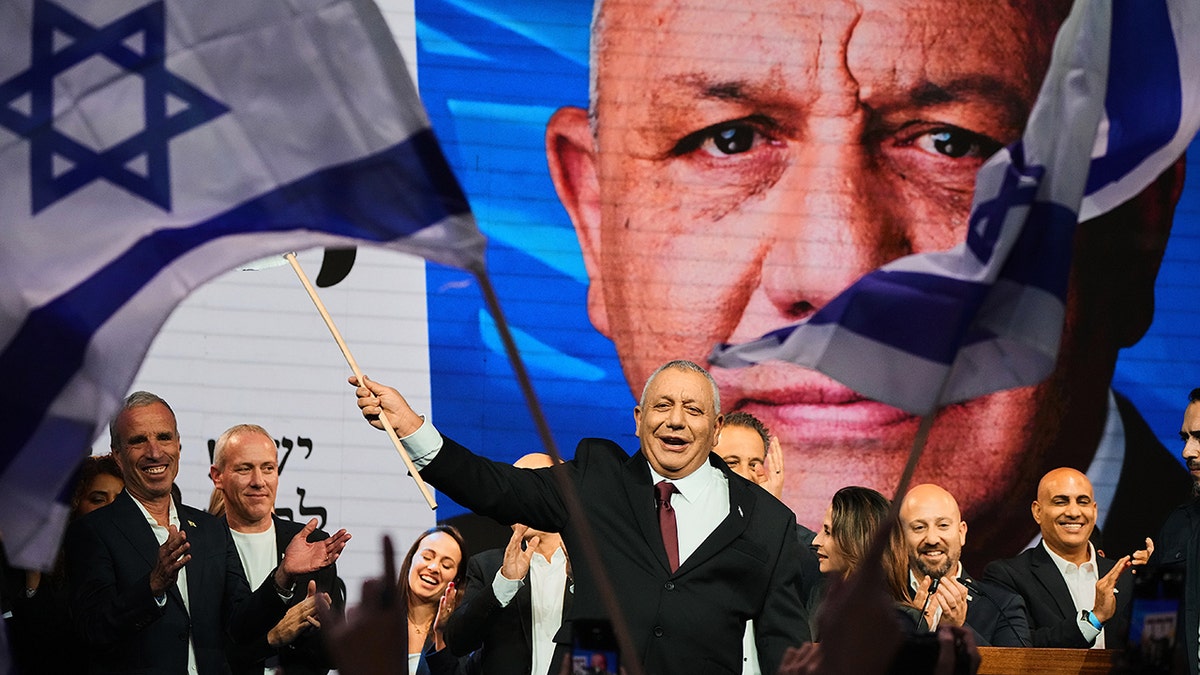
Gadi Eisenkot, head of the Yashar, or “Straight,” Party, waves an Israeli flag after early exit poll results were announced in the country’s general election in Tel Aviv on Wednesday, Oct. 28, 2026. (Ariel Schalit/AP Photo)
In a Truth Social post, Trump shared remarks from Irving C. Schwartz, who wrote, “When President Trump endorsed Bibi Netanyahu, the whole tide turned, and now, rather than a decisive defeat for a Great Prime Minister, it looks like a big come-from-behind stalemate, or even a WIN for Netanyahu.”
Speaking to reporters near Air Force One, Trump later said he had heard the exit polls were inaccurate and that Netanyahu had performed far better than expected. “It was pretty close, but very well. When the endorsement went out, it helped him a lot,” Trump said.
“It’s a little bit early, but I’m hearing in Israel, top people say, ‘Wow! He did a lot better than people thought.’ It’s looking like maybe a stalemate or a win,” he added.

U.S. President Donald Trump meets with Israeli Prime Minister Benjamin Netanyahu in the Knesset, Israel’s parliament, on Oct. 13, 2025, in Jerusalem. (Jalaa Marey – Pool/Getty Images)
Arab parties could determine the next government
The rising strength of Arab parties could prove decisive as Israel’s political leaders try to assemble the country’s next government.
Partial results showed the Joint List with 13 seats and Ra’am, led by Mansour Abbas, with six, giving Arab parties a combined total of 19 seats.
DON’T MISS: Fox News Hosts Sean Hannity and Ainsley Earhardt Tie the Knot
Abbas indicated that he was willing to discuss possible political arrangements, saying representatives from both sides of Israel’s political divide had contacted him.
“Everyone is talking to us, not just the change bloc,” Abbas told Israel’s Channel 12.
Yair Golan, leader of the Democrats, openly advocated forming a government with Arab parties. “Netanyahu lost. I know how to count to 120–65 is greater than 55. That’s how Israeli democracy works. Period,” Golan wrote on X. He also rejected Netanyahu’s distinction between Jewish and Arab political support, saying the vote of every Israeli citizen should have equal value. “The vote of an Israeli citizen in Tira is worth exactly the same as the vote of an Israeli citizen in Givat Shmuel,” he wrote.
Golan was referring to an earlier vote count, but his comments underscored the opposition’s growing debate over whether Arab parties should participate in the next government.
Eisenkot has previously opposed bringing Ra’am into his coalition, while Netanyahu has cautioned against relying on Arab parties to govern.
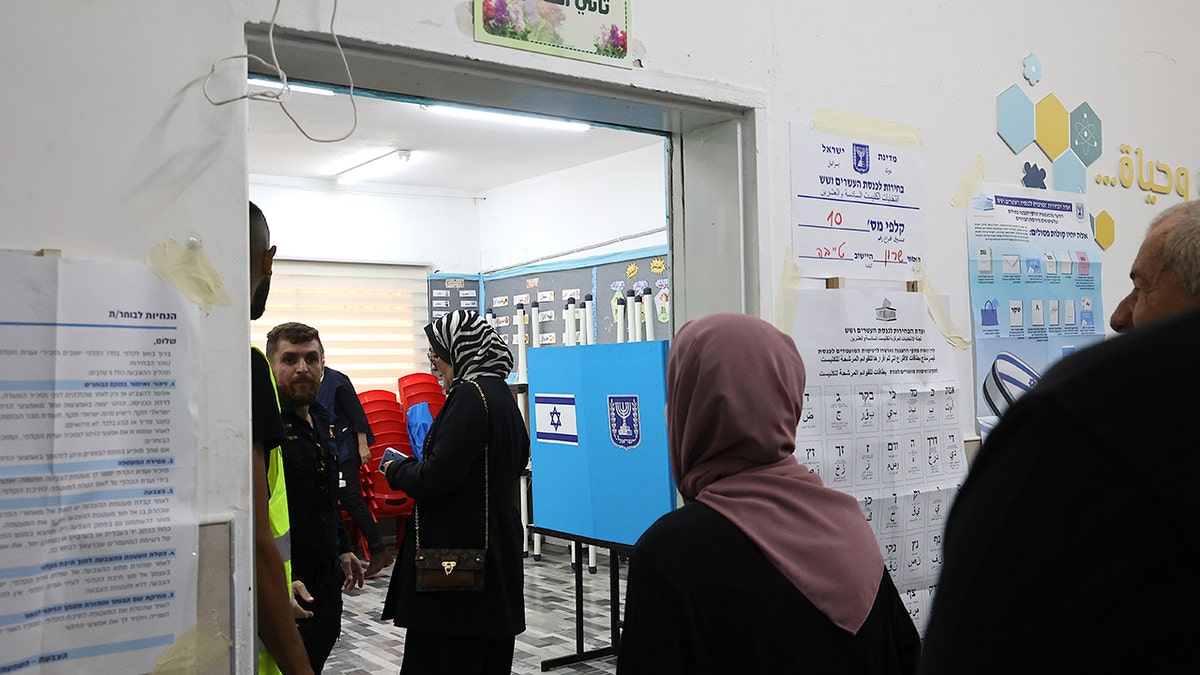
Voters cast ballots at a polling station during Israel’s legislative election in the northern Arab town of Taibe on Oct. 27, 2026. (Gil Cohen-Magen/picture-alliance/dpa/AP Images)
Three possible routes to a new government
Netanyahu could try to broaden his existing coalition by attracting at least seven lawmakers from outside the right-wing and religious bloc, giving him the 61 seats required for a standard parliamentary majority.
Eisenkot could instead seek recommendations from enough members of the Knesset—including potentially Arab lawmakers—to convince President Isaac Herzog to let him make the first attempt at forming a government.
Arab parties would not necessarily have to formally join Eisenkot’s coalition under that scenario. He would, however, still need sufficient backing to pass a confidence vote.
The third outcome is another political impasse, leaving both leaders unable to build a governing majority and potentially sending Israelis back to the polls.
The picture remains unsettled while officials count the remaining ballots, including votes cast by soldiers and others using special voting procedures.
Final results are expected Nov. 4. Herzog will then meet with the parliamentary factions before choosing a lawmaker to lead efforts to form the next government.
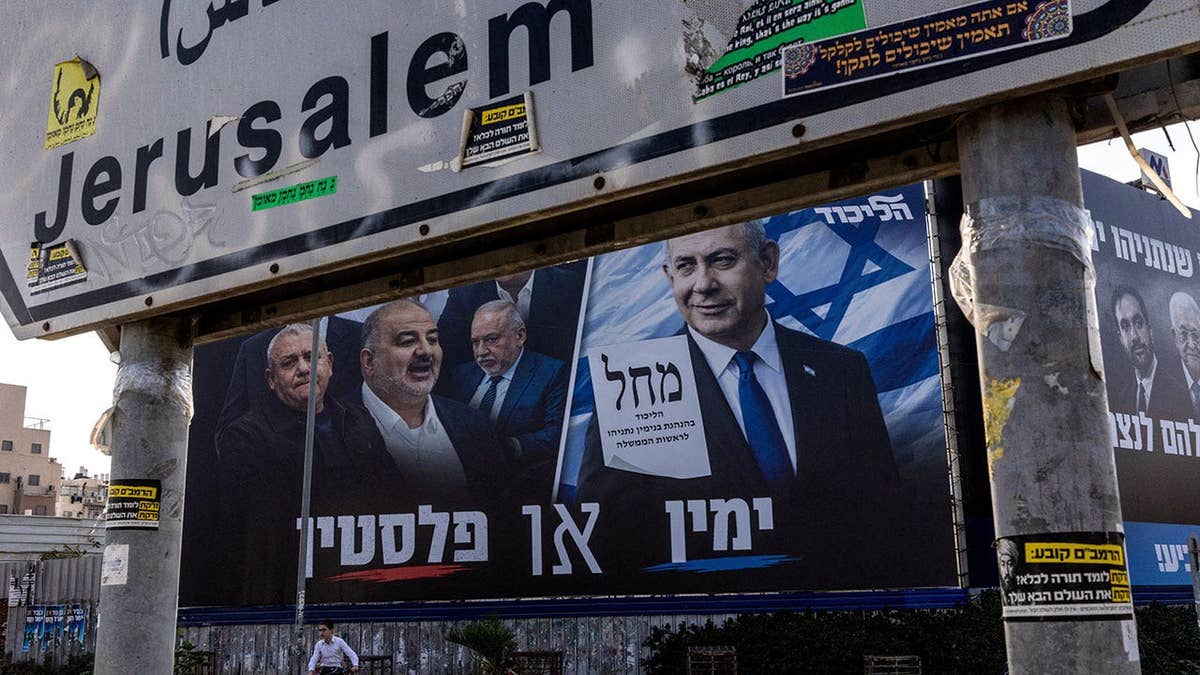
A boy sits on his bicycle beside a campaign banner for Netanyahu’s Likud party ahead of Israel’s parliamentary election in Bnei Brak on Oct. 25, 2026. (Nir Elias/Reuters)
The lawmaker selected by Herzog will have an initial 28 days to negotiate coalition agreements, with the option of seeking a further 14-day extension.
Netanyahu will continue serving as prime minister until a new government is sworn in.