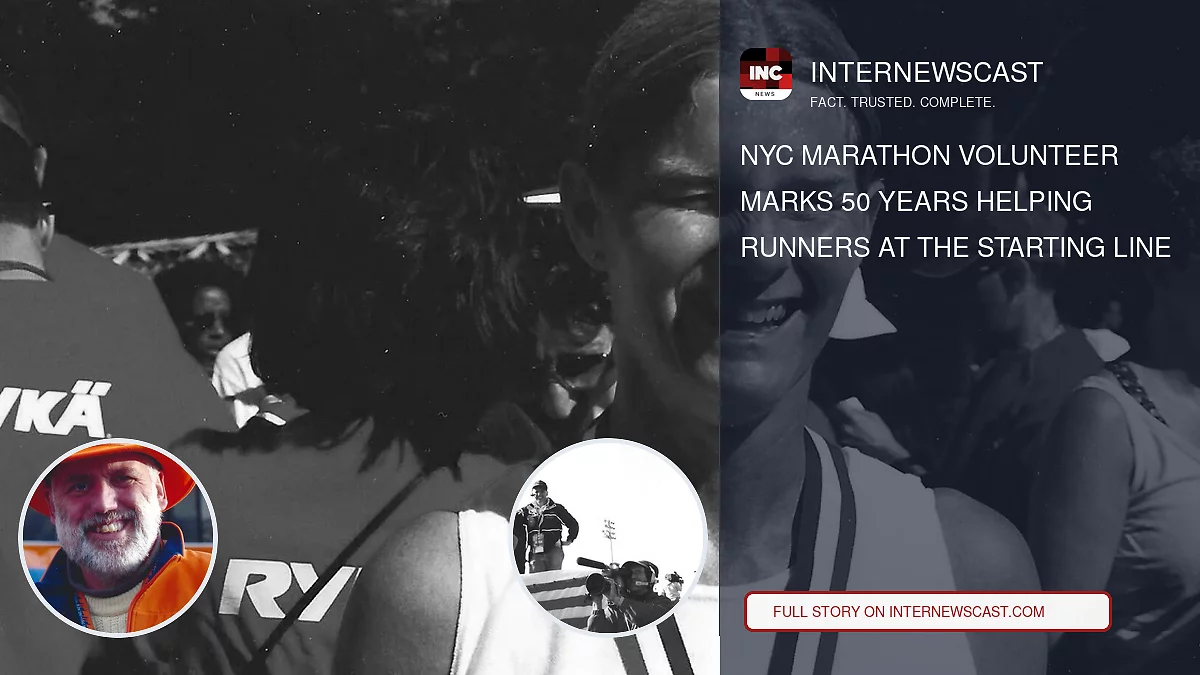

When nearly 60,000 runners line up for the 26.2-mile New York City Marathon on Sunday, Nov. 1, the finish line will command plenty of attention. But Joanne Navarra believes the race’s true energy can be found at the start, where thousands of emotions and stories converge before the first step.
“It’s more exciting than the finish because you have everybody there at the same time,” Navarra said. “It’s just an adrenaline rush.”
This year’s race commemorates the 50th anniversary of the marathon’s five-borough course—a milestone that is especially meaningful to Navarra. For half a century, she has served as the lead volunteer at the starting village in Fort Wadsworth on Staten Island.
“I never imagined, when I first got involved, that I’d still be doing this 50 years later,” she said. “But I enjoy it.”
On Oct. 24, 1976, as New York marked the U.S. Bicentennial, the marathon’s starting point moved from Central Park to Staten Island. The new route carried runners over five bridges and through all five boroughs: Staten Island, Brooklyn, Queens, the Bronx and Manhattan.
Courtesy of Joanne Navarra 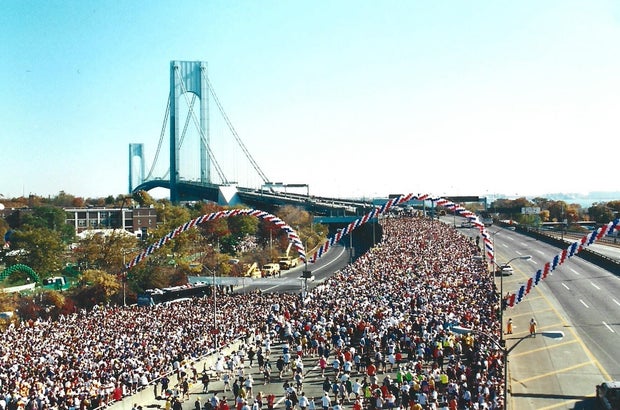
In those early days, the event was a far cry from the massive start village runners know today. Just 2,090 people entered, paying a $5 registration fee, while a modest team of volunteers helped get the race moving.
“It was basically a local race. You went to Fort Wadsworth and signed up to run,” Navarra recalled. “My husband wanted to participate, and I said, ‘You’re out of your mind. What are you talking about?’ Then I asked myself, ‘What am I going to do?’ So I started volunteering and helping out.”
Neither Navarra nor her husband, Victor, a New York City Fire Department lieutenant, could have known that the race would become the beginning of a lifelong journey together.
Courtesy of Joanne Navarra 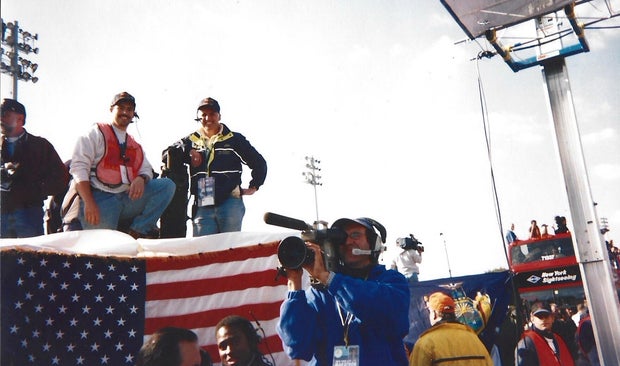
“The race kept getting bigger, and our responsibilities kept growing with it,” Navarra said. “After maybe three years, Fred Lebow, one of the race’s co-founders and organizers, told us, ‘You guys can run the whole start.’ And that’s what we did.”
Navarra also ran the marathon herself several times. She would volunteer through the early morning, then hurry to the back of the starting area in time to join the race.
Courtesy of Joanne Navarra 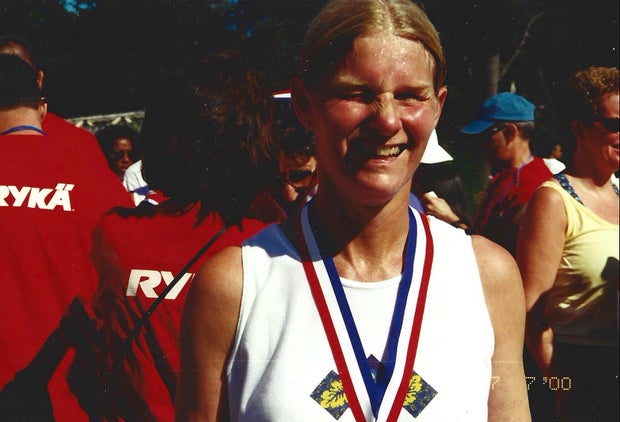
Over time, the Navarras helped New York Road Runners turn race-day coordination into the highly organized operation it is today. They recruited volunteers, arranged the corrals and guided participants toward the starting line at the Verrazzano-Narrows Bridge.
Yet the marathon has carried a different emotional weight for Navarra since Victor died in 2007 of paranasal sinus cancer. His illness was attributed to his volunteer work at Ground Zero following the terrorist attacks of Sept. 11, 2001. For Navarra, continuing their shared marathon tradition has become a powerful way to keep his memory alive.
“It was a passion for him,” Navarra said. “He loved the start because everyone was together. Until the day he died, he was determined to be at that marathon.”
Being there was one of Victor’s final wishes. After doctors told him he likely had only months to live, he wrote down a list of things he wanted to accomplish.
Courtesy of Joanne Navarra 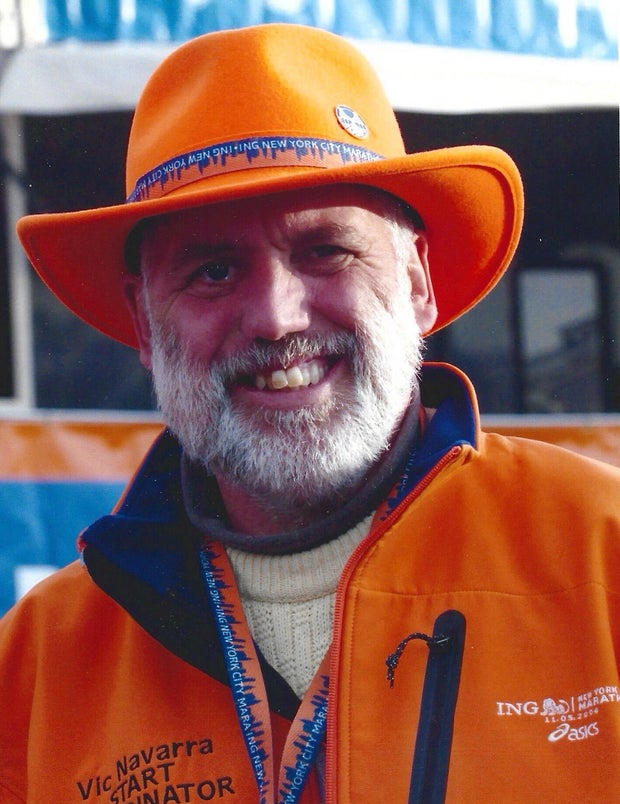
“His final goal was to make it to that marathon. Come hell or high water, he was going to be there,” Navarra said. “At that race, he was blind and could barely speak. He had no idea what he looked like, but he made it. He told me, ‘If something happens to me before then, just put me on ice.’”
Nineteen years later, Navarra remains at the center of marathon preparations. In the days before race day, she supervises construction of the start village, leads volunteer meetings on race procedures and distributes trash and donation bags for cleanup in the corrals.
By 8:30 a.m. on race morning, she can often be found 85 feet above the ground in the bucket of an FDNY truck, directing operations from above despite her fear of heights. She knows Victor would have found the sight amusing.
“He knew how much I hated heights, and I still do. I don’t even like standing on a step ladder,” Navarra said. “I think he’d be proud that I’ve continued this work and maintained all these relationships.”
On Nov. 1, nearly 2,000 volunteers will assemble at the start village under Navarra’s direction. The gathering will celebrate not only the runners beginning their journey, but also the woman who has spent 50 years making the New York City Marathon starting line a welcoming place—with no end to her commitment in sight.
“You don’t really see sad faces,” Navarra said. “It’s wonderful to see everyone together and enjoying themselves.”


