

Israel’s final election tally has stripped Prime Minister Benjamin Netanyahu’s bloc of its parliamentary majority, setting the stage for tense coalition talks. Whether opposition leader Gadi Eisenkot can build an alternative government remains unresolved as negotiations move behind closed doors.
The completed results, released early Friday by Israel’s Central Elections Committee, awarded Netanyahu’s bloc 53 of the Knesset’s 120 seats. Eisenkot’s opposition alliance won 48, while the two predominantly Arab parties captured a historic 19 seats and could hold the balance of power.
Netanyahu’s Likud remained the largest single party with 27 seats, followed by Eisenkot’s Yashar with 21 and former Prime Minister Naftali Bennett’s Beyachad with 12. Overall turnout was 77.9%, according to the committee.
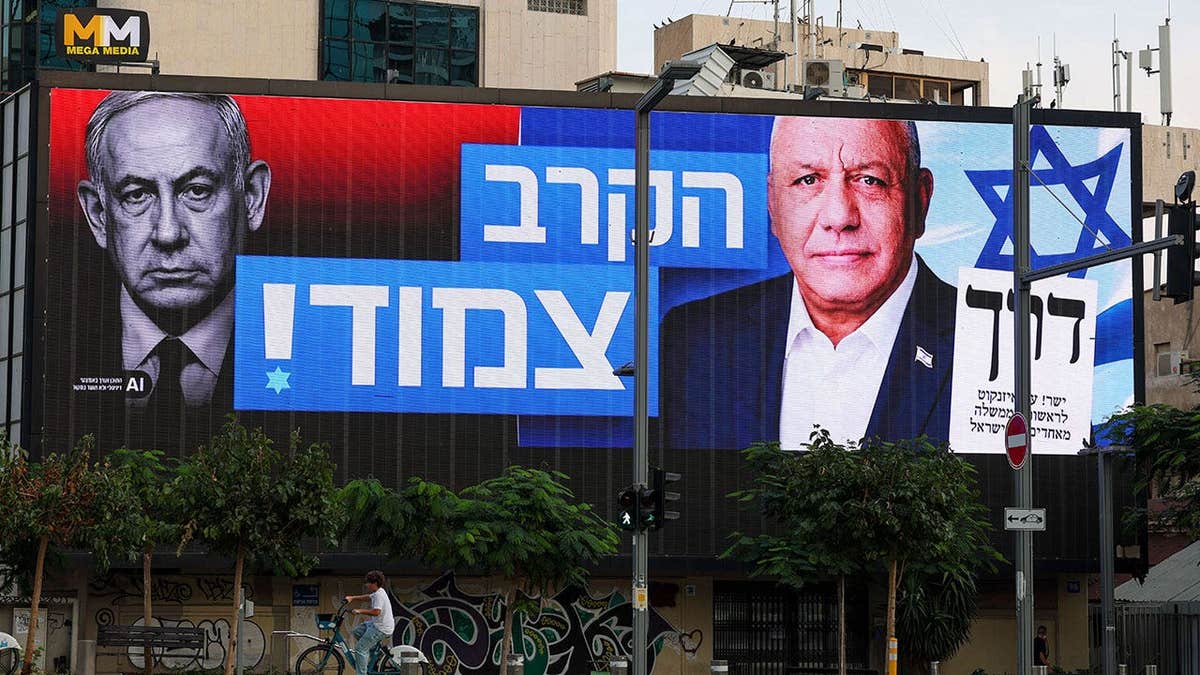
Posters showing former Israeli Chief of General Staff and Yashar leader Gadi Eisenkot, right, and Prime Minister and Likud leader Benjamin Netanyahu line the streets of Tel Aviv on October 25, 2026, two days before Israel’s Knesset election. (Nir Keidar/Anadolu via Getty Images)
Neither major bloc is close to the 61 seats needed to govern alone. The result has opened a complicated battle over possible alliances with Arab lawmakers, ultra-Orthodox parties or even a unity government between longtime political rivals.
A source familiar with opposition discussions, speaking to News Outlet on condition of anonymity, called the outcome a “bitter stalemate” but said it was not an impossible political situation.
The source said opposition leaders were entering coalition talks with patience and experience rather than viewing the result as a defeat. The next government, the source argued, may depend on whether they can create partnerships that once appeared politically unthinkable.
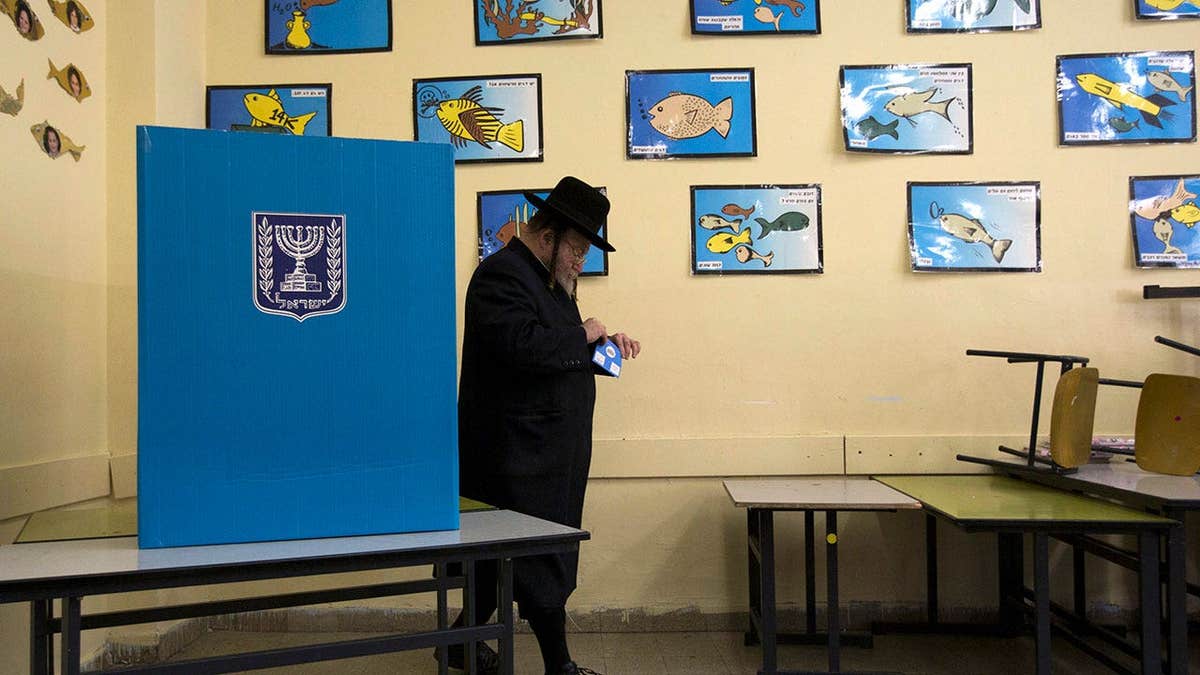
An ultra-Orthodox Jewish man holds his ballot while voting in Jerusalem on January 22, 2013. Israelis voted in an election widely expected to give Prime Minister Benjamin Netanyahu a third term and move the country further to the right. (Ronen Zvulun/Reuters)
Ultra-Orthodox allies consider distancing themselves from Netanyahu
A potentially important development emerged Friday when Israeli journalist Yishai Cohen of Kikar HaShabbat reported that Rabbi Dov Lando, a leading ultra-Orthodox authority, had instructed lawmakers from Degel HaTorah, part of United Torah Judaism, to begin talks with the opposition.
The reported goal was to secure protections for yeshiva students amid the longstanding dispute over mandatory military service.
Channel 12 separately reported that some figures in the ultra-Orthodox party were weighing whether to allow an Eisenkot-led minority government to remain in office with outside parliamentary support—a move that would break with Netanyahu.
“Our votes are not in Netanyahu’s pocket,” party figures told Channel 12, according to a translation of the Hebrew-language report.
The office of United Torah Judaism Chairman Yaakov Asher, however, denied that any directive to open negotiations had been issued.
Such a deal would mark a major departure from the party’s longstanding partnership with Netanyahu. Eisenkot’s promise to broaden military conscription for ultra-Orthodox men remains a central obstacle, although Channel 12 reported that party officials were open to discussing a compromise.
The source familiar with opposition talks said Eisenkot’s camp had been preparing for possible cooperation with ultra-Orthodox parties well before the vote. Some of the options now under discussion, the source said, had already been explored privately.
Any agreement could involve concessions on military service as well as outside support from Arab lawmakers, joining factions that appeared fundamentally opposed throughout the campaign.

People gather near a campaign banner featuring leaders of the Joint List before Israel’s national election in Nazareth on October 10, 2026. (Ammar Awad/Reuters)
Arab parties show flexibility as coalition math tightens
The Arab parties offer another possible route to power after nearly doubling their representation from 10 to 19 seats, fueled by a sharp increase in turnout.
Still, analysts disagree over how realistic an Arab-backed government would be.
Channel 12 reported Thursday that Ra’am leader Mansour Abbas was deeply doubtful that an Eisenkot-led minority government supported by Arab lawmakers could be formed.
Political commentator Amit Segal likewise said the available choices had narrowed, identifying a Netanyahu-Eisenkot unity government or another election as the two main possibilities.
Mohammed Majadla, head of the news division at Radio Nas and a Channel 12 political commentator, offered a different view in an interview with News Outlet. He said both Ra’am and the Joint List were prepared to use their parliamentary leverage to keep Netanyahu from returning to power.
CONTINUE READING: FBI Agent Reveals Existential Threat That Could Plunge US Into Chaos
“The two Arab lists agree on two things,” Majadla said in the Hebrew-language interview. “First, they are prepared to do everything within the political process to ensure Netanyahu does not return to power.”
That could mean joining a coalition, providing outside support or abstaining on crucial votes, Majadla said.
He added that the parties also shared a desire to avoid another election, which Arab leaders fear could cost them their newly won seats.
“The ball is now in Eisenkot’s court, not in the Arab parties’ court,” Majadla said. “As far as the Arab parties are concerned, I can tell you they are truly prepared to do everything to make this happen.”
Majadla cautioned that public statements should not always be viewed as final positions, particularly while parties are trying to maximize their leverage in coalition talks.
Eisenkot also faces resistance within his potential camp. Some prospective partners oppose working with ultra-Orthodox factions, while several opposition leaders campaigned against depending on Arab lawmakers to govern.
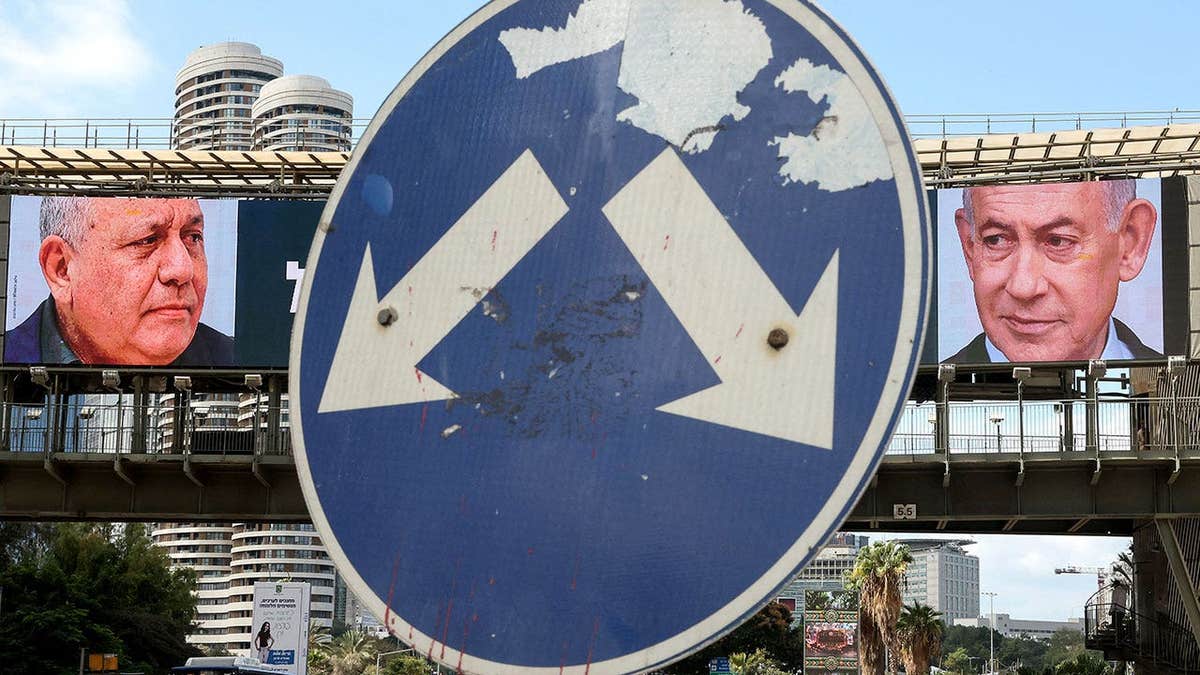
A road sign stands before a billboard featuring Prime Minister Benjamin Netanyahu, right, of Likud and former military chief Gadi Eisenkot, leader of the centrist Yashar party, in Ramat Gan on October 20, 2026. Israel is set to vote on October 27 in its first election since the Hamas-led October 7, 2023, attack. (Jack Guez / AFP via Getty Images)
Unity government or a return to the polls?
A national unity government joining Likud and Yashar would provide the clearest mathematical path to a majority. It would also require Eisenkot to abandon his campaign promise not to serve in a government led by Netanyahu.
The prolonged coalition process could give Netanyahu additional openings. If Eisenkot receives the mandate to form a government but fails, President Isaac Herzog could give another candidate the opportunity—potentially allowing Netanyahu to try again. If multiple efforts collapse, Israelis could be sent back to the polls.
The source familiar with opposition talks said Bennett and Lapid’s experience managing complicated coalition negotiations could prove valuable.
“They’ve both played this game many times. They know it, and they’re not rattled,” the source said, according to a translation of the Hebrew-language conversation.
Bennett’s past cooperation with Netanyahu, the source added, gives him insight into the prime minister’s negotiating style, while Lapid brings his own experience building governing alliances.
Former Prime Minister Yair Lapid, one of the opposition’s senior figures, acknowledged Friday that forming a government would be far more difficult than campaigning against Netanyahu.
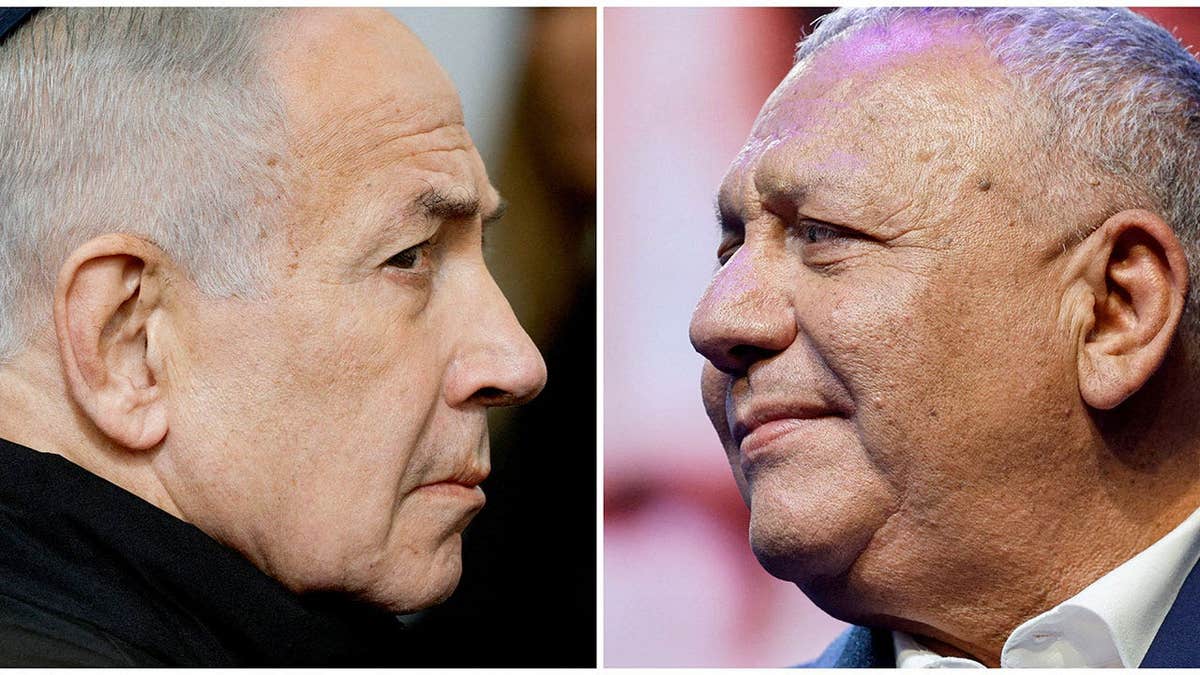
A combination picture shows Israeli Prime Minister Benjamin Netanyahu at a memorial service in Meitar on January 28, 2026, and Israeli opposition leader and former military chief Gadi Eisenkot launching his Yashar election campaign near Hod Hasharon on June 30, 2026. (Amir Cohen/Reuters)
“Now comes the truly hard part: trying to form a government,” Lapid wrote on X, urging supporters to remain patient.
“It takes place in small rooms, slowly, away from the cameras,” he wrote, according to a translation of his Hebrew-language statement, underscoring the importance of private negotiations.
The coalition talks will also take place as the Trump administration advances its own Middle East agenda.
The source familiar with opposition discussions said Washington’s regional priorities could become an important factor in shaping the next government, though no specific American role in the negotiations has been confirmed.
The results are scheduled to be formally submitted to President Herzog on November 4 after remaining verification procedures are completed. The new Knesset is expected to be sworn in on November 10.
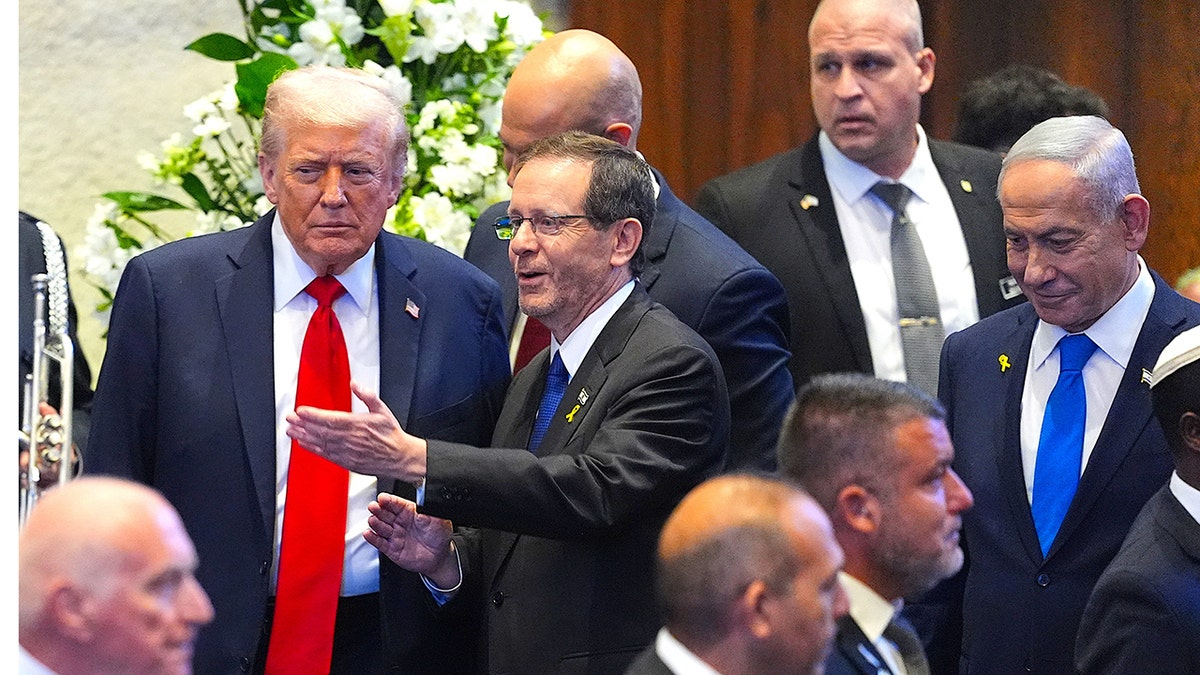
U.S. President Donald Trump enters the Knesset with Israeli President Isaac Herzog and Prime Minister Benjamin Netanyahu before addressing Israel’s parliament on October 13, 2025, in Jerusalem. (Evan Vucci – Pool/Getty Images)
The election has answered how Israelis voted, but not who will lead them. As the source familiar with the negotiations put it: “Whoever manages to forge new partnerships will move forward. Whoever doesn’t will remain stuck.”


