
Health experts have unveiled a modern take on the traditional “food pyramid” — one that places plant-based foods at its foundation rather than meat.
An international group of scientists led by researchers at Brigham Young University in Utah developed the pyramid after reviewing dietary guidelines from countries including the United States, Canada, Australia, China and the Nordic nations.
The model encourages people to make whole grains, fruits, vegetables and plant-based proteins such as lentils and chickpeas central to their diets, while reducing their intake of red and white meat.
It also advises limiting ultra-processed foods and drinks, including doughnuts and sugary sodas.
The recommendations differ from Dietary Guidelines for Americans promoted by Health Secretary Robert F. Kennedy Jr., which urge Americans to make protein a cornerstone of their diet.
The researchers said replacing some red meat with plant-based protein could help prevent as many as 15 million premature deaths from conditions including heart disease and cancer. Red and processed meats contain high levels of saturated fat, which has been associated with an increased risk of heart disease, while processed meats are classified as carcinogenic.
Kennedy has encouraged Americans to obtain protein from a range of sources, including meat. Supporters of a higher-protein diet say it helps people feel full for longer, potentially lowering the risk of obesity and the many health problems associated with it.
Karen Della Corte, the study’s lead author and a nutritional scientist at BYU, said: “Despite what people often hear, there’s actually substantial agreement in nutrition science about the foundations of healthy eating.

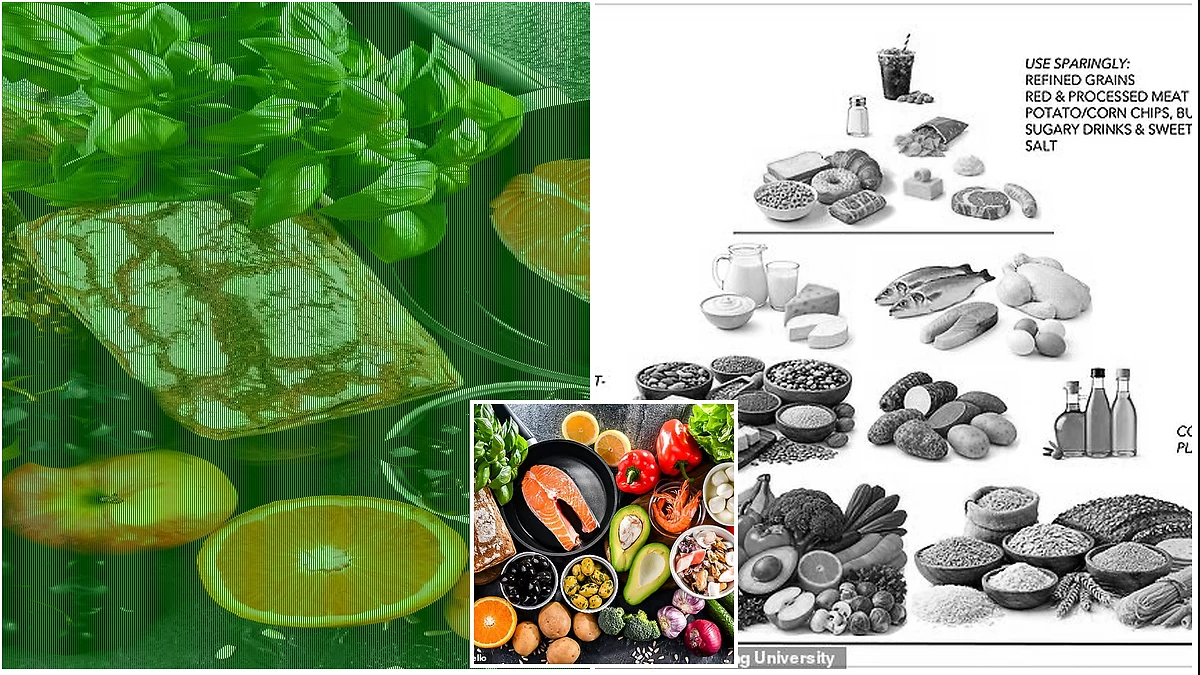
This illustration depicts the food pyramid created by an international team of experts led by scientists at Brigham Young University
“We wanted to bring those shared principles together and translate an extensive body of scientific evidence into a coherent and practical food guide pyramid.”
Dr Anette Buyken, a study author and professor at Paderborn University in Germany, said: “For both health and sustainability reasons, carbohydrate-rich foods should provide a substantial share of our energy, so their quality is particularly important.
“Alongside sugar and fiber content, we should consider how these foods affect blood glucose, as reflected by their glycemic index, especially because many people worldwide are insulin resistant and therefore at increased risk of type 2 diabetes.”
Published in the journal Advances in Nutrition, the study examined dietary guidance from 11 countries: the US, Canada, Australia, China, Germany, the Netherlands, Denmark, Finland, Iceland, Norway and Sweden.
The researchers compared those recommendations with recent studies on health outcomes before combining the findings into a broad summary of healthy eating principles.
They also drew on the EAT-Lancet Planetary Health diet, a flexitarian eating pattern developed by the EAT-Lancet Commission. It emphasizes whole grains, fruits and vegetables while keeping meat and dairy consumption relatively low. The researchers selected it because it addresses both human health and environmental sustainability and was designed to accommodate different populations and cultures.
Serving recommendations in the new pyramid were based on the dietary guidelines reviewed by the team and the EAT-Lancet Planetary Health diet.
At the base of the pyramid are vegetables, fruits and whole grains.
The model recommends five combined servings of fruits and vegetables each day, without prescribing particular varieties. Instead, it emphasizes eating a diverse selection. In the US, one serving of fruit or vegetables is generally equivalent to about one cup.
It also advises getting roughly half of all grain servings from whole-grain or low-glycemic foods, such as quinoa and basmati rice, which cause blood sugar to rise more slowly and by a smaller amount after eating.
The researchers placed these foods at the foundation of the pyramid because they provide substantial fiber and a broad range of micronutrients essential to a healthy diet. An estimated 95 percent of Americans fail to consume the recommended 30 grams of fiber per day. Higher intakes of fruits, vegetables and whole grains have also been associated with better heart and metabolic health.
The pyramid additionally recommends 125 grams per day of legumes, nuts and seeds — roughly equivalent to four or five handfuls of nuts — along with about 50 grams of tubers daily. That amount is approximately two-thirds of a potato and includes foods such as sweet potatoes, cassava and yams.
SEE ALSO: Lindsay Clancy Supporter Accused of Posting Patrick’s Dad Recording
The team pointed to evidence that these foods provide protein, unsaturated fats, fiber and vitamins, nutrients associated with lower cholesterol levels and reduced risks of type 2 diabetes, heart disease and premature death.
Dairy intake should be limited to 250 grams per day, or about one cup, with yogurt or soy milk preferred to full-fat dairy. The researchers noted that although regular milk is a good source of calcium, it also contains saturated fat, which may be linked to heart disease.
They recommended replacing saturated fats found in butter, cream and fatty meats with healthier unsaturated fats, including olive and avocado oil, to help support healthier blood pressure and cholesterol levels.
For those who eat meat, the pyramid places greater emphasis on white meat, such as chicken. It recommends no more than 30 grams per day — about one-quarter of a typical 110-gram chicken breast.
For red meat, including beef, the suggested limit is 14 grams per day, roughly equivalent to a single bite of steak. The recommendation reflects concerns from the EAT-Lancet Commission about heart disease, diabetes and colorectal cancer, as well as the greenhouse gas emissions associated with livestock farming.
Sugary snacks, sweetened drinks and other ultra-processed foods should be consumed sparingly and reserved for occasional treats because of their links to obesity, diabetes and heart disease. The pyramid does not ban any foods outright.

The new food pyramid from Brigham Young University researchers emphasizes whole grains, plant-based proteins and healthier fats
The dietary model does not specify a daily calorie target or set exact amounts for nutrients such as protein, fat, carbohydrates or fiber.
The Dietary Guidelines for Americans, updated earlier this year under Kennedy’s leadership, encourage people to eat both animal proteins — including red meat — and plant-based protein sources.
Kennedy’s guidelines advise Americans to consume 1.2 to 1.6 grams of protein per kilogram of body weight, along with three servings of dairy, three servings of vegetables, two servings of fruit and two to four servings of whole grains daily.
In that pyramid, protein, dairy and healthy fats form the base. Vegetables and fruits occupy the middle, while whole grains make up the smallest category.
BYU researchers said that emphasizing plant-based protein could deliver environmental benefits as well as health advantages by reducing greenhouse gas emissions and other impacts associated with livestock production.
“Our diet has to be not only for our own health but also for the health of our planet,” said David J. Jenkins, a study author and creator of the glycemic index.
“Our science base has to be appropriately comprehensive to include that.”
Della Corte said a healthy diet “won’t look exactly the same for everyone around the world.”
She added: “Durum pasta, basmati rice, tortillas, rice noodles, bulgur and many other staples with a low to moderate glycemic index can all fit into a healthy diet.
“People can follow the same underlying principles using traditional foods that are locally available, affordable and culturally appropriate for them.”
To put the recommendations into practice, Della Corte suggests choosing beans, peas, lentils, fish, poultry or yogurt more often than red or processed meat.
Instead of ultra-processed snacks, people could reach for nuts, seeds, fruit or vegetables with hummus. She also recommends choosing whole grains rather than refined grains, and high-fiber cereals instead of puffed, flaked or popped varieties.
For cooking, she advises using canola or olive oil in place of butter or tallow, and choosing water instead of sugary soda.