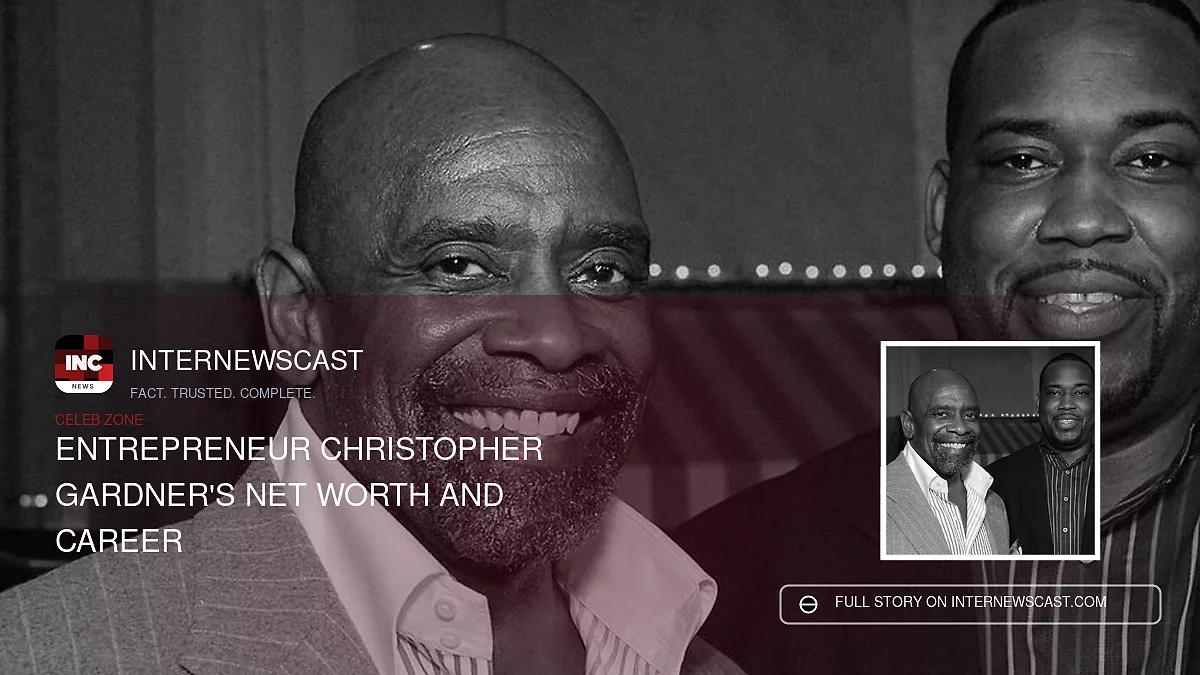

What Is Christopher Gardner’s Net Worth?
Christopher Gardner is an American entrepreneur, investor, author, and motivational speaker with an estimated net worth of $50 million.
He is widely recognized for overcoming homelessness and building a successful career on Wall Street—an inspiring journey later portrayed in the 2006 film The Pursuit of Happyness, starring Will Smith. In the early 1980s, Gardner was a struggling single father who moved between homeless shelters and, at times, slept in public bathrooms with his young son while pursuing a future in stockbroking. He eventually joined Dean Witter Reynolds, later moved to Bear Stearns, and founded Gardner Rich & Co. in Chicago in 1987. The institutional brokerage firm grew into a multimillion-dollar business serving major pension funds and other large investors, making Gardner financially successful well before Hollywood told his story.
Gardner later built an international profile as an author and public speaker. His 2006 memoir, The Pursuit of Happyness, became a bestseller, and its film adaptation earned more than $307 million worldwide while bringing Will Smith an Academy Award nomination. Gardner also wrote Start Where You Are and Permission to Dream, expanded his investment portfolio, and launched educational initiatives aimed at helping disadvantaged young people. His professional work has included leadership roles in financial services and collaborations with organizations focused on improving access to education and employment.
Early Life
Christopher Paul Gardner was born on February 9, 1954, in Milwaukee, Wisconsin. His mother, Bettye Jean Gardner, worked as a schoolteacher, while his biological father, Thomas Turner, played little role in his childhood. Gardner grew up with three sisters in a difficult home environment shaped by poverty and the abuse of his stepfather, Freddie Triplett. His early years included time in foster care, domestic violence, and persistent financial instability.
Gardner often said that his mother helped him imagine a life beyond the hardships surrounding him. She encouraged his education, introduced him to books, and taught him to believe that he was capable of achieving something meaningful. Several maternal uncles who had served in the military also influenced his outlook and ambitions.
As a child, Gardner made a promise to himself that his own children would never grow up questioning the identity or whereabouts of their father. That commitment took on greater significance years later when he became responsible for raising his young son without a secure home. His determination to remain present in his children’s lives would eventually become one of the defining themes of his memoir.
Military Service and Medical Career
Gardner joined the United States Navy as a teenager and trained as a hospital corpsman. His military service introduced him to medicine and gave him hands-on experience assisting medical personnel. After leaving the Navy, he relocated to San Francisco and began working in medical research.
He later became a clinical research assistant at the University of California, San Francisco, working alongside doctors and contributing to research projects. Gardner gained valuable medical expertise and initially imagined becoming a physician. The cost of medical school and the years of education required, however, made that path difficult to pursue.
He eventually left clinical research to sell medical equipment. Although the position offered higher earning potential, it also brought new financial pressures as his family responsibilities grew. Gardner began searching for a profession that could provide stronger long-term advancement without requiring years of additional schooling.
Marriage, Fatherhood, and Homelessness
In June 1977, Gardner married Sherry Dyson, an educational specialist. Their marriage later broke down as Gardner reconsidered his medical ambitions and began a relationship with Jackie Medina, a dental student. Gardner and Dyson separated, and Medina gave birth to his son, Christopher Jarrett Gardner Jr., in January 1981.
Fatherhood increased Gardner’s financial obligations at a time when he was already trying to find a more promising career. His direction changed after an encounter in a San Francisco parking lot. Gardner noticed a man driving a red Ferrari and asked him about his work. The man, stockbroker Bob Bridges, told Gardner about his profession and said he earned $80,000 a month. Although Gardner knew nothing about securities trading, the conversation sparked his interest in becoming a stockbroker.
Bridges introduced Gardner to contacts in the brokerage business, prompting him to apply for training positions. After months of interviews, Gardner believed he had landed an opportunity with a brokerage firm and left his medical equipment sales job. But when he arrived to start, he learned that the manager who had offered him the position had been fired. The job was no longer available.
Gardner’s financial situation worsened after an argument with Medina led to police being called to their home. Officers found that he had accumulated $1,200 in unpaid parking fines, resulting in his arrest. Unable to pay the amount, Gardner spent 10 days in jail. While he was incarcerated, Medina left with their son, and Gardner was released without steady employment or a permanent place to live.
Even so, he obtained an interview with Dean Witter Reynolds. He had only recently left jail and arrived in the same jeans and sneakers he had been wearing when arrested. Gardner candidly described his circumstances to the interviewer, who ultimately accepted him into the company’s stockbroker training program.
The position offered a possible path forward but provided very little money during the training period. Gardner struggled to cover basic expenses and initially lived in low-cost boardinghouses. Several months later, Medina returned and left their young son in his care, placing Gardner in full-time responsibility for the child.
Gardner took custody of Christopher Jr., but children were not allowed in the boardinghouse where he lived. With his limited income making an apartment unaffordable, Gardner and his son were left without a home.
For roughly the next year, Gardner tried to establish himself in finance while caring for his toddler without stable housing. They moved among inexpensive hotels, shelters, and other temporary spaces, occasionally sleeping in parks or locked bathrooms at Bay Area Rapid Transit stations. On some nights, Gardner slept under his desk at the office.
Reverend Cecil Williams and Glide Memorial Church in San Francisco provided crucial assistance. Through its programs for homeless and low-income residents, Glide helped Gardner and his son find temporary shelter. Gardner brought his son to daycare each morning before attending his brokerage training sessions, keeping the family’s homelessness hidden from many coworkers as he worked toward a more secure future.
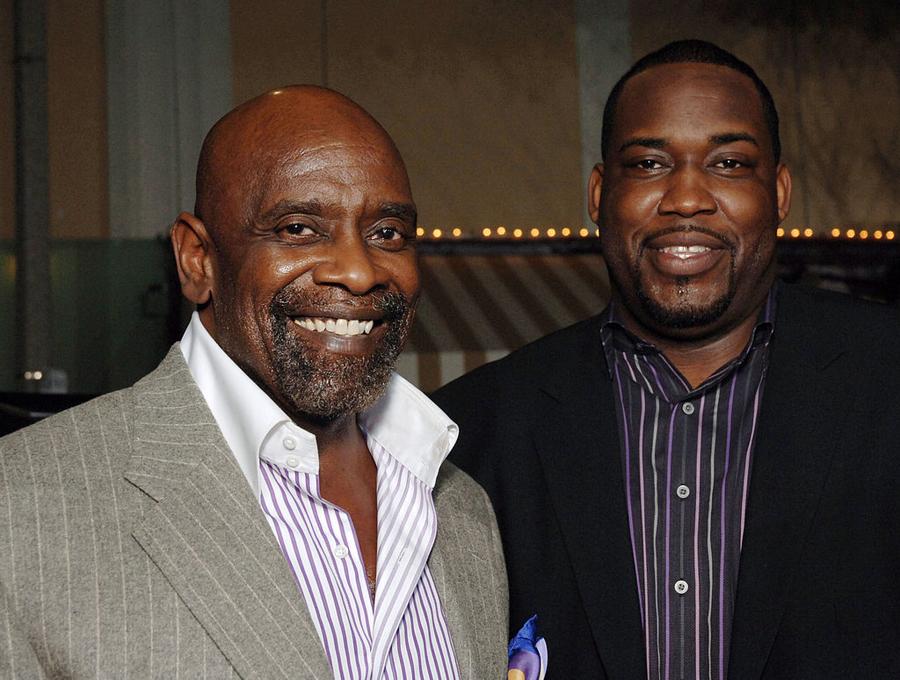
Chris Gardner and son Christopher Gardner (Photo by Alberto E. Rodriguez/WireImage)
Wall Street Breakthrough
Gardner approached his brokerage training with extraordinary intensity. At Dean Witter Reynolds, he reportedly set a goal of making at least 200 telephone calls to prospective clients every day. He arrived early, worked long hours, and concentrated on building relationships despite his limited financial resources and the responsibilities of raising his son.
In 1982, Gardner passed the Series 7 licensing examination and became a full-time stockbroker at Dean Witter. His career began advancing rapidly, and in 1983 he moved to Bear Stearns, where he developed a reputation as a productive and ambitious broker.
His success at Bear Stearns eventually provided the financial stability that had eluded him for years. He earned enough to rent an apartment for himself and Christopher Jr., ending their period of homelessness. Gardner subsequently worked in the firm’s New York operations and continued developing relationships with institutional investors.
His experience at Bear Stearns gave him knowledge of securities trading, client management, and the institutional investment business. It also provided the foundation for his eventual decision to establish his own brokerage firm.
Gardner Rich & Co. and Business Fortune
In 1987, Gardner launched Gardner Rich & Co. in Chicago with $10,000 in start-up capital. He initially operated the business from his apartment, concentrating on securities trading and investment services for institutional clients, particularly public employee pension funds.
His timing was remarkable. Gardner opened the firm on October 19, 1987, the day that became known as Black Monday, when the Dow Jones Industrial Average plunged 22.6%. Despite launching into one of the worst stock market crashes in American history, he managed to establish a viable business. One of his first major clients was the Chicago Teachers Pension and Annuity Fund, and he subsequently expanded his relationships with other public pension systems and institutional investors.
Gardner Rich specialized in transactions involving stocks, bonds, and other securities for large institutional clients. The company eventually expanded beyond Chicago, establishing offices in New York and San Francisco. Its clients included major public-sector pension funds, and Gardner developed a particular interest in working with organizations associated with teachers and public employees.
The business became increasingly valuable during the 1990s. In a 1999 interview with “Education Week,” Gardner placed his company’s value between $7 million and $10 million. That same year, the “Los Angeles Times” reported that the brokerage was on track to conduct $10 million in business and counted the city of Los Angeles and public pension systems in California, Illinois, and Alabama among its clients.
The firm’s growth also made Gardner personally wealthy. He acquired multiple residences, a luxury condominium in New York, and a Ferrari previously owned by basketball superstar Michael Jordan. The Ferrari carried the personalized license plate “Not M.J.,” reflecting Gardner’s desire to demonstrate that young people could achieve significant financial success through business rather than professional sports.
Gardner eventually sold an ownership interest in Gardner Rich in a multimillion-dollar transaction associated with his move away from managing the brokerage. In 2006, he established Christopher Gardner International Holdings, expanding his activities into investment opportunities and other business ventures.
His investment interests included South Africa, which he visited in 2003. During the trip, Gardner met Nelson Mandela and became interested in projects intended to stimulate economic development and employment. He pursued an initiative to attract as much as $1 billion in investment capital for South African businesses, although that figure represented a fundraising ambition rather than a completed personal investment.
Gardner subsequently continued working in financial services alongside his speaking and philanthropic activities. In 2021, he joined Sutter Securities as a senior managing director and became affiliated with Boustead Securities. He also retained business interests through Chris Gardner Inc. and the Christopher P. Gardner Foundation.
“The Pursuit of Happyness”
Gardner’s personal story reached an international audience through his 2006 autobiography, “The Pursuit of Happyness,” written with Quincy Troupe. The memoir described his difficult childhood, early professional struggles, period of homelessness, and eventual success in the financial industry. It became a number-one “New York Times” bestseller and was subsequently translated into more than 40 languages.
The book’s unusual spelling of “happiness” reflected the misspelled word Gardner encountered during his years of homelessness. The deliberate spelling also became the title of the film adaptation, released by Columbia Pictures in December 2006.
Directed by Gabriele Muccino, the film starred Will Smith as Gardner and Smith’s real-life son, Jaden Smith, as Christopher Jr. The cast also included Thandiwe Newton, who portrayed a fictionalized version of Gardner’s son’s mother.
“The Pursuit of Happyness” became a major commercial success. Produced on a budget of $55 million, the film grossed $307.1 million worldwide, including $163.6 million in North America. Will Smith received an Academy Award nomination for Best Actor, along with Golden Globe and Screen Actors Guild Award nominations.
Gardner was closely involved with the production and received an associate producer credit. He also made a cameo appearance near the end of the film, briefly crossing paths with the characters played by Will and Jaden Smith.
Although the film closely followed the central events of Gardner’s story, it made several changes for dramatic purposes. Gardner’s son was a toddler during their period of homelessness rather than the older child portrayed in the movie, and the actual brokerage training program provided a modest stipend rather than being entirely unpaid. The film also compressed events that unfolded over a longer period.
The movie’s success dramatically expanded Gardner’s public recognition. His story became a popular subject for corporate leadership seminars, educational conferences, and motivational speaking events, creating opportunities beyond his established financial career.

(Photo by Evan Agostini/Getty Images)
Books, Public Speaking, and Later Career
Following the success of “The Pursuit of Happyness,” Gardner established himself as an internationally sought-after motivational speaker. His presentations frequently focused on overcoming adversity, personal responsibility, entrepreneurship, and the importance of education. By 2014, he was reportedly delivering as many as 200 speeches annually, with half of those engagements taking place outside the United States.
In 2009, Gardner published his second book, “Start Where You Are: Life Lessons in Getting from Where You Are to Where You Want to Be.” The book offered practical lessons about achieving personal and professional goals, drawing on Gardner’s experiences and the principles that helped him build his career.
Gardner published his third book, “Permission to Dream,” in 2021. The work explored personal reinvention, ambition, and the importance of encouraging younger generations to pursue meaningful goals. The book was inspired in part by experiences with his granddaughter Brooke and by the death of his longtime partner, Holly Ann Norwick.
Gardner also adopted the professional title “CEO of Happyness,” describing his later career as an opportunity to concentrate on work that he found personally meaningful. His activities increasingly combined public speaking, financial industry relationships, education, and charitable initiatives.
In October 2024, Gardner announced a partnership with the workforce-training technology company Transfr to launch “Permission to Dream 2.0: Pathways to Success.” The program combined his educational initiatives with virtual reality training designed to introduce students and adults to skilled occupations and career opportunities that do not necessarily require a four-year college degree.
Through the partnership, Gardner took on the role of chief evangelist at Transfr while continuing his work through the Chris Gardner Foundation. The initiative expanded his longstanding efforts to connect education, professional development, and economic mobility.
Philanthropy
Gardner has devoted substantial financial resources and personal attention to educational programs and organizations serving homeless and economically disadvantaged communities.
During the 1990s, he pledged 10% of Gardner Rich’s profits to educational initiatives in communities where the brokerage operated. By the end of 1999, those contributions had exceeded $700,000 and supported programs in roughly 25 communities across the United States.
His educational philanthropy included sponsorship of the National Teacher of the Year program and initiatives intended to encourage students to pursue higher education. In 1999, Gardner contributed $50,000 to the American Federation of Teachers to help produce “Hard Work Pays,” an educational publication distributed to middle school students. He also supported internship opportunities and programs connecting young people with careers in finance.
Gardner maintained a particularly strong relationship with Glide Memorial Church in San Francisco, which had helped him and his son during their period of homelessness. He supported the organization’s efforts to provide shelter and social services, including sponsorship of the Cecil Williams Glide Community House, a nine-story residential development in San Francisco’s Tenderloin neighborhood.
His philanthropic efforts later expanded through the Christopher P. Gardner Foundation and its “Permission to Dream” initiative, which brought career education and motivational programming to schools. The initiative reached hundreds of schools, and Gardner made educational opportunity a major focus of his work.
Real Estate and Personal Assets
Gardner’s financial success allowed him to acquire properties in several major American cities. By the time his life story was adapted into a Hollywood film, he owned three residences, including a condominium in Manhattan’s Trump Tower.
The New York apartment was especially symbolic of his rise from poverty. In a 1999 interview with the “Los Angeles Times,” Gardner described traveling between his brokerage offices and staying at his Trump Tower condominium when conducting business in New York. He also maintained a residence in Chicago, where his company was headquartered.
Another conspicuous purchase was the red Ferrari he acquired from Michael Jordan. The automobile represented a personal milestone for Gardner because his original decision to enter the financial industry had been inspired by seeing a stranger driving a Ferrari in San Francisco. Purchasing one that had belonged to one of the world’s most famous athletes brought that experience full circle.
Personal Life
Gardner’s first marriage, to Sherry Dyson, ended in divorce. He subsequently had two children with Jackie Medina: a son, Christopher Jr., born in January 1981, and a daughter, Jacintha, born in October 1985.
Gardner remained particularly close to his son following their shared experience of homelessness. Christopher Jr. eventually pursued his own education and career, while Gardner continued emphasizing the importance of breaking the cycle of absent fathers that had affected his own childhood.
Gardner later shared a long-term relationship with Holly Ann Norwick, a financial writer and founding partner of Ilex Ventures. They were together for 20 years before Norwick died of brain cancer on July 1, 2012, at the age of 55.
Her death profoundly affected Gardner. During her final illness, Norwick encouraged him to reconsider what he wanted to accomplish with the remainder of his life. Gardner subsequently spoke about the experience as a major reason for stepping away from the daily demands of his brokerage career and concentrating more heavily on writing, speaking, and helping others.
His relationship with his children and grandchildren continued to influence his work. In “Permission to Dream,” Gardner explored the lessons he wanted to pass along to younger generations, particularly the idea that circumstances at birth need not determine the opportunities available later in life.
All net worths are calculated using data drawn from public sources. When provided, we also incorporate private tips and feedback received from the celebrities or their representatives. While we work diligently to ensure that our numbers are as accurate as possible, unless otherwise indicated they are only estimates. We welcome all corrections and feedback using the button below.


