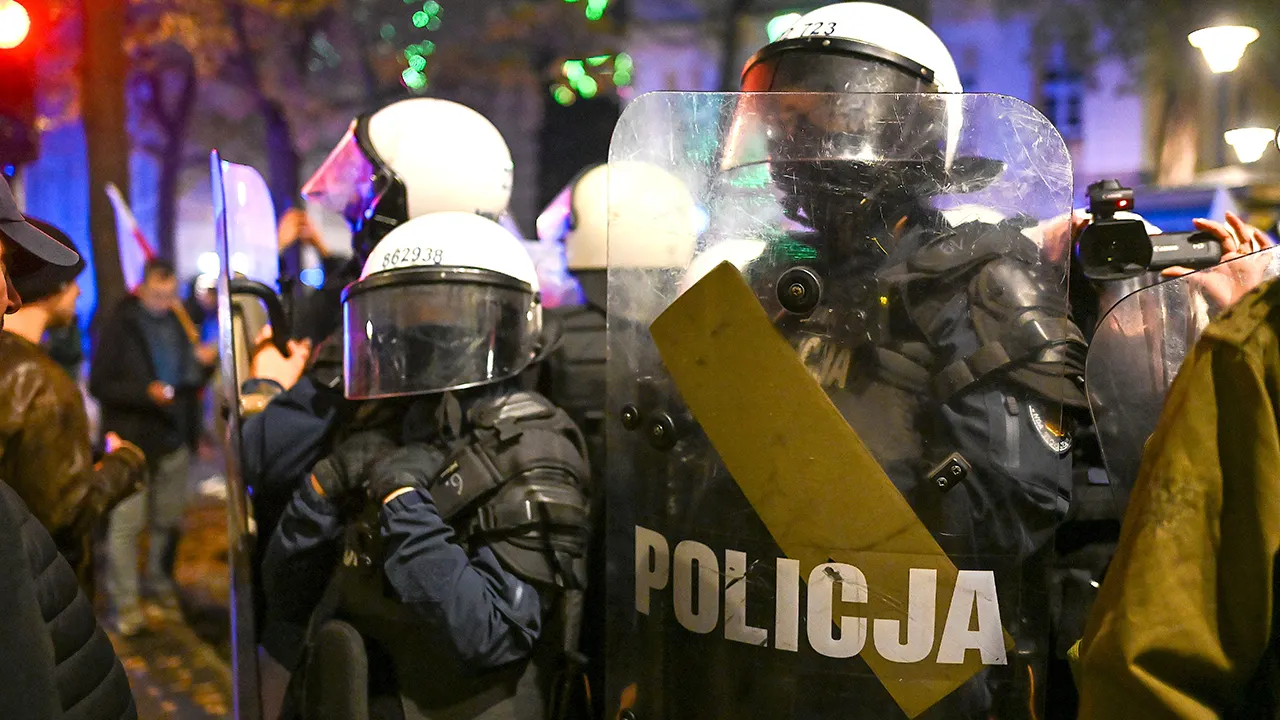

A late-night clash at Poland’s Constitutional Tribunal on Friday, involving riot police and protesters, has reopened a fierce national debate over whether Prime Minister Donald Tusk is repairing the country’s rule of law or exceeding his constitutional authority. The confrontation also prompted President Karol Nawrocki to turn his plane around and return to Warsaw.
The standoff began after the tribunal announced that its president, Bogdan Święczkowski, had been suspended. Allies of Tusk’s government called the move an effort to rebuild judicial independence, while opponents condemned it as an unconstitutional seizure of power.
Marcin Przydacz, head of the International Policy Bureau in Nawrocki’s office, criticized the government’s conduct during an appearance on European TV Monday. “Even lawyers who are close to the Tusk government say that there’s absolutely no legal basis for such behavior,” he said.
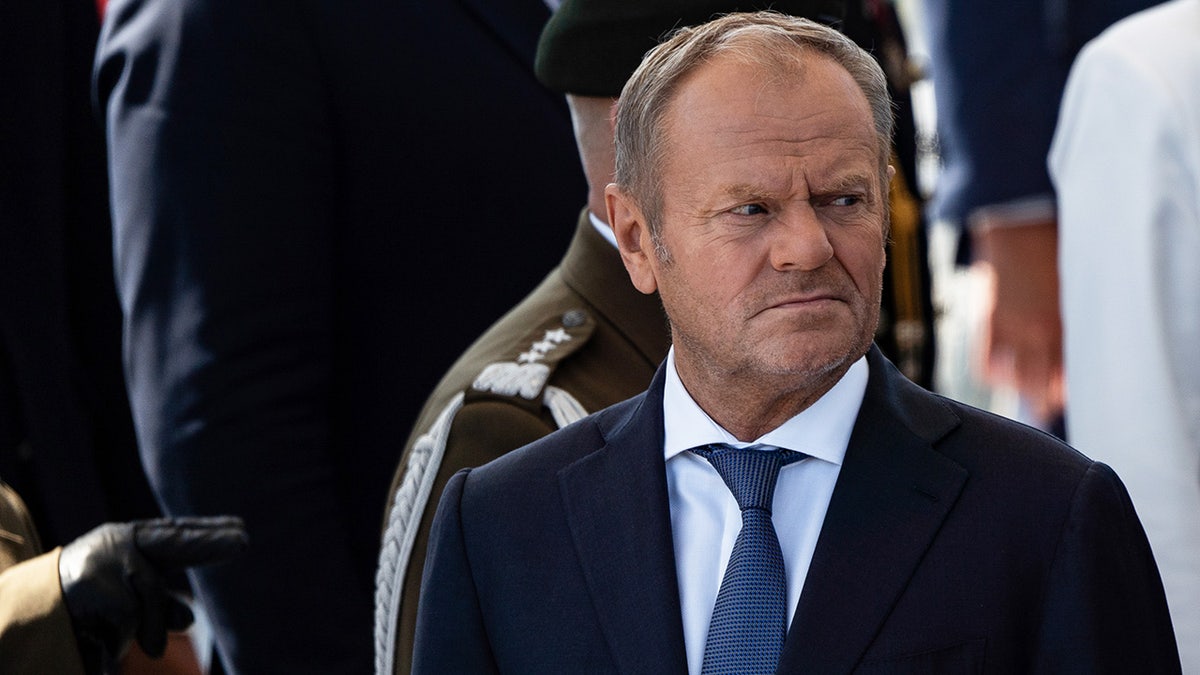
Polish Prime Minister Donald Tusk attends the Polish Army Parade in Warsaw on Aug. 15, 2025. (Damian Lemanski/Bloomberg via Getty Images)
The political crisis has also produced diplomatic consequences. At least three Polish ambassadors have resigned in protest. Przydacz, a former lawmaker from the opposition Law and Justice party, said Monday that Krzysztof Szczerski, Poland’s permanent representative to the United Nations since 2021, had stepped down. His resignation followed those of Poland’s ambassadors to China and Romania over the weekend.
“This crisis didn’t begin on Friday,” said Simone Rodan‑Benzaquen, senior envoy to Europe at the Foundation for Defense of Democracies. “Poland has been living with a deeply compromised Constitutional Tribunal for more than a decade.”
She said Friday’s events are part of a much longer institutional struggle. Parliament has continued to select judges under Poland’s constitution, but several nominees have been prevented from assuming their posts amid an enduring confrontation involving the government, the presidency and the tribunal.

Presidential candidate Karol Nawrocki, a conservative historian supported by the right-wing Law and Justice party, second from right, greets supporters at his headquarters after Poland’s presidential runoff in Warsaw on June 1, 2025. (AP Photo/Czarek Sokolowski)
“This isn’t simply a case of Tusk deciding to pack a functioning, independent court ahead of an election,” Rodan-Benzaquen told News Outlet. “There is a genuine institutional crisis that predates his government, and a legitimate question of how to resolve it.”
The dispute spilled into the streets Friday when Judge Anna Korwin-Piotrowska suspended Święczkowski and his deputy. Demonstrators gathered outside the tribunal, while Nawrocki cut short a trip to Senegal and returned home. Police detained three people after some protesters clashed with officers near the court complex.
Rodan-Benzaquen said doubts about the tribunal’s actions extend beyond the opposition, warning that the episode “raise[s] serious questions about the legality and proportionality of the methods being used.”
Government opponents have portrayed the confrontation as an unprecedented attack on Poland’s constitutional system. Nile Gardner, director of the Margaret Thatcher Center for Freedom at the Heritage Foundation, told News Outlet that his former boss, Margaret Thatcher, “would have been absolutely appalled by what we’re witnessing in Poland.” He described the episode as “a crisis for Poland and an attempted coup by Donald Tusk.”
Gardner went further, calling the developments “a Soviet-style coup operation.” He accused Tusk of waiting until Nawrocki was outside the country before moving against the tribunal and said the prime minister was creating further instability ahead of next year’s election. “It’s the sort of thing you’d expect actually from a third world dictator,” he said.
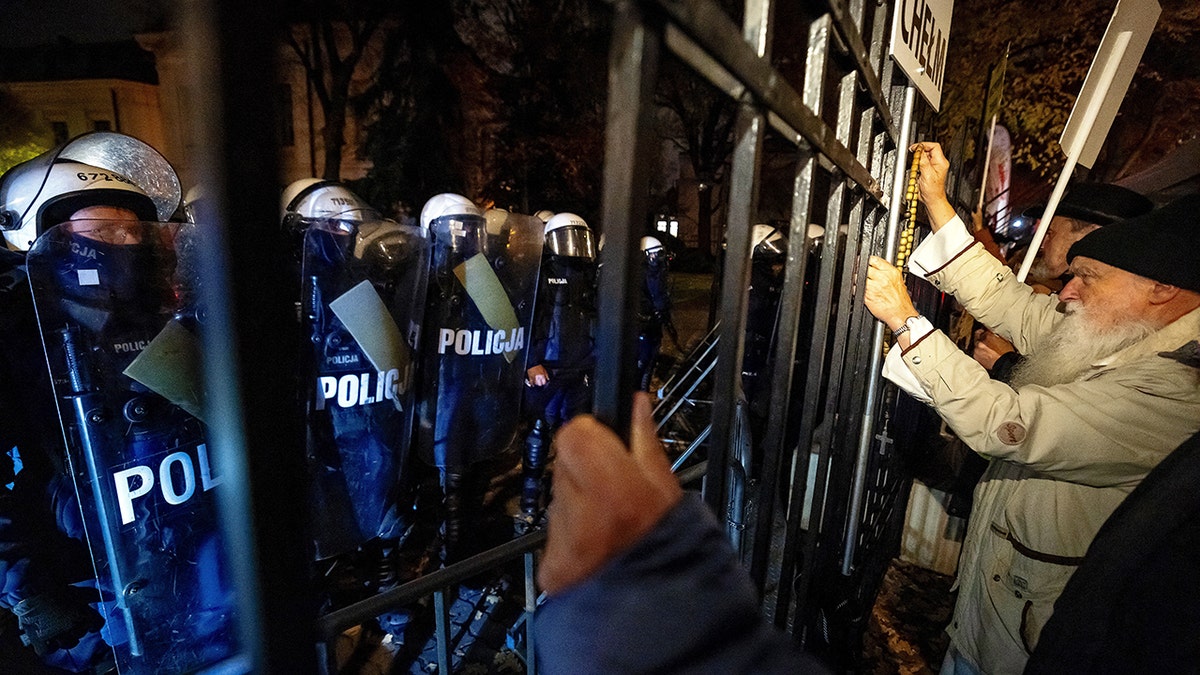
Protesters gather outside Poland’s Constitutional Tribunal in Warsaw after police blocked access to the court building on Oct. 30, 2026. (Wojtek Radwanski/AFP via Getty Images)
EXPLORE MORE: Trump Launches Attack on Iran Ahead of Crucial US Midterm Elections
Others reject the coup comparison. Boštjan Udovič, chair of international relations at the University of Ljubljana, said the dispute reflects the government’s effort to reverse judicial arrangements that critics of the former PiS administration consider incompatible with Poland’s constitution and European legal standards.
“Tusk wants to restore the situation as required by the constitution and the international institutions,” Udovič said. “I think that he hoped the transition would be easier.”
Tusk has defended the government’s actions as part of a campaign to restore the rule of law. He accused Nawrocki and the tribunal of improperly blocking judges chosen by parliament from taking office. “The solution to the conflict is simple,” Tusk said Monday. “The president recognizes the judges legally elected by [parliament], because that is what the Constitution stipulates.” He also accused Nawrocki of “choosing forceful confrontation, which could cost Poland very dearly. A democratic state under the rule of law cannot yield to violence.”
“Restoring the rule of law is essential,” Rodan-Benzaquen said, cautioning against reducing the dispute to a partisan battle. “But the legitimacy of that restoration depends not only on its objectives, but also on the legality of the means used to achieve it.”
Poland’s internal divisions are now reverberating internationally, as European institutions and political leaders offer sharply contrasting assessments of the constitutional crisis.
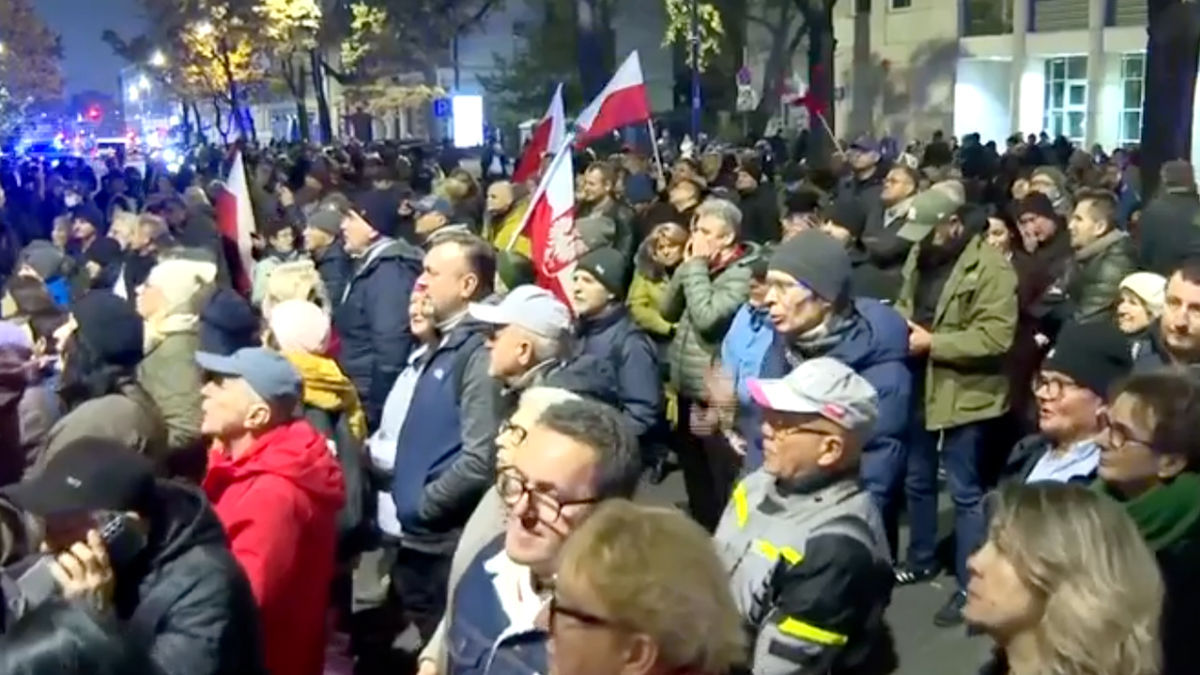
Demonstrators rally outside Poland’s highest court as tensions grow between President Karol Nawrocki and Prime Minister Donald Tusk’s government. (AP)
The European Commission has generally supported parliament’s authority to select judges. European Commissioner Michael McGrath said the appointment of new judges falls within the powers granted to Poland’s parliament.
French opposition leader Marine Le Pen accused Brussels of applying inconsistent standards. “One cannot claim to defend democracy and the rule of law while remaining silent when the constitutional balance of a member state is gravely threatened,” she wrote on X. “The proliferation of such strong-arm tactics within the European Union itself is beginning to raise serious questions.”
“America is on Poland’s side,” U.S. Ambassador to Poland Tom Rose wrote on X, urging restraint from all sides. “Our concern is for the stability, security, and democratic future of a country we are proud to call our friend and ally… Poland has come too far and accomplished too much to let political differences, no matter how strongly felt, put any of that at risk.”
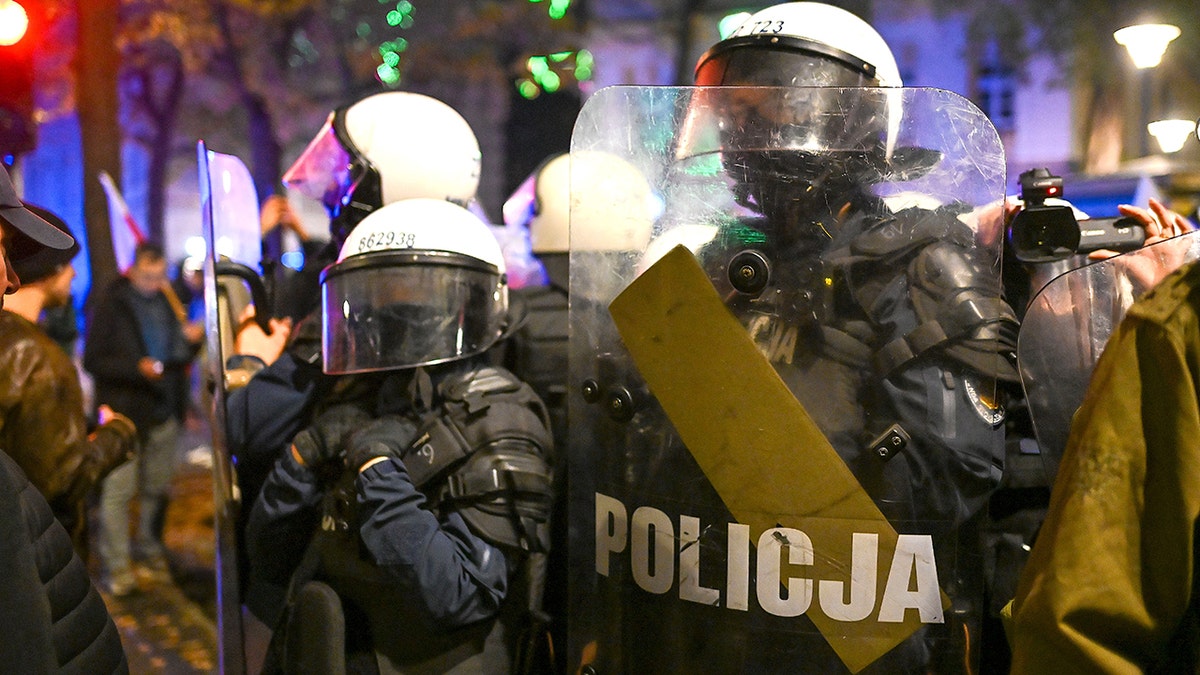
Police were deployed outside the Constitutional Tribunal after Judge Anna Korwin-Piotrowska, elected by the Parlament in March 2026, issued an order suspending Tribunal President Bogdan Swieczkowski and Vice President Bartlomiej Sochanski from their duties for one month. (Kai Taller/Arena Akcji/Sipa USA)
Rodan-Benzaquen said the stakes extend well beyond Friday’s confrontation. “One side claims to be defending constitutional order against the abuses of the other, while the institutions that should arbitrate the dispute have themselves become the object of the dispute,” she said.
With Poland’s parliamentary elections just a year away, the struggle over who has the authority to define and enforce the rule of law could carry greater consequences than the weekend’s dramatic scenes outside the tribunal.
Gardner, who described Tusk’s approach as “straight out of the Putin playbook,” warned that Poland is “in an incredibly dangerous situation right now,” placing responsibility squarely on Tusk and his government.